

Warning: This article contains discussion of cancer which some readers may find distressing.
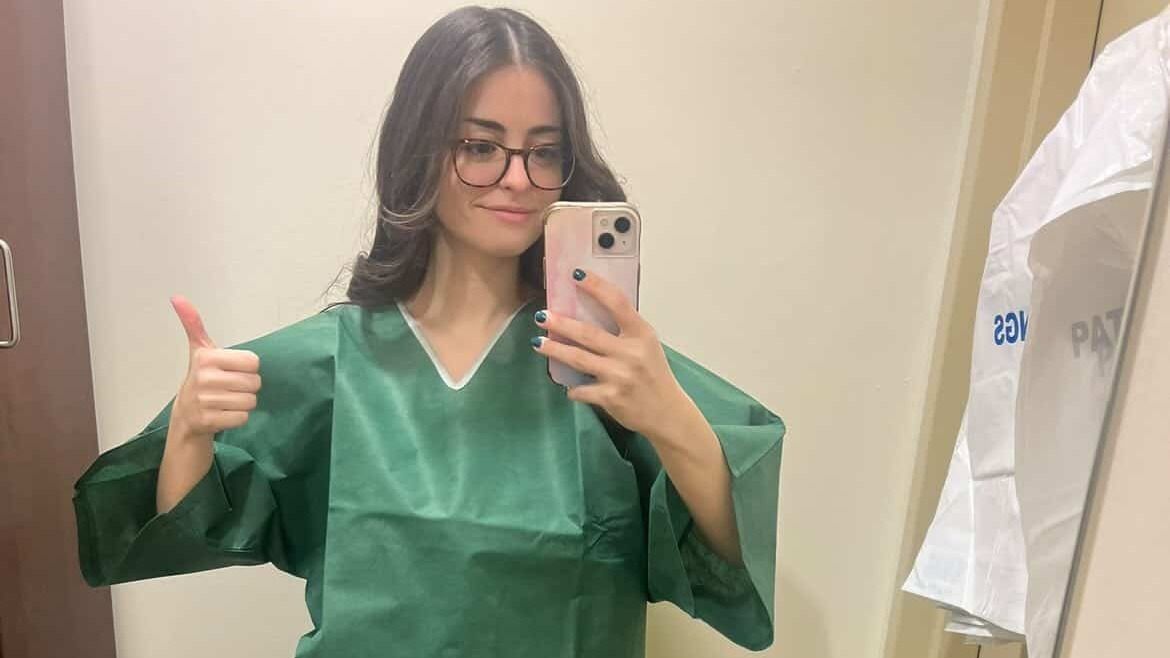
Allison Dashow has opened up about being diagnosed with ‘a five in one million cancer’ at the age of 26.
Allison Dashow, now 30, is sharing her story after being diagnosed four years ago with a rare eye cancer, in the hope it encourages others to pay attention to subtle symptoms and seek medical advice when something feels off.
Dashow said the first sign appeared in April 2022, but it didn’t immediately strike her as urgent.
She told the Mail Online she presumed it was ‘probably nothing serious’ and it would ‘go away,’ particularly given it ‘wasn’t that uncomfortable’.
As the weeks passed, the issue persisted. About two months later, she mentioned it to her therapist, who encouraged her to stop brushing it off and get checked by a doctor.
Dashow had been experiencing a ‘very intermittent shooting pain in [her] left eye,’ she told People.
She booked an appointment with a local optometrist, where an examination revealed fluid sitting behind her retina.

Following referrals to specialists and a series of scans, Dashow said she was questioned about any other symptoms and asked about her family’s medical background.
She was allegedly told the ‘good news’ was it wasn’t ‘eye cancer’ and diagnosed with chorodial neovascularization (CNV).
But after seeking another assessment, Dashow learned the diagnosis was more serious: ocular melanoma in her left eye.
She recalled to People: “I still remember that moment of being told that. This feels like another life, right? It feels like, ‘This can’t really be my life.’ Hearing the word cancer, hearing the word melanoma — it’s everyone’s worst fear and at the same time, you never think you’re going to be that person.”
Ocular melanoma ‘is an extremely rare type of cancer that occurs in about five out of every million adults,’ National Organization for Rare Disorders explains. However, ‘despite its rarity, it is the most common primary cancer of the eye in adults’.
Doctors don’t fully understand what causes eye melanoma. Mayo Clinic notes that certain factors are associated with a higher risk, including lighter eye color, being white, older age, some inherited skin disorders, specific genetic changes, and ultraviolet light exposure.
In basic terms, the Mayo Clinic says this cancer can develop after cells in the eye ‘develop changes to their DNA’ that alter the instructions controlling how cells behave.
“In healthy cells, the DNA tells the cells to grow and multiply at a set rate. The DNA also tells the cells to die at a set time,” it continues. “In cancer cells, the DNA changes give different instructions.”
When those instructions change, cancerous cells can multiply as healthy cells die off. Over time, the abnormal cells may form a tumor that can expand, damage surrounding tissue, and potentially spread elsewhere in the body.
In Dashow’s case, treatment was possible and the cancer had not spread.
She underwent surgery which left the tumor still in her eye ‘but dead’ with ‘a very low chance of recurring’.
Even so, her follow-up care remains extensive. She continues to have regular scans to monitor for any issues in other parts of her body, and she also receives injections every five weeks to help manage a rare, progressive vision loss linked to radiation used during treatment.
By speaking publicly, Dashow hopes others will take eye symptoms seriously, even when they seem minor or sporadic.
That message is particularly important because Mayo Clinic says many eye melanomas develop in areas that can’t be easily seen without an examination, which can make them difficult to spot.
It also notes the condition doesn’t always cause symptoms at first, meaning people may not realize anything is wrong until a routine eye test or a detailed scan identifies a problem.
Alongside Dashow’s ‘intermittent shooting pain’ in her left eye, Mayo Clinic details other symptoms as including ‘flashes of light or what look like specks of dust in a person’s vision, a growing dart spot in the colored part of the eye, a change in the shape of the pupil, poor vision or blurry vision in one eye’ and ‘not being able to see when looking to the side’.
If you’ve been affected by any of these issues and want to speak to someone in confidence, contact the American Cancer Society on 1-800-227-2345 or via their live chat feature, available 24/7 every day of the year.