

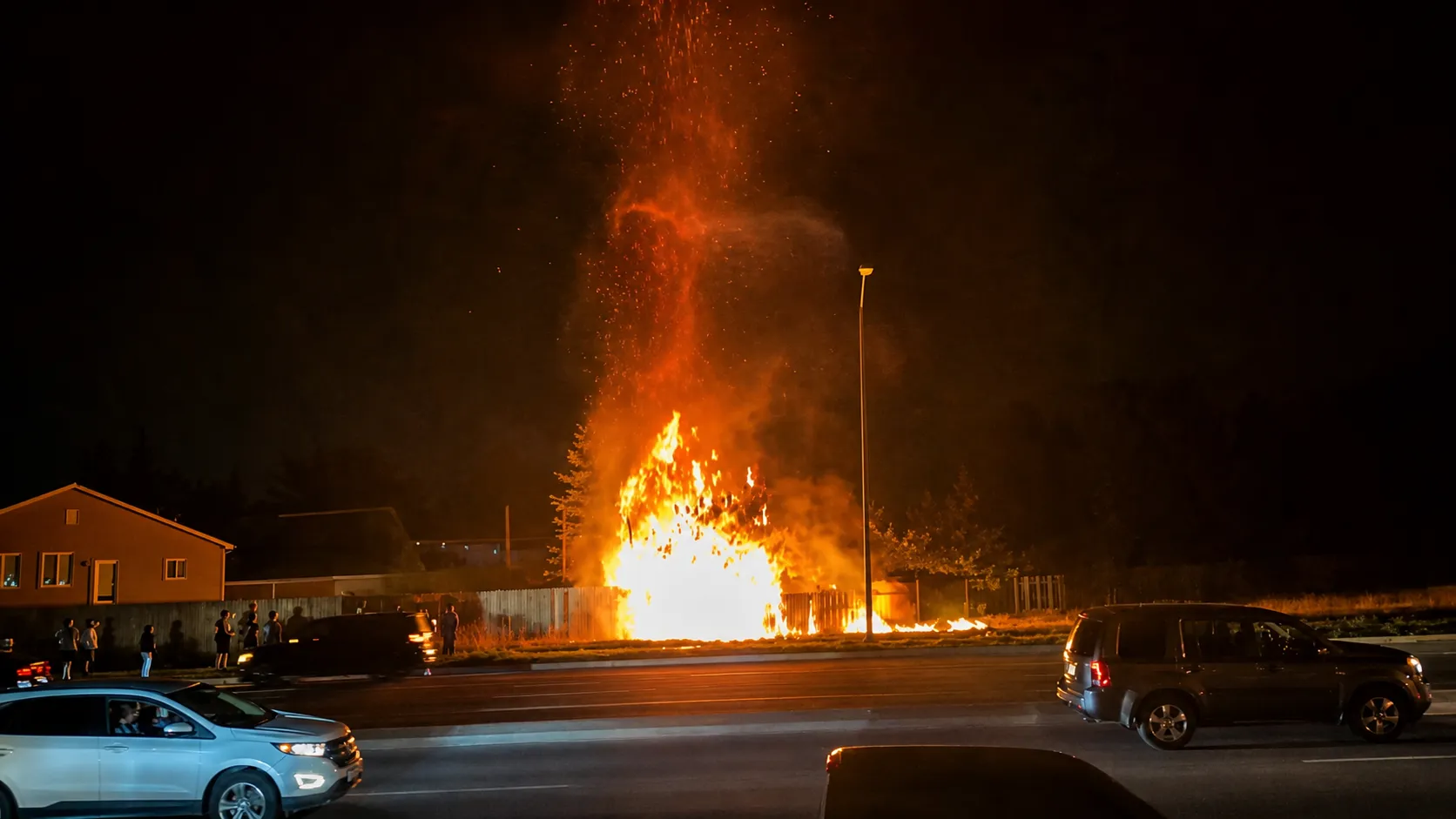
Three wildland firefighters remembered for their bravery died on June 27 while battling a rapidly moving wildfire near the Colorado-Utah border. Emily Barker, 38, of Clinton Township, Michigan; Nick Hutcherson, 27, of Glendale, Arizona; and Sydney Watson, 27, of Warrior, Alabama, were assigned to the Rifle Helitack crew and were conducting initial attack operations on the Knowles Fire when a wind-driven fire advance cut off their escape route.
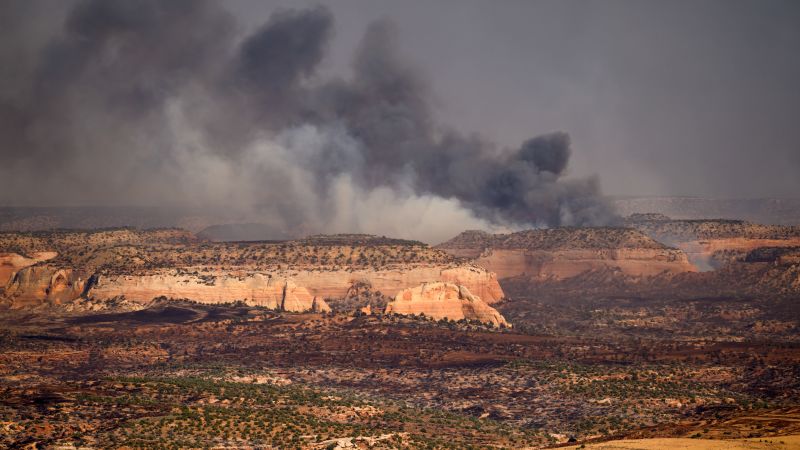
The crew deployed emergency shelter systems as a last resort when flames overtook them. A burnover incident occurred when the fire advanced so suddenly that it prevented firefighters from using escape routes and safety zones. Two other firefighters were injured during the same incident and were hospitalized with burn injuries. Barker and Hutcherson were assigned to the U.S. Forest Service, while Watson worked for the U.S. Wildland Fire Service. Watson’s death marked the first fatality for the newly formed U.S. Wildland Fire Service, created earlier in 2026 to coordinate firefighting on public lands.
Hundreds of wildland firefighters and residents gathered Sunday at a memorial service in Grand Junction, Colorado, near where the three firefighters died, to honor their memory and their sacrifice. During the ceremony, U.S. Wildland Fire Service Chief Brian Fennessy described how the firefighters showed courage and dedication day after day. “They showed up to make order out of chaos day after day with purpose, dedication and heart,” Fennessy said during the memorial service.
Barker was from Clinton, Michigan, and had worked as a teacher before joining the wildland fire service. She was a trailblazer who helped pave the way for women in the industry. Before her firefighting career, she worked in trail building and forest management in Idaho. She was passionate about the outdoors, enjoying hiking, skiing, dirt biking, and hockey. “I’ve never seen someone so excited to go to work,” said colleague Brubeck Schnurbusch.
Hutcherson, 27, served in the U.S. Navy and had been planning to become a physical therapy doctor. He was an active member of the Northern Arizona Deaf and American Sign Language community. Those who knew him remembered him as having an upbeat personality, with his signature phrase “easy day” being used to describe many aspects of life, from firefighting to chores.
Watson, 27, had pitched for the University of Tennessee Southern softball team from 2017 to 2019 before joining the wildland fire service. Her college remembers her as “a quiet, composed leader.” She was known to her fellow firefighters for her distinctive side eye—a critical look she would give when colleagues were acting up.
The Knowles Fire was one of several blazes that erupted near the state line on Saturday. The fire merged with the Jones, Snyder Mesa, and Gore fires to form the much larger Snyder Fire, which burned over 28,000 acres along the Colorado-Utah border. The incident is being investigated by the Forest and Wildland Fire services, a process that typically results in recommendations for preventing similar accidents.
The deaths highlight the extreme dangers facing wildland firefighters, a specialized crew trained to be dropped into remote areas by helicopter to quickly suppress new fires before they grow into uncontrollable blazes. When fires are rapidly expanding and conditions become treacherous, firefighters have no choice but to deploy emergency shelters and hope the fires pass over them.
The tragedy came at a time when nearly 40 large fires were burning across the Western United States. The Snyder Fire that claimed the lives of the three firefighters and the Cottonwood Fire in Utah—which has burned more than 93,000 acres and is the largest wildfire currently burning in the nation—exemplify the extreme fire behavior and unprecedented conditions firefighters are facing this season.
Across Colorado, the Aspen Acres Fire had burned more than 50,000 acres by early July with minimal containment. That fire destroyed or damaged more than 200 structures across four counties. In total, six large wildfires across Colorado have scorched more than 129,000 acres. National Guard soldiers were deployed to help with staffing checkpoints and conducting patrols in evacuated areas.
The western fire season has been intensified by months of dry weather and a record lack of snow during the past winter in some locations. Utah recorded its lowest snowpack and warmest winter on record this past season, conditions that stretched the state’s firefighting capacity to its limits. Utah Gov. Spencer Cox declared a state of emergency and imposed Fourth of July fireworks restrictions statewide. Colorado Gov. Jared Polis also declared an emergency and authorized the National Guard to assist with firefighting efforts.
Experts had been warning for months that extreme fire dangers were likely to emerge this summer. Nearly 8,000 wildland firefighters and dozens of firefighting helicopters have been deployed across the country. The national “preparedness level” for wildfires was raised to a 4 on a scale of 1 to 5, indicating that resources were becoming strained and officials warned of high potential for new, large fires in multiple parts of the country.
The deaths of Barker, Hutcherson, and Watson came almost 13 years to the day after 19 elite wildland firefighters from the Granite Mountain Hotshot crew died in a burnover incident near Yarnell, Arizona. Like the crew members in Arizona, these firefighters had deployed emergency shelters as a final attempt to survive when all escape routes were cut off by fast-moving flames.
The wildland firefighting community continues to face increasingly dangerous conditions as climate change intensifies fire behavior. Burk Minor, executive director of the Wildland Firefighter Foundation, noted that while every fire season brings challenges, wildland firefighter deaths have increased even as overall wildfire numbers have declined. “But when you’re battling Mother Nature, you’re up against the elements all the time. Bad things happen on bad days,” Minor said.