

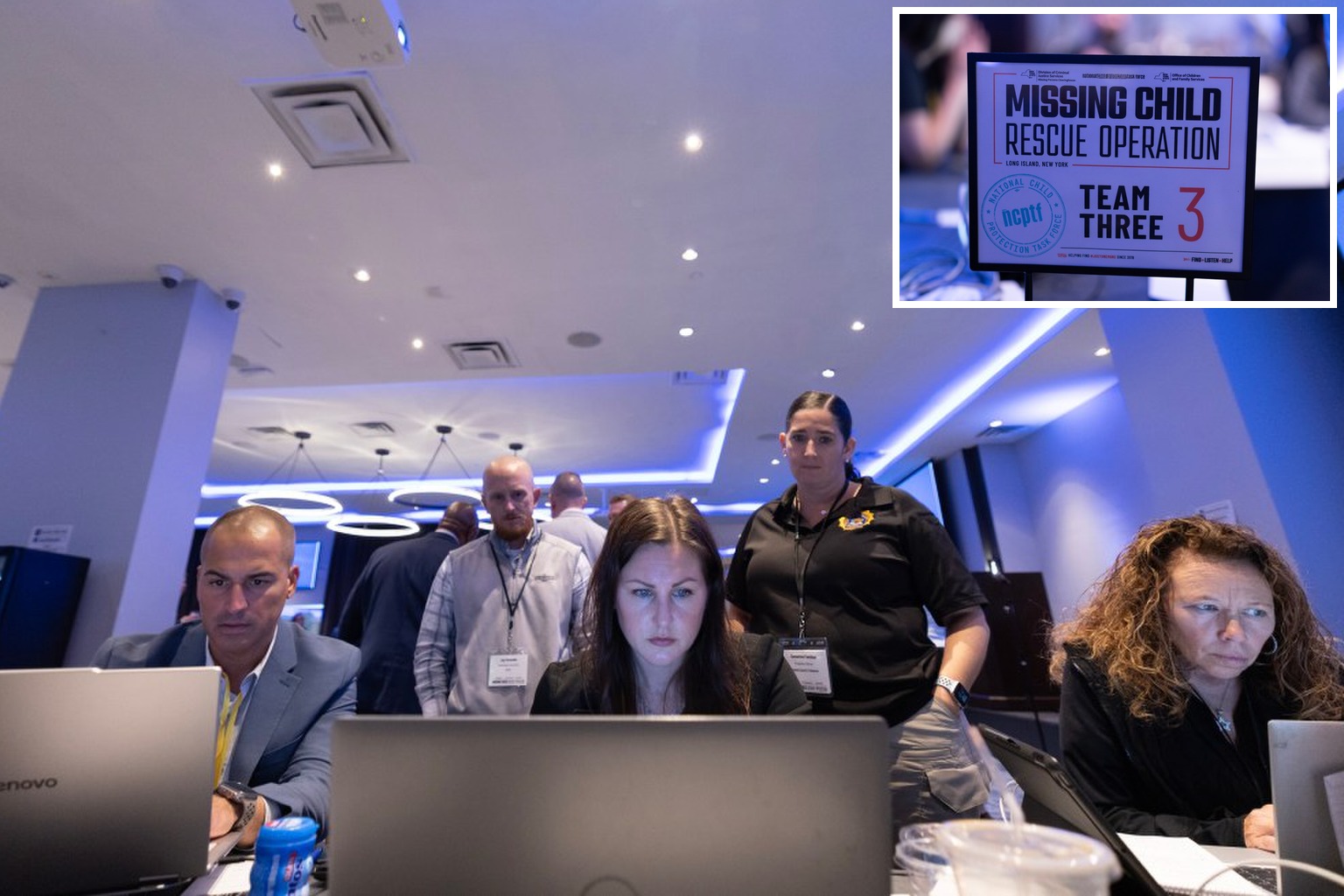
Thirty-four missing children and teens were located across Queens and Long Island in a sweeping 72-hour rescue operation that concluded Thursday, officials announced Friday.
The “Long Island Children Rescue Operation,” run from a command center in Garden City, Nassau County, recovered young people whose disappearances had stretched from a few days to a full decade, authorities said. The rescued youth ranged in age from 7 to 18.
Eighteen of the children came from Nassau County, 12 from Suffolk County, and four from Queens, according to the governor’s office. Another 31 local cases remain open.

While the vast majority were runaways, some had faced what officials called grotesque exploitation and human trafficking. Nearly 100 professionals from 40 agencies and organizations collaborated to find the vulnerable youth and link them with medical care, daily essentials, and ongoing support services.
“A total of 10,629 children younger than 18 were reported missing to police across New York State in 2025, with 94% reported as runaways,” New York State police superintendent Steven James said in a statement Friday.
“During that year, police closed 10,672 cases involving children reported missing in 2025 or earlier years. At the end of 2025, there were 1,079 active missing children cases statewide.”
The Long Island sweep marks the fourth such large-scale child rescue effort in New York. Previous operations in Erie County, the Capital Region, and Westchester County had located 168 missing children and teens combined.

The most recent prior effort came in February, when a Westchester County operation spearheaded by the state Division of Criminal Justice Services and involving 70 federal, state, and local agencies recovered 43 missing and runaway kids. That sweep, the third of its kind statewide, operated out of a hotel in Mount Kisco and concentrated on Dobbs Ferry, Mount Pleasant, Mount Vernon, White Plains, and Yonkers.
“Everyone is in the room focused on one task, and when something is needed, it’s a conversation across the table instead of a phone call,” Tim Williams, program manager at the division’s Missing Person’s Clearinghouse, told The Post about that earlier operation’s approach.
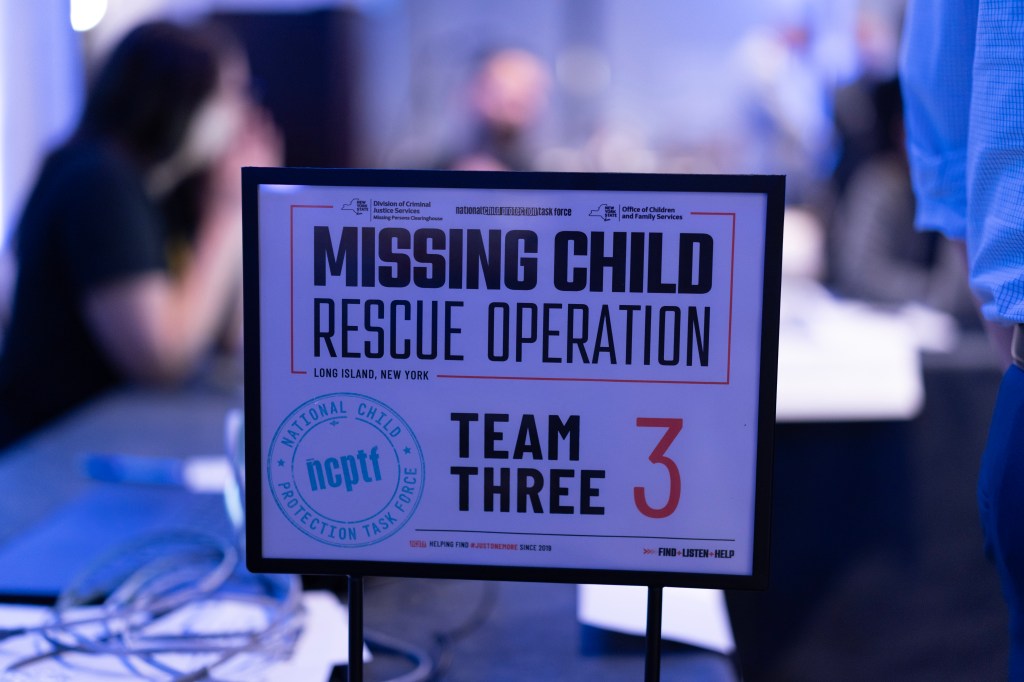
“Not every case ends with a dramatic rescue, a door being kicked in, and a child being carried to safety,” said National Child Protection Task Force chief executive officer Kevin Branzetti.
“The reality is that finding a child quickly — hopefully before something bad happens — often takes a coordinated effort. But finding them is only the first step,” he explained.
“We need to listen and understand why they left, what they experienced while they were gone, and most importantly, what we can do to help.”
The operation unfolded from Tuesday through Thursday, with the multi-agency team working intensive shifts to close cases that had languished across the region.