

A speeding, overcrowded passenger bus plunged from a highway into a rocky ravine in southwestern Pakistan early Friday, killing 40 people and injuring eight others in one of the deadliest road accidents in recent years. The bus went out of control and fell into the ravine in Dana Sar, a remote area near the border of Balochistan and Khyber Pakhtunkhwa provinces, according to officials.
The bus was traveling from Quetta to Peshawar when the accident occurred. According to officials, the bus was carrying not only its own passengers but also passengers from another bus that had broken down along the route, leaving the vehicle overcrowded. The bus originally departed Quetta with approximately 36 passengers, but more individuals boarded after being transferred from the broken-down vehicle. Rescue officials said the bus was carrying 48 passengers when it crashed.
The exact cause remains under investigation, though preliminary reports suggest multiple factors may have been involved. Some initial findings point to suspected brake failure as the bus negotiated a difficult bend on the mountainous terrain. Other reports indicate that speeding may have also played a role in the crash. A police official noted that speeding was a likely cause, but investigators said a full inquiry would determine the exact sequence of events.
One of the injured survivors told local media from his hospital bed that some passengers had protested after the driver stopped to pick up people from the broken-down bus also headed to Peshawar. According to the survivor’s account, an argument followed, during which one passenger allegedly grabbed the driver by the neck. Moments later, the driver lost control of the bus, which plunged into the ravine. However, authorities stated that this account could not be independently verified and that police were still investigating.
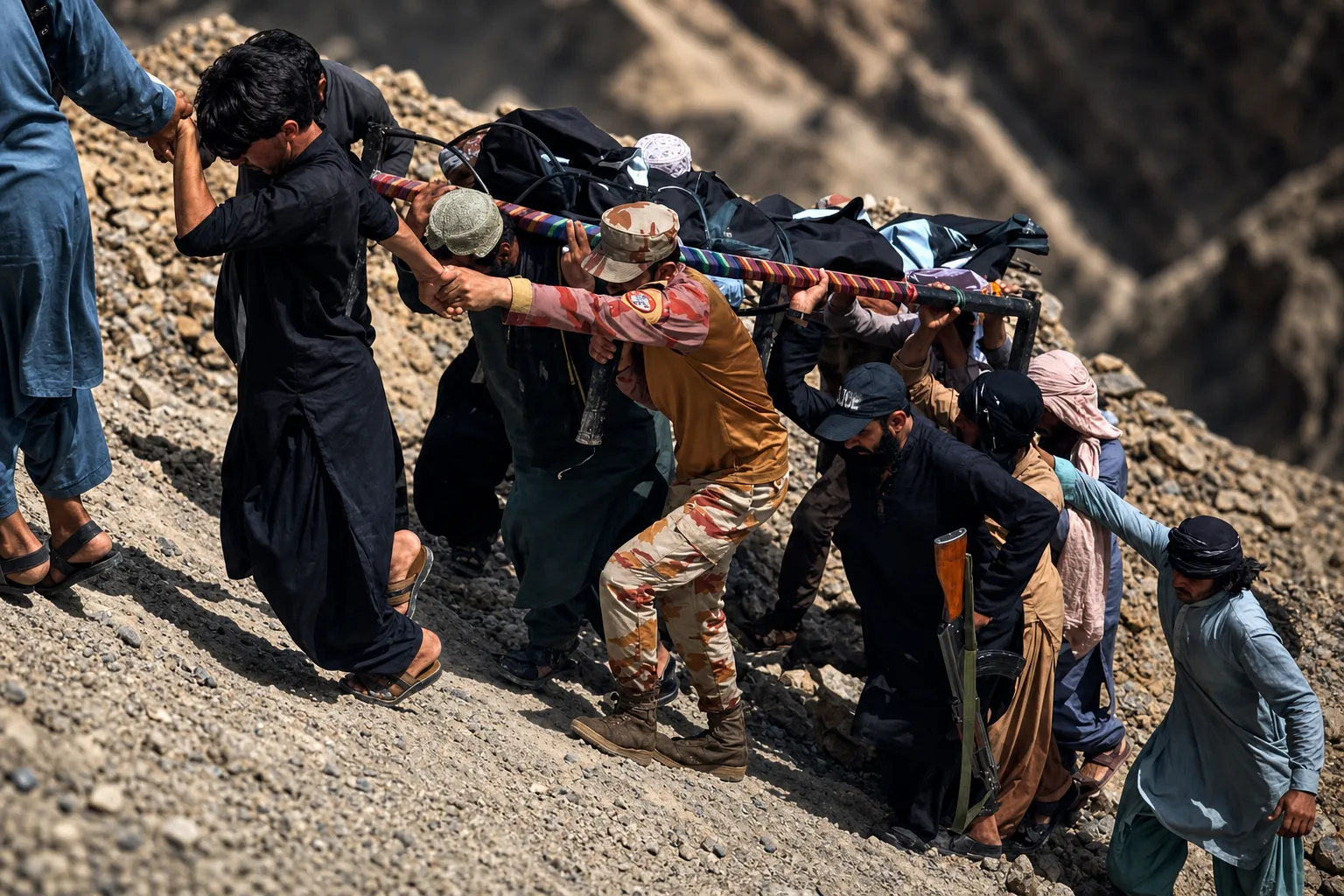
The ravine in the Dana Sar mountain range proved treacherous terrain for rescue operations. The bus fell approximately 70 to 80 feet into the rocky ravine, making access extremely difficult. Reaching the wreckage required emergency workers, backed by paramilitary forces, to climb down a steep mountainside. Rescue teams faced significant difficulties during the initial phase of the operation in the rugged mountainous area. Teams were using cutters and machines to retrieve bodies and injured people from the vehicle.
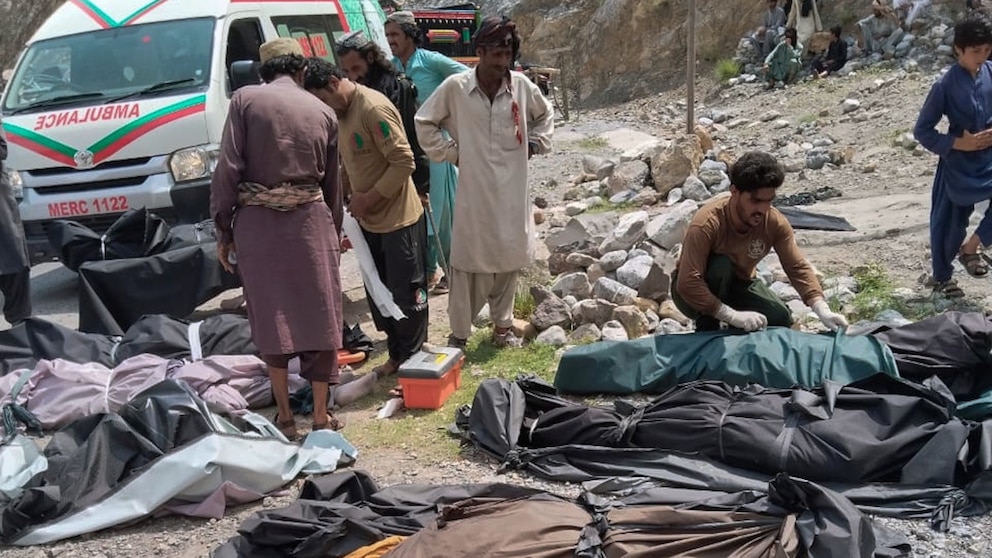
Several hours after the crash, rescuers carried the injured on stretchers and recovered the dead in makeshift carts, painstakingly hauling them back up the rugged slope. Rescue teams from both Balochistan and Khyber Pakhtunkhwa provinces coordinated in the rescue and recovery operation. Eight injured passengers received initial medical treatment at the scene before being taken to the district headquarters hospital in Zhob, while the bodies of the 40 victims were transported to the same facility.
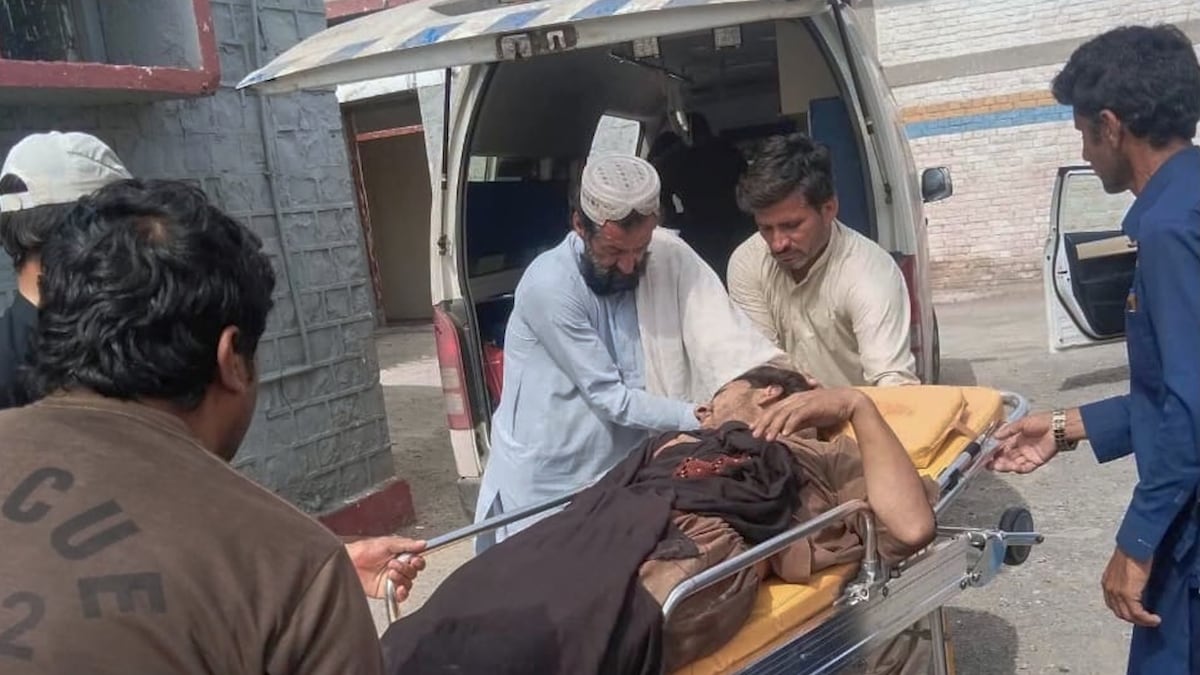
Most of the casualties were identified through documents, though three bodies remained unidentified as of reports Friday. Families of those killed and injured had begun their difficult journey to locate and retrieve their loved ones. In the northwestern city of Peshawar, one family member described frantically calling emergency services, hospitals, and local police after learning that a relative had been on the bus.
Pakistan’s President Asif Ali Zardari expressed sorrow over the crash, offering condolences to the families of those killed and wishing the injured a speedy recovery. He directed the relevant authorities to ensure the injured receive the best possible medical care. Balochistan Chief Minister Sarfraz Bugti also expressed grief over the loss of life and ordered authorities to ensure the injured receive the best possible medical treatment. Bugti ordered a probe into the causes of the accident.
Road accidents remain a persistent challenge in Pakistan, particularly in mountainous areas where narrow roads, steep slopes, and dangerous bends increase the risk of crashes. The country struggles with poor road conditions, inadequate enforcement of traffic laws, unsafe driving practices, and vehicle maintenance issues. This latest tragedy comes only weeks after another deadly accident in May when a minibus rammed into a bus parked along a motorway in northwest Pakistan, killing 17 people and injuring five others, underscoring the nation’s ongoing transportation safety concerns.