

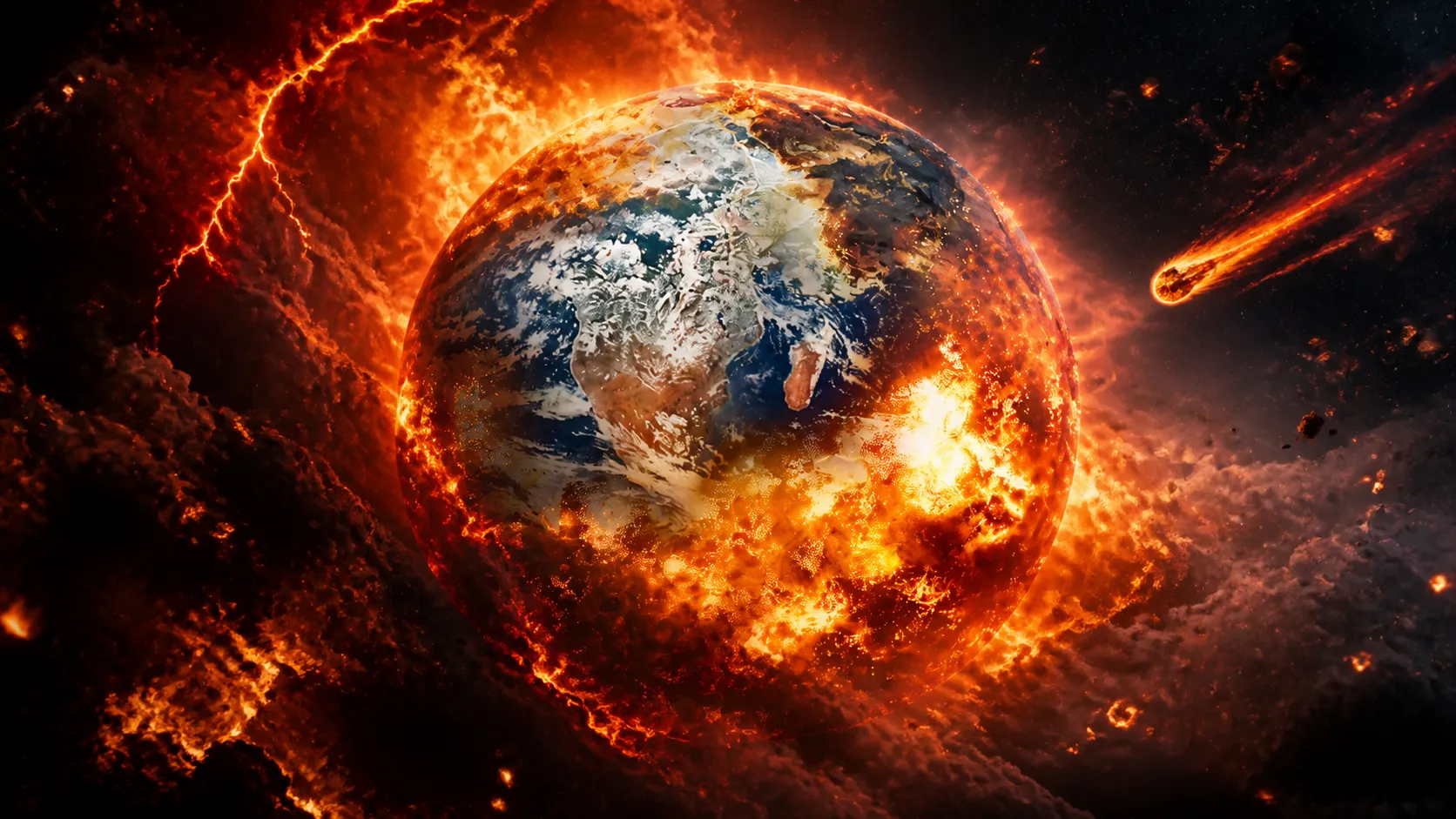
Scientists have identified five leading ideas for how the universe could eventually come to an end, although the most widely supported scenario today is a slow cosmic fade-out rather than a dramatic collapse.
It is not exactly a problem humanity is likely to face anytime soon, and by that we mean not just individual lifetimes but probably the lifespan of our species as well.
Even so, physicists have spent decades trying to understand what the farthest future of the cosmos might look like.
Most people are familiar with the Big Bang, the event that marked the beginning of the universe as we know it.
Since that moment, space has kept expanding while gravity has gathered matter into galaxies, stars and planets.
At some point, though, that story has to reach an ending, most likely long after the Sun has grown large enough to consume Earth and long after the last stars have burned out.
Today, observations show the universe is expanding at an accelerating rate, driven by a mysterious component called dark energy. That means the simplest expectation is not a cosmic crash, but a future in which galaxies drift ever farther apart, new stars stop forming and the cosmos grows colder, darker and emptier over unimaginable timescales.
Here are five of the main scientific possibilities for how everything could finish.
1. The Big Crunch
This is one of the best-known ideas, and it essentially acts as the reverse of the Big Bang.
Instead of the universe continuing to spread outward forever, expansion would eventually slow, stop and then reverse.
Matter would begin collapsing back in on itself until everything merged into an unbelievably dense state of energy and matter where time, as we understand it, may no longer apply.
For this to happen, gravity would need to overcome expansion on the largest scales, or dark energy would need to change in a way that allows contraction. Based on current evidence, that looks less likely than continued expansion, but it cannot be ruled out completely.
2. The Big Freeze
Another major theory suggests the universe does not collapse at all, but simply keeps expanding forever.
In this version, expansion never flips into the Big Crunch because the cosmos does not fall into the kind of energy state needed for that to happen.
As matter and energy become more and more spread out, the temperature of the universe would continue to fall while entropy steadily increases.
Given enough time, everything would fade into a cold, lifeless expanse with temperatures sitting only just above absolute zero.
This scenario is also called heat death, and it is the outcome most cosmologists currently regard as the leading possibility if dark energy remains roughly constant.
3. The Big Bounce
This idea offers a slightly less bleak follow-up to the Big Freeze or a collapsed universe.
Rather than ending permanently, the universe could enter a cycle in which one cosmic ending eventually gives rise to another beginning.
In other words, the final state of this universe might somehow trigger a fresh Big Bang and the birth of a new one.
Some versions of this idea come from cyclic cosmology or quantum gravity models, but there is not yet direct evidence that the universe actually behaves this way.
4. The Big Rip
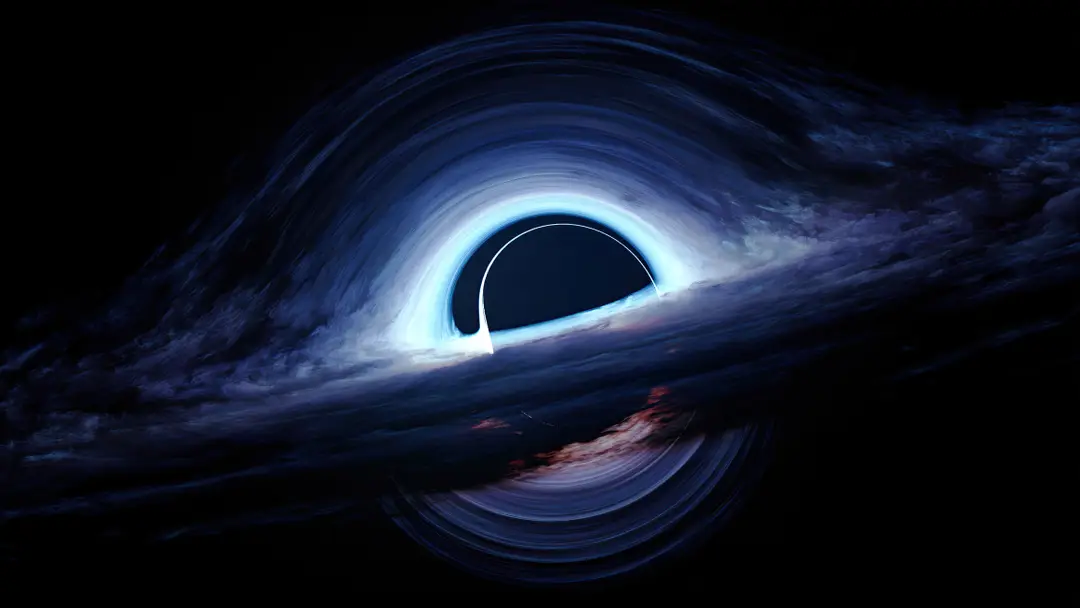
This scenario is not caused by some ordinary cosmic disturbance, but by the growing power of “dark energy”.
If that force becomes strong enough, it would push everything apart more and more aggressively.
Galaxies would separate, then solar systems, then planets, and eventually even atoms would be torn into their most basic components.
In the final stage, space-time itself would be ripped apart.
For the Big Rip to happen, dark energy would have to become stronger over time in a very specific way. Current measurements do not point to that as the most likely future, but scientists still study it because dark energy remains one of the biggest open questions in cosmology.
5. Vacuum Decay
This may be the most unsettling possibility of the lot.
Unlike the other endings, which play out over incomprehensibly long stretches of time, this one depends on the idea that the “quantum vacuum” underlying reality might not actually be in its most stable form.
If that is true, it could suddenly decay into a different state.
Should that happen, the laws of physics governing matter could instantly change, effectively remaking the universe before anyone could even register what was happening.
Put simply, it means the entire universe could, in theory, just stop existing in its current form at any moment.
That sounds terrifying, but there is no evidence that vacuum decay is imminent. If it can happen at all, it is expected to be extraordinarily rare and more a matter of fundamental physics than a practical near-term danger.
For now, the universe seems to be headed toward continued expansion, not immediate collapse. Future missions and observations designed to study dark energy may eventually show whether that expansion is truly steady, slowly changing, or capable of turning the cosmic story in a completely different direction.