


Anne Hathaway has shared that she’s dealt with cataracts and ultimately needed surgery after being diagnosed with the condition.
In a conversation on the podcast Popcast, Hathaway said her eyesight had been severely affected for years, leaving her unable to see properly in one eye for a long period.
“This is maybe too much information. I was half blind for 10 years,” she said.
“It impacted my vision so much that I was basically legally blind out of my left eye and I wound up getting surgery. And I didn’t realise how bad it had gotten until I could finally see the full spectrum.
“I appreciate vision because I literally feel like every day, I wake up and I get to see the way that I do, it’s a miracle. I actually am like, ‘Oh, two generations back, that wouldn’t have been an option for someone like me.”
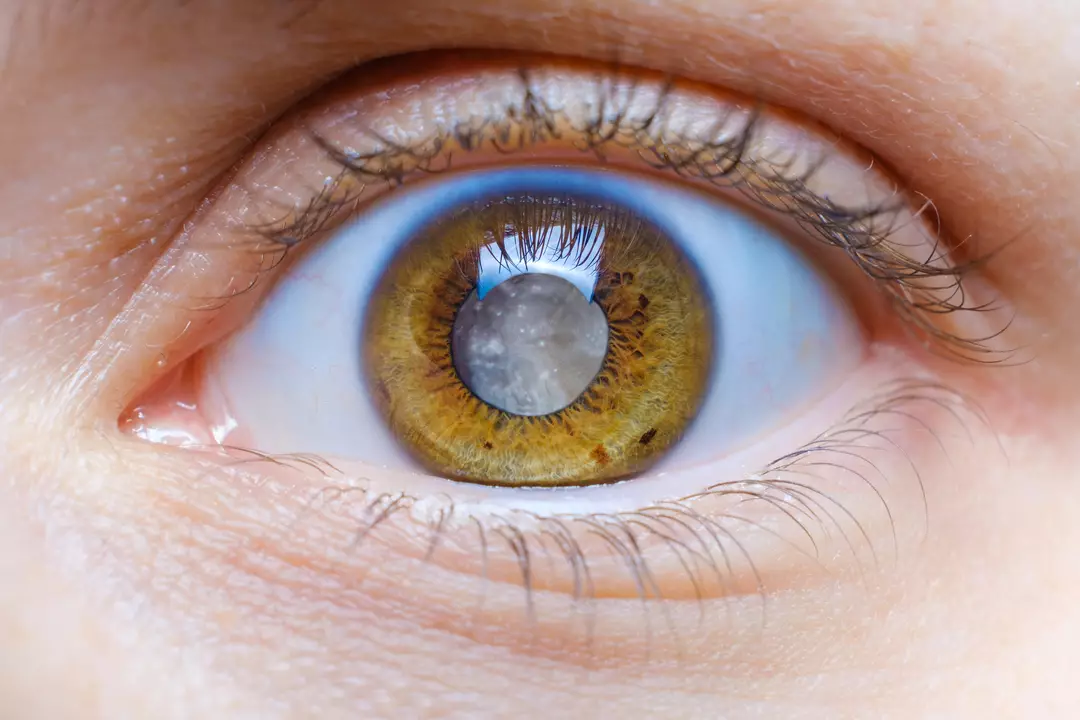
Cataracts develop when the eye’s lens becomes cloudy, which can make vision seem as though you’re looking through frosted glass. According to the Mayo Clinic, the condition can interfere with everyday tasks like reading and driving, and it typically worsens gradually if it isn’t treated.
“At first, stronger lighting and eyeglasses can help deal with cataracts. But if impaired vision affects usual activities, cataract surgery might be needed. Cataract surgery is generally a safe, effective procedure,” the site explains.
SAGA notes there are several warning signs that may suggest cataracts are forming. Here are some of the key symptoms often highlighted.

A frequent early sign is blurred or hazy vision, which can feel like trying to see through a misted-up window.
SAGA says this happens as proteins in the lens clump together, reducing the amount of light that can pass through clearly.
Another complaint many people report is glare or halos around lights, especially at night when bright points like headlights and street lamps stand out more.
“During autumn, when we rely more on artificial lighting, people often notice halos or glare around street lamps, car headlights or taillights.
“When you have a cataract, light scatters as it enters the eye, creating those classic rings or starbursts around lights.”
Symptoms can also feel more pronounced in dim environments. As pupils widen to admit more light, the clouding can scatter incoming light even further, making it tougher to pick out detail.
“For individuals with cataracts, this can actually make vision worse. The larger pupil allows more of the scattered, cloudy light to enter the eye, amplifying blurriness and glare. Low-contrast environments, such as dusk, winter, overcast weather, or softly lit rooms, make it even harder for your eyes to distinguish edges or details.”
Cataracts may also dull colour perception. Shades can look less vivid—often affecting reds, purples, and blues—and whites may take on a yellowish tint. Many people notice the difference most clearly after treatment.
Some people experience double vision in one eye as the cataract disrupts how light is focused, sometimes creating a faint “ghost” image.
In more advanced cases, the pupil itself can appear whitish or less black than usual because of the opacity behind it.
Frequent changes to glasses or contact lens prescriptions can also be a sign. SAGA explains that as the lens becomes more clouded, vision can shift in ways eyewear can’t fully correct, leading to repeated prescription updates.