


Richard Scott, 15, of Pennsylvania, has a blunt warning for classmates tempted by the AI button on their school laptops: “It slowed my thinking down.”
Scott told The Wall Street Journal that his algebra scores cratered after he started leaning on an AI search tool for daily homework. He finished the year with mostly B’s, then flunked his final exam. “When I was in a test and I couldn’t use AI, it was hard to think,” he said.
His experience is far from isolated. A new survey by Common Sense Media’s Youth AI Safety Institute found that 70% of teens ages 13 to 17 now use AI for homework and class assignments. Nearly two-thirds of those students, 63%, admitted they deploy the technology simply “to get answers.” Only 35% said they use it to “fix or improve” work they already understand.
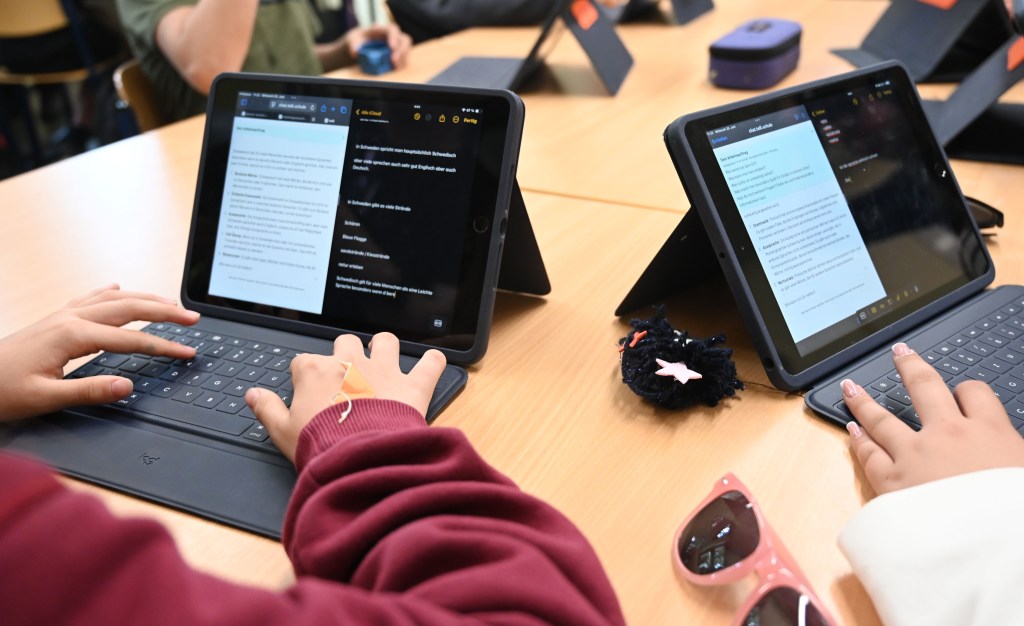
The findings land as Google aggressively expands its Gemini AI across ChromeOS, the operating system that dominates American classrooms. The platform already serves over 38 million K-12 students worldwide, and education accounted for more than 60% of global Chromebook market share in 2025, according to technology site ommandlinux.com. A staggering 93% of schools are reportedly planning Chromebook purchases this year.
Teachers are watching the academic consequences unfold in real time. Kaitlyn Ruano, an Advanced Placement Art History teacher in Miami, Florida, saw her school’s test scores plunge after the district gave all high schoolers access to Google’s Gemini chatbot last year. Students who had earned A’s and B’s in her class were among those who failed the AP exam.
“I had kids come to class after saying, ‘Miss, I had no clue what half the material was, I’m not going to lie to you. I’ve been using AI all year,'” Ruano said.
Sophia Chatzigianni, 15, of Fairfax County, Virginia, traced her own slipping grades in Human Geography and Algebra to AI shortcuts on her school-issued laptop. “The Google one was the biggest temptation, because it’s the easiest to access,” she said. Her marks rebounded only after she quit using the tool.
The academic damage extends beyond individual classrooms. Global test scores have fallen to historic lows across math and reading comprehension, according to data released earlier this year. The 2025 Program for International Student Assessment, the world’s largest comparative education survey, recorded the lowest student performance in 25 years. A May report from Stanford University’s Educational Opportunity Project found American students performing worse than their peers a decade ago in nearly every district nationwide. Reading scores declined in 83% of districts, math scores in 70%, regardless of wealth or racial demographics. The Organization for Economic Cooperation and Development has linked rising AI and smartphone use to the worldwide erosion of reading skills.
Even Google’s own research has flagged risks specific to children, who struggle to distinguish chatbots from human interaction, The Wall Street Journal reported. Current and former employees and dozens of internal papers have acknowledged potential cognitive and emotional harm.
“We’re doing this experiment on an entire generation on cognitive development, with no control group,” said Mikel Rodriguez, a former Google research scientist who departed in 2024. “It’s really uncertain what that’s going to lead to in terms of learning.”
Yvette Renteria, a veteran teacher, principal, and chief program officer at Common Sense Media, framed the crisis in broader terms. “What’s really scary is that AI is working against the core craft of teaching: embracing critical thinking, developing curiosity, and making space to have dialogue,” she said. She warned that normalization is accelerating the problem: “You can imagine a young person seeing mom use AI, seeing teachers use it, seeing leaders use it, and thinking, ‘Oh, that’s justifiable, it’s fine, it’s safe. Everybody else is using it.'”

Google defends its classroom push. A company spokeswoman told The Wall Street Journal that studies show AI tools combined with teacher-led instruction can improve learning outcomes. “Teachers around the world use our technology every day because it solves real classroom challenges and helps improve learning outcomes,” she said.
The survey by Common Sense Media’s Youth AI Safety Institute was conducted among teens ages 13 to 17.