


The intriguing ‘hostile’ object on a path towards Earth has once again captivated scientists, as they have detected a ‘heartbeat’ signal emanating from it.
The object, known as 3I/ATLAS, was first identified in July when it was observed hurtling towards our solar system by the NASA-funded ATLAS survey telescope situated in Río Hurtado, Chile.
This discovery piqued the interest of researchers because 3I/ATLAS is only the third known object that has been traced back to interstellar space, indicating it originated beyond our solar system.
Experts quickly determined that the object is moving at a velocity exceeding 41 miles per second, too fast to be captured by the Sun’s gravitational pull.
As the object approaches its closest point to Earth in the coming weeks, scientists continue to analyze its behavior and unique features.
Harvard scientist Avi Loeb suggests that 3I/ATLAS might have a mysterious ‘heartbeat’ based on recent observations.
“The pulses could be periodic thrusts for orbit corrections or some other internal cycle within the spacecraft,” Loeb explained.
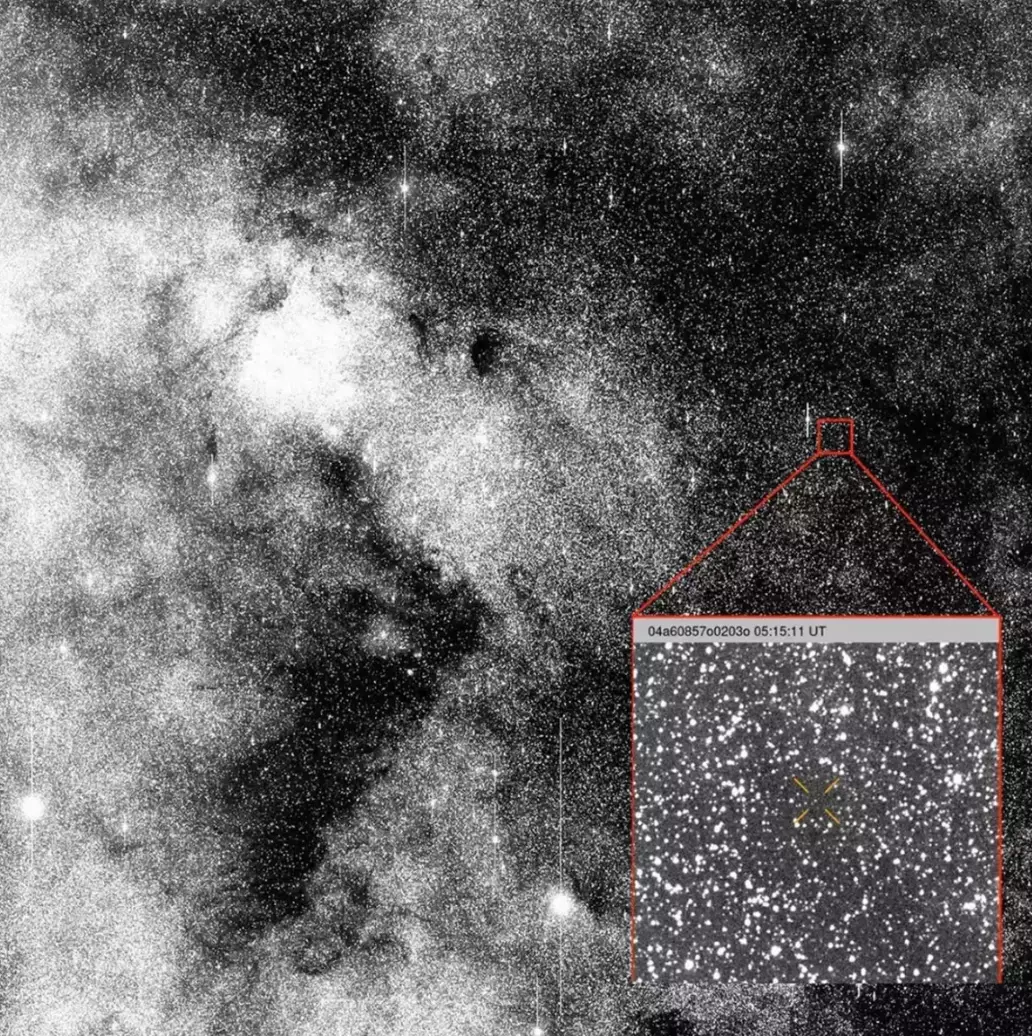
Loeb and his colleagues shared their findings in a blog post, highlighting that the ‘heartbeat’ consists of light pulses emitted every 16 hours.
“Overall, 3I shows characteristics typical of weakly active outer Solar System comets, despite its interstellar origin,” the researchers noted.
“Continued monitoring around perihelion is necessary to track changes in activity, color, which will provide insights into the evolution of interstellar materials under solar radiation.”
Loeb elaborated: “In the context of a natural comet, this can arise from a sunward jet (anti-tail) that is initiated only when a large pocket of ice on one side of the nucleus is facing the Sun.
“As a result, the coma will get pumped up every time the ice pocket is facing the Sun.”

Loeb’s research also indicates that the direction of the pulsing jet might not necessarily be oriented towards the Sun.
Regardless of the final findings, scientists believe that tracking the evolution of these pulses over time could shed more light on 3I/ATLAS.
Loeb mentioned that the ‘heartbeat pattern’ should have been documented in photographs by experts, though ‘none were systematically studied in the published literature.’
He further explained: “A movie showing the periodic brightening of the jets around 3I/ATLAS over several days can reveal whether the jets are natural or technology-based on the orientation of the heartbeat pattern relative to the Sun.”