

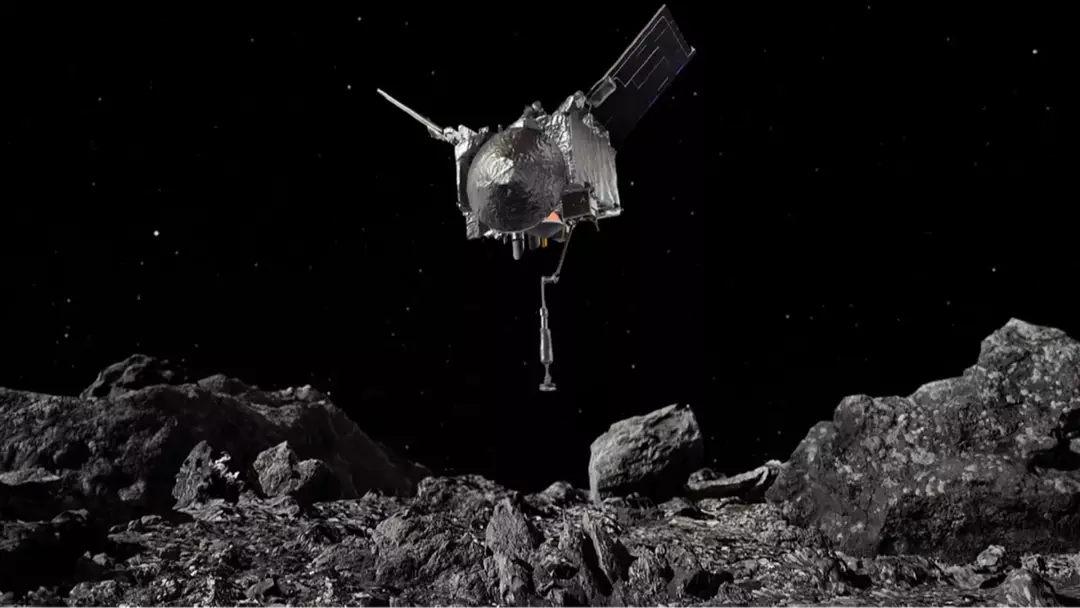
NASA has revealed an astonishing breakthrough concerning asteroid Bennu, which could provide insights into one of life’s enduring mysteries.
Bennu is approximately one-third of a mile in width, particularly at its equator, and comprises rocks that originated around 4.6 billion years ago from a ‘primitive world that was destroyed by a massive collision,’ according to the space agency.
“[Bennu] may have formed in the main asteroid belt between Mars and Jupiter, and drifted close to Earth since then. Bennu makes its closest approach to Earth every 6 years, coming within about 186,000 miles (299,000 kilometers) of our planet,” NASA elaborates.
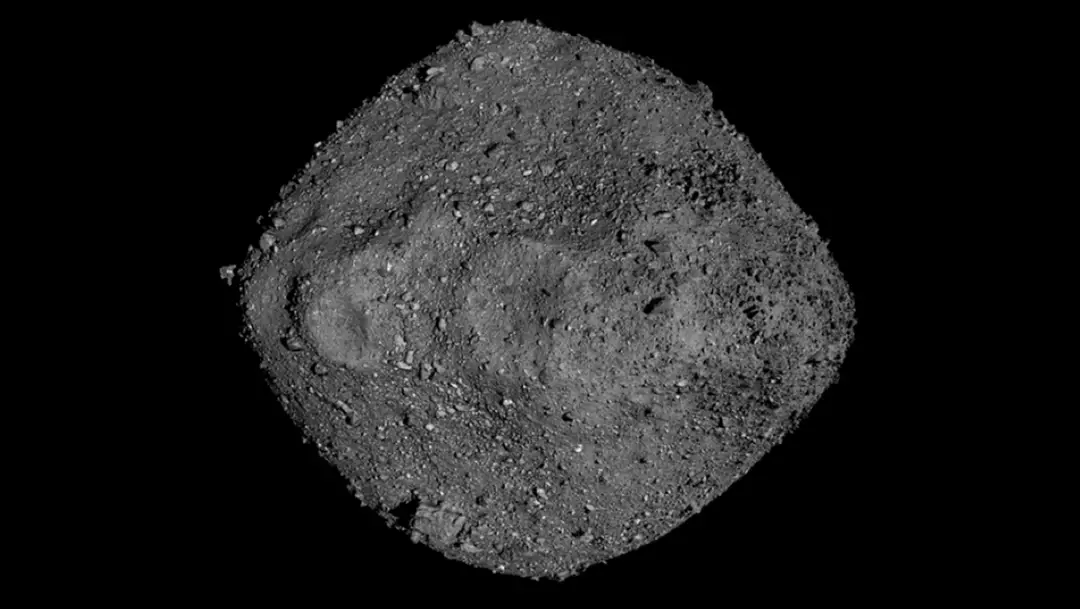
In a recent discovery, scientists have identified ribose, a five-carbon sugar, and glucose on the asteroid.
Ribose serves as the primary energy source for cells and is a crucial component of RNA, a molecule found in most living organisms.
While ribose has been detected in meteorites before, this is the first time it has been found in an asteroid sample.
The discovery could potentially answer significant questions about the origins of life on Earth, as experts suggest these sugars are vital to understanding events that transpired billions of years ago and the formation of the solar system.
Study leader Yoshihiro Furukawa of Tohoku University in Japan expressed, “All five nucleobases used to construct both DNA and RNA, along with phosphates, have already been found in the Bennu samples brought to Earth by OSIRIS-REx.
“The new discovery of ribose means that all of the components to form the molecule RNA are present in Bennu.”
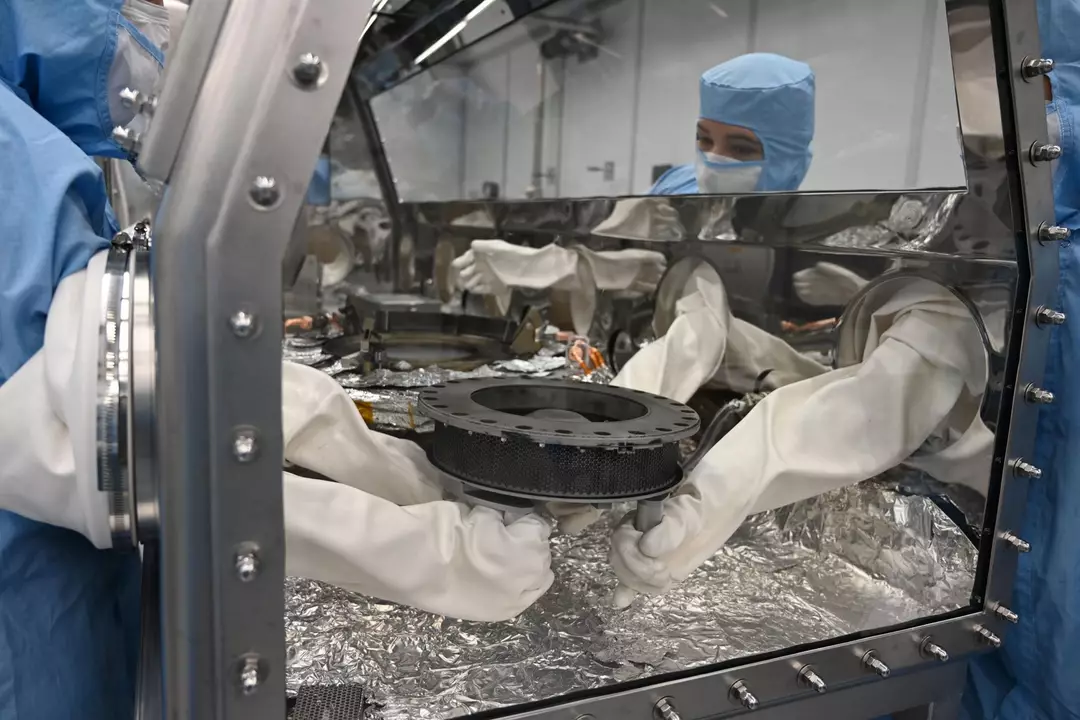
The findings, released earlier this week in the journals Nature Geosciences and Nature Astronomy, bolster the theory that some fundamental molecules making up DNA and RNA could be found in asteroid samples.
However, Bennu holds more secrets.
Researchers also uncovered an enigmatic ‘space gum’ not previously observed in asteroids, which might have contributed to the emergence of life on Earth.
This rubbery, plastic-like substance is thought to have formed through chemical processes involving radiation that heated Bennu’s parent asteroid.
The creation of carbamate, followed by its reaction with other molecules, is believed to have led to the formation of this gum.
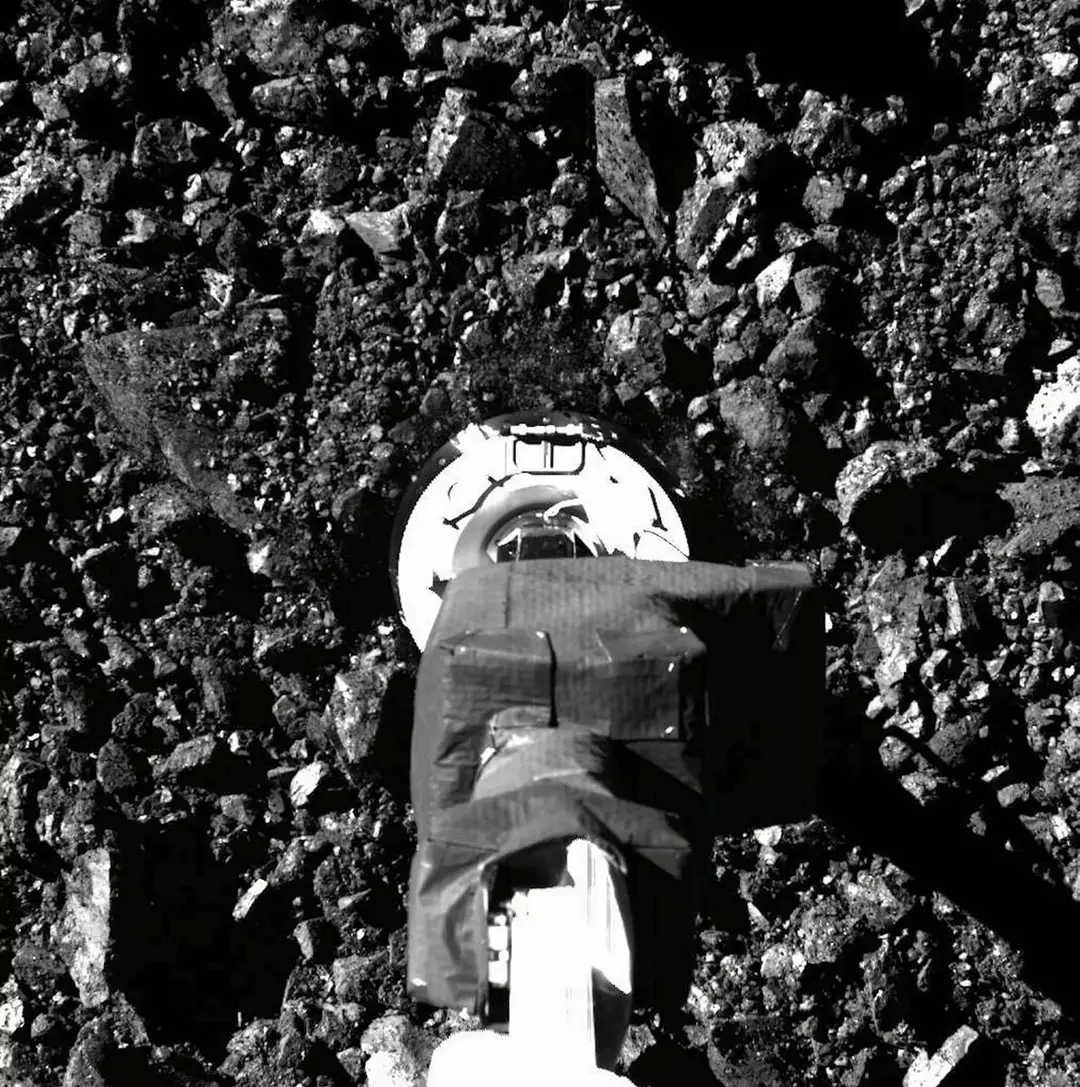
“With this strange substance, we’re looking at, quite possibly, one of the earliest alterations of materials that occurred in this rock,” commented Scott Sandford from NASA’s Ames Research Center alongside Zack Gainsforth from the University of California.
“On this primitive asteroid that formed in the early days of the solar system, we’re looking at events near the beginning of the beginning.”