


A Harvard scientist has made his assessment on the enigmatic comet 3I/ATLAS.
This rapidly moving celestial object has captivated global interest since its discovery by the NASA-funded ATLAS telescope in Chile during the summer months.
Being only the third known object to enter our solar system from interstellar space, it originates from realms far beyond our own solar neighborhood.
Researchers quickly established that the comet was moving at an impressive speed of over 41 miles per second, which is too swift to be influenced by the Sun’s gravitational pull.
Harvard physicist Avi Loeb noted several peculiarities about the object, even suggesting that 3I/ATLAS could be ‘hostile’ or of artificial origin—perhaps an alien probe.
However, NASA and other space agencies have rejected this hypothesis.
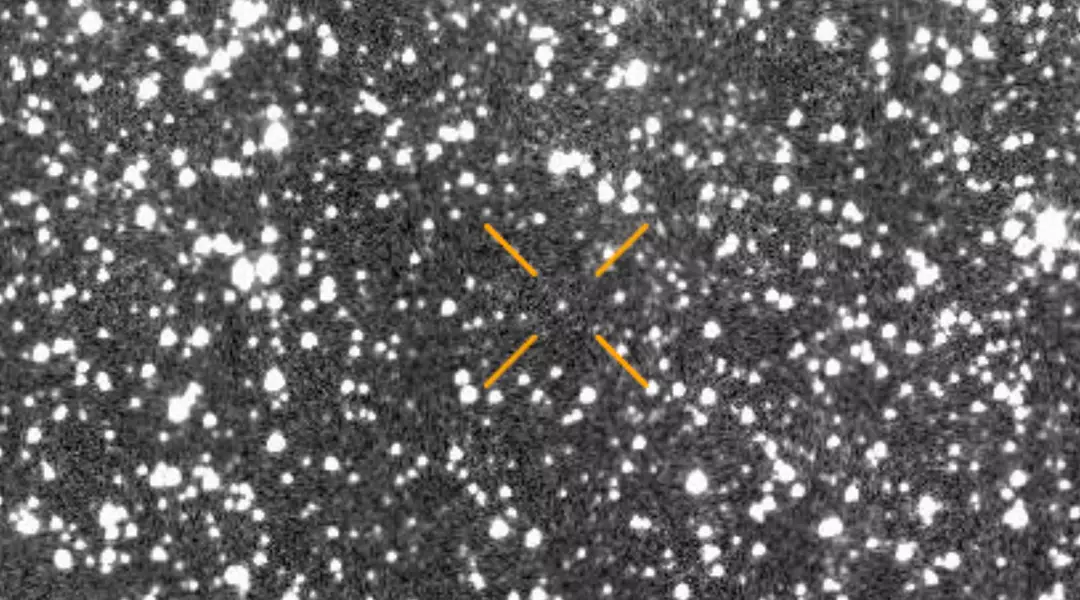
As the comet progresses through our solar system, NASA’s Hubble Space Telescope has captured new images.
On December 4, these images were shared by the US space agency, displaying the comet’s core as a bright white spot surrounded by a glowing coma of dust and vapor, which eventually forms a tail.
In the background, stars appear as elongated streaks due to the comet’s swift movement through space.
The European radio space telescope ALMA has further identified methanol in the comet, a compound associated with life’s building blocks.
The comet also contains hydrogen cyanide (HCN), a compound that, while potentially dangerous, is essential in forming amino acids and DNA bases.

In Loeb’s latest blog post, he discusses how 3I/ATLAS has one of the highest methanol-to-HCN ratios observed, suggesting it may be unusually rich in life-compatible organic compounds.
Although Loeb previously speculated on the comet’s potentially dangerous nature, recent findings seem to have shifted his perspective.
In his blog, he questioned: “Is 3I/ATLAS a friendly interstellar gardener or a deadly threat?”
He elaborated: “On a blind date with an interstellar visitor, it is prudent to observe the dating partner and decide whether it could have seeded life on Earth by carrying out interstellar panspermia… Or whether it represents a serial killer spreading poison.”
Offering his conclusion, Loeb noted: “The anomalously large ratio of methanol to hydrogen-cyanide production by 3I/ATLAS suggests a friendly nature for this interstellar visitor.”
This marks a significant observation!
The closest approach of Comet 3I/ATLAS to Earth is anticipated in a few days, on December 19.
It will pass by at a distance of 270 million kilometers (170 million miles) from Earth, approximately twice the distance between Earth and the Sun.
NASA assures that it poses no threat to life on Earth.