


Research suggests that the presence of gray hair might actually indicate the body is defending itself against cancer.
While many people find the onset of gray hair frustrating as they age, it may serve a beneficial purpose.
Despite the common dislike for gray hair, a study published in October in the journal Nature Cell Biology suggests it is part of a natural protective mechanism that develops with age to guard against DNA damage and illness, as noted by the study’s authors.
The growth of healthy hair is largely dependent on the quantity of stem cells within hair follicles and their capacity for self-renewal.
Within the follicle lies a small reserve of melanocyte stem cells, which are precursors to the cells responsible for the melanin pigment that gives hair its color. The more you know, right?
Dot Bennett, a cell biologist at City St George’s, University of London, who was not part of the study, shared her insights on the findings.
She elaborated on the process: “Every hair cycle, these melanocyte stem cells will divide and produce some mature, differentiated cells. These migrate down to the bottom of the hair follicle and start making pigment to feed into the hair.”
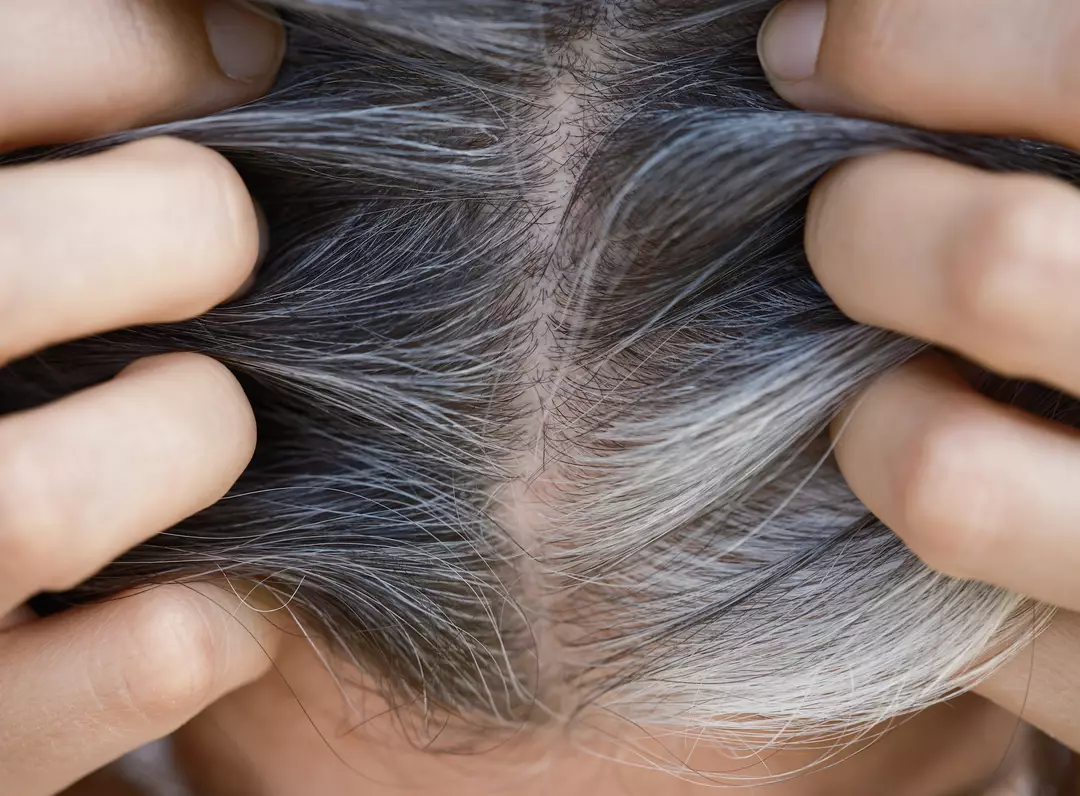
Gray hair appears when these cells fail to produce enough pigment to thoroughly color each strand of hair.
Bennet further explained: “It’s a sort of exhaustion called cell senescence.
“It’s a limit to the total number of divisions that a cell can go through, and it seems to be an anti-cancer mechanism to prevent random genetic errors acquired over time propagating uncontrollably.”

The researchers initially tested their theories on mice, examining the progress of individual melanocyte stem cells when exposed to various harmful environments. They discovered that the type of damage affected how the cells reacted.
Exposure to ionizing radiation prompted the stem cells to mature and activate the biochemical pathway associated with cell senescence.
This led to a depletion of the melanocyte stem cell reserves after exposure, especially when the risk of cancer from the ionizing radiation was increased.
The outcome was a cessation in the production of more mature pigment cells, resulting in gray hair.