


The tragic assassination of Charlie Kirk has caused significant concern for the world’s wealthiest individual, who now fears for his safety in public settings due to the volatile political environment where a single error could prove fatal.
Elon Musk, the billionaire owner of Tesla, opened up about his anxieties following the death of the conservative figure during a rare interview with Katie Miller. Miller is a former staffer from President Trump’s first term and is married to key adviser Stephen Miller.
Musk discussed his concerns on Miller’s podcast when she inquired about the last time he personally shopped for groceries. “These days, particularly in light of Charlie Kirk’s murder, there are serious security issues,” he explained.
“It’s not that I don’t want to,” stated Musk, whose net worth stands at $500 billion, “I simply can’t.”

The public assassination of 31-year-old Kirk in September has led the SpaceX founder to feel as though he is living life on ‘hardcore mode,’ where he too could fall victim to an assassin’s attack over a single misstep.
Musk conveyed to Miller: “It certainly reinforced the severity of the situation where life is on hardcore mode. You make one mistake and you’re dead.”
Musk, who is 54 years old, attended Kirk’s memorial service and a politically charged rally featuring fireworks in Arizona on September 21. He labeled those who celebrated Kirk’s murder as ‘evil’ and cautioned conservatives, saying ‘Either we fight back, or they will kill us.’
While Musk is outspoken about political matters, the interview revealed that he harbors significant regrets concerning the past year and the Department of Government Efficiency (DOGE), which he described as only ‘somewhat successful’.
Miller inquired if Musk would make the same choices if he could return to the start of the year, a period when he was frequently seen alongside Trump in the Oval Office.
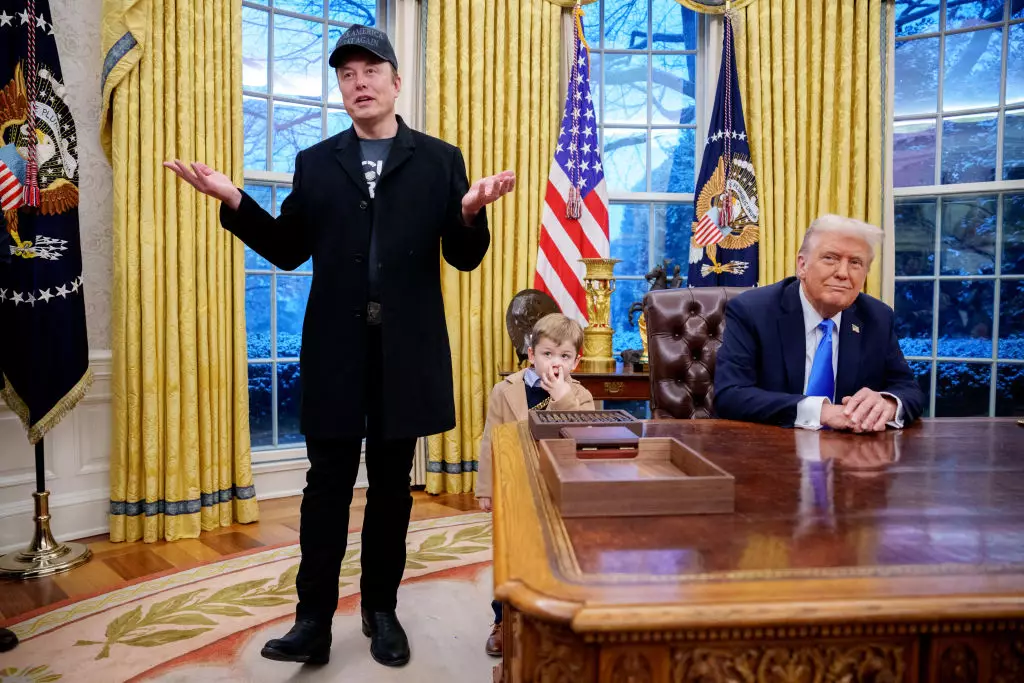
‘I mean no, I don’t think so,’ Musk replied, indicating that he would have preferred to ‘work in my companies,’ rather than becoming the public face of the administration’s extensive cuts to international aid programs and the federal workforce.
The DOGE’s aggressive cost-cutting measures provoked widespread backlash, as the unelected South African billionaire’s reduction of state resources caused significant problems for Tesla.
He acknowledged that ‘they wouldn’t have been burning the cars’ at his dealerships, which became the focal point for public dissatisfaction with his growing influence in government.
In April, Tesla announced that their sales had dropped to a three-year low following a series of vandalism incidents targeting Tesla Cybertrucks, attributing the decline to ‘changing political sentiment’.
Nonetheless, Musk defended DOGE’s mission to eliminate waste, noting that the department had halted ‘a lot of funding that really just made no sense’.