

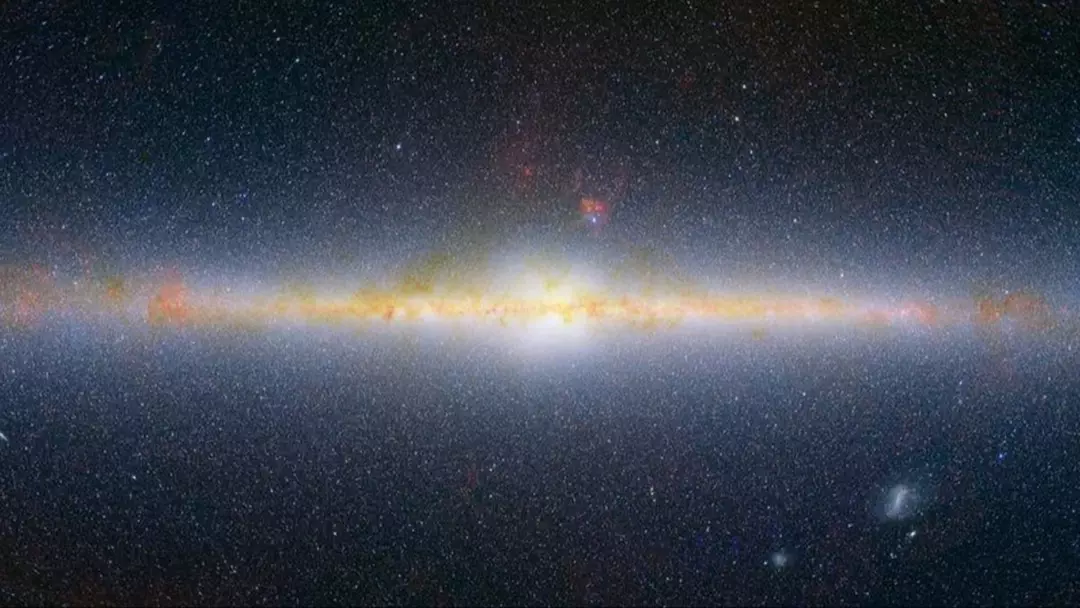
Researchers have unveiled an innovative map of the universe, offering a unique perspective on space beyond our planet.
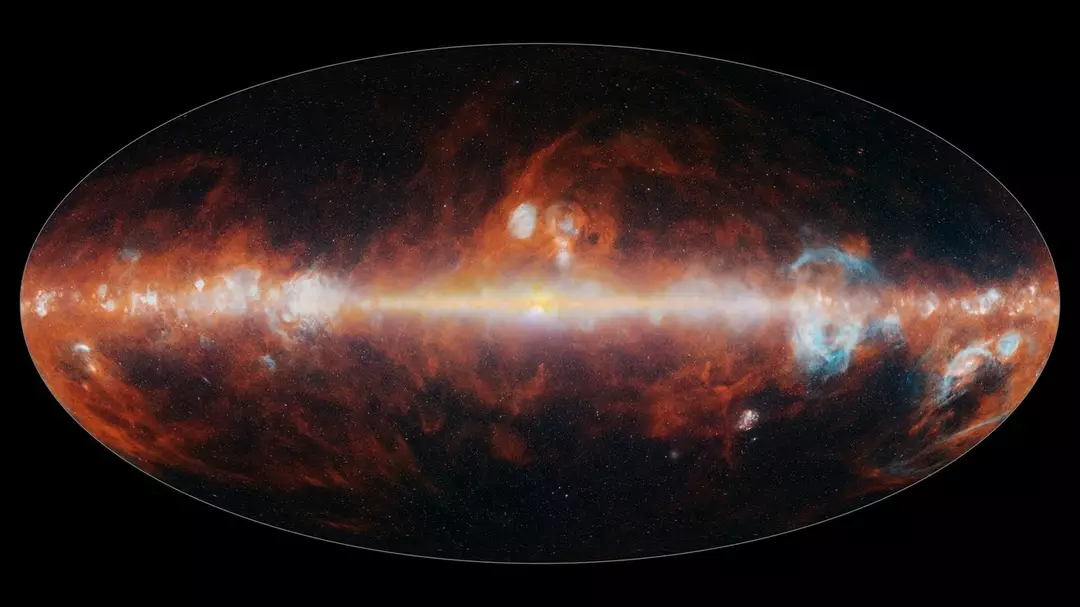
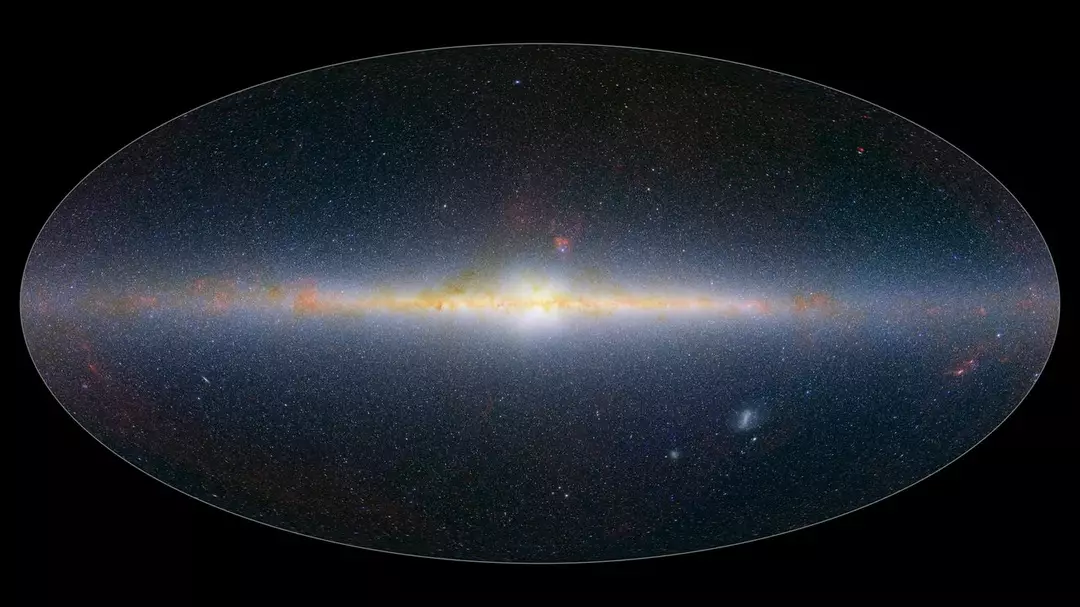
This feat has been made possible through a cutting-edge NASA telescope that is already transforming our understanding of the cosmos. The SPHEREx space telescope, launched in March, has successfully completed its initial comprehensive infrared survey of the entire sky, capturing it in an impressive 102 distinct colors.
These colors correspond to infrared wavelengths that, while invisible to the human eye, are predominant in the universe. This allows scientists to reveal hidden features of galaxies, stars, and potentially even the origins of the universe.
The revolutionary map is expected to address significant questions, such as the locations of water and life-forming elements within the Milky Way and the events that transpired in the moments following the Big Bang.
By examining the three-dimensional distribution of hundreds of millions of galaxies, researchers aim to gain insights into cosmic inflation, a mysterious phenomenon where the universe underwent rapid expansion immediately after its inception.
“It’s incredible how much information SPHEREx has collected in just six months – information that will be especially valuable when used alongside our other missions’ data to better understand our universe,” stated Shawn Domagal-Goldman, director of the Astrophysics Division at NASA Headquarters in Washington, D.C.
“We essentially have 102 new maps of the entire sky, each one in a different wavelength and containing unique information about the objects it sees. I think every astronomer is going to find something of value here, as NASA’s missions enable the world to answer fundamental questions about how the universe got its start, and how it changed to eventually create a home for us in it.”
SPHEREx orbits Earth approximately 14.5 times daily, conducting sky surveys by moving from pole to pole and capturing around 3,600 images each day. Over a period of six months, these images are compiled to produce a complete 360-degree visualization of the universe. The mission is managed by NASA’s Jet Propulsion Laboratory in California, which commenced the sky mapping in May, culminating in its initial full mosaic by December.
“SPHEREx is a mid-sized astrophysics mission delivering big science,” remarked JPL Director Dave Gallagher. “It’s a phenomenal example of how we turn bold ideas into reality, and in doing so, unlock enormous potential for discovery.”
What makes SPHEREx truly distinctive is its capability to survey the entire sky in such a diverse range of colors. While previous missions have mapped the universe, none have achieved this level of spectral detail. Each color uncovers different cosmic characteristics, from star-forming dust clouds to distant galaxies billions of light-years away.
“The superpower of SPHEREx is that it captures the whole sky in 102 colors about every six months. That’s an amazing amount of information to gather in a short amount of time,” said Beth Fabinsky, the SPHEREx project manager at JPL.
“I think this makes us the mantis shrimp of telescopes, because we have an amazing multicolor visual detection system and we can also see a very wide swath of our surroundings.”
Even more exciting, the entire dataset is publicly accessible, allowing both scientists and the general public to explore this unprecedented view of the universe—and perhaps even make groundbreaking discoveries.