


Millennia after the construction of the Pyramids of Giza, these ancient wonders continue to reveal their secrets to modern researchers.
Recent investigations have focused on the Pyramid of Menkaure, the smallest of the trio at Giza, standing at 200 feet tall and believed to have been built circa 2510 BC.
This architectural marvel is thought to serve as the tomb for Fourth Dynasty monarch Menkaure. Scholars from Cairo University and the Technical University of Munich (TUM) have potentially uncovered a concealed entrance.
Utilizing advanced scanning technology, the team identified two air-filled voids behind a polished granite surface, situated beneath the eastern facade of the pyramid.
The polished stones intrigued researchers as similar stones are only found on the pyramid’s northern side at its entrance.
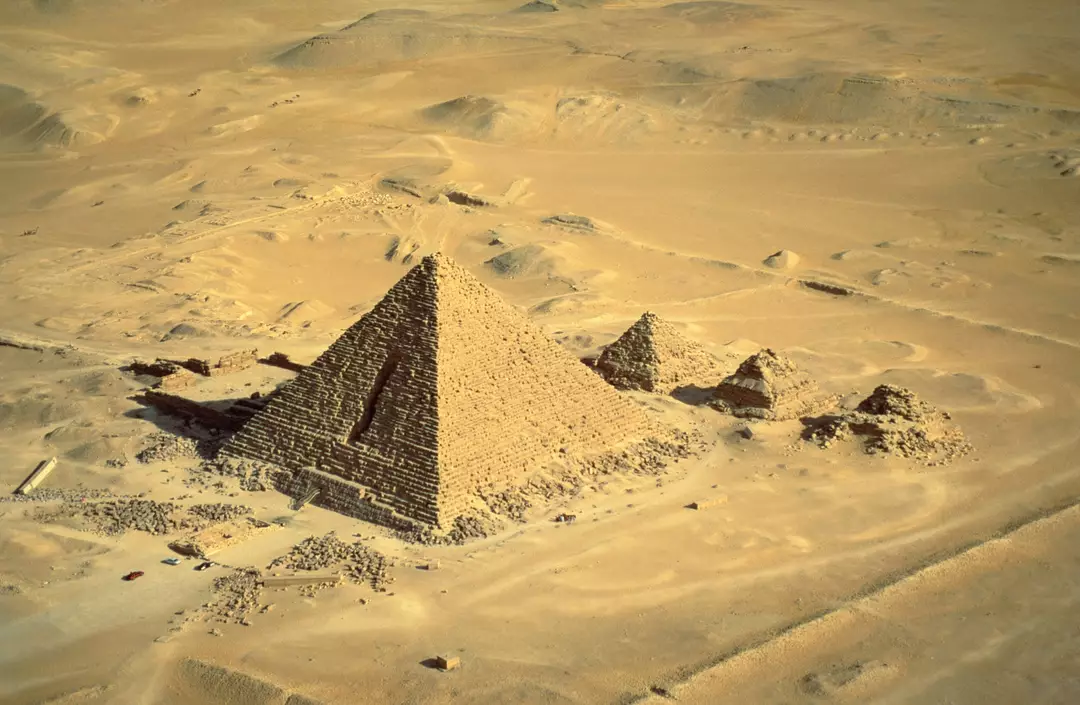
This finding suggests the presence of another, yet less recognized entrance to the pyramid. The existing entrance on the north side is already documented.
As part of the ScanPyramids project, researchers employed radar, ultrasound, and electrical resistivity tomography to examine the pyramid without causing any harm to its ancient structure.
Christian Grosse, a Professor of Non-destructive Testing at TUM, commented on the discovery: “Following the significant validation of a hidden corridor in the Pyramid of Cheops in 2023, ScanPyramids has once again succeeded in making an important finding in Giza.
“The testing methodology we developed allows very precise conclusions to be drawn about the nature of the pyramid’s interior without damaging the valuable structure.
“The hypothesis of another entrance is very plausible, and our results take us a big step closer to confirming it.”
The research was carried out under the oversight of the Egyptian Supreme Council of Antiquities and the Egyptian Ministry of Tourism and Antiquities.

Although immediate access to the newfound corridor is unlikely, previous explorations have utilized robots to film inside similar spaces.
For example, archaeologists encountered narrow shafts in the Great Pyramid that were too small for human entry.
To address this, researchers from the University of Leeds collaborated with Dassault Systèmes in France to create a robot small enough to explore these areas. The project took nearly five years but ultimately provided valuable insights.
The robot gathered nine hours of footage, offering new perspectives on the structure of the shafts.