

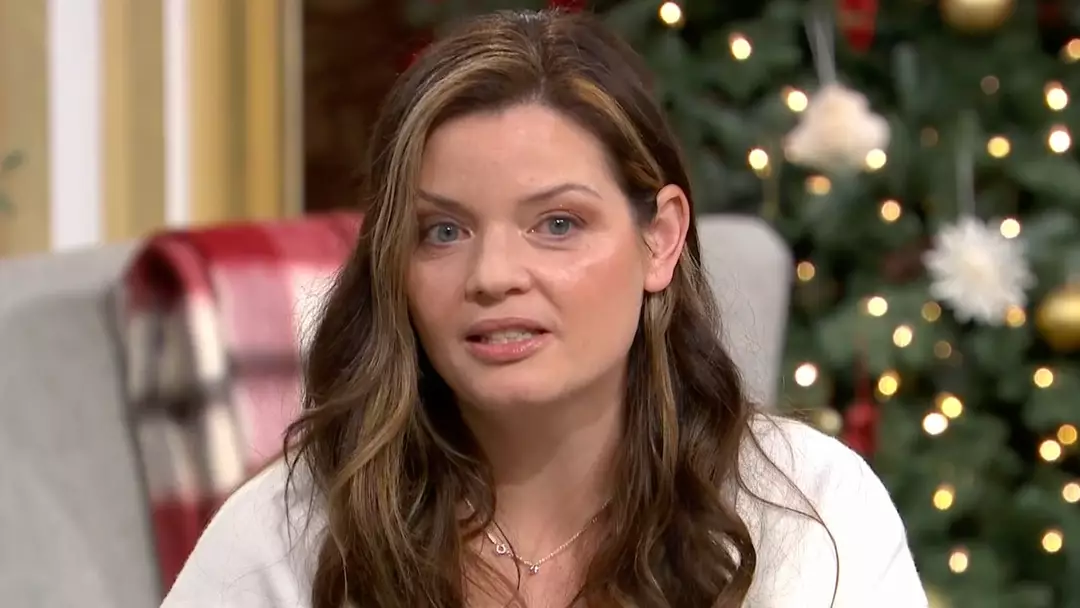
Kirsten Evans, a British woman, has been managing a rare chronic skin condition known as cold-induced urticaria (CU), for the past ten months. This condition effectively makes her ‘allergic to winter’.
Back in February, 41-year-old Evans experienced intense ‘pain’ after taking her children to school.
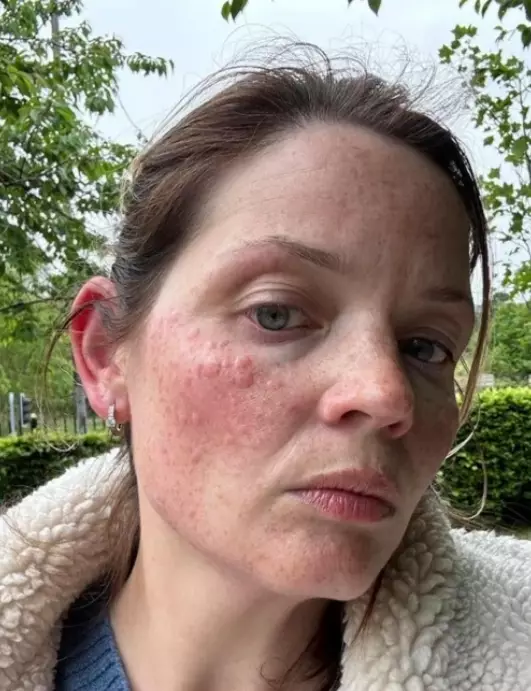
Shortly thereafter, she observed hives forming all over her body. Initially, she attributed these to stress and anxiety about returning to work after her maternity leave of nine months.
After enduring six weeks of persistent flare-ups on her face, neck, and stomach, accompanied by a sensation of being ‘on fire’, Evans consulted her doctor. She was promptly referred to an allergist.
She was soon diagnosed with a condition called cold-induced urticaria.
The Cleveland Clinic characterizes CU as an allergic reaction triggered by cold temperatures.

According to Anaphylaxis UK, this reaction happens when cold stimuli prompt mast cells in the skin to release histamine and other inflammatory substances.
Triggers for the condition can include consuming cold food or drinks, swimming in moderately warm water, or simply being outside in colder weather.
While the disorder may sometimes be hereditary, CU can occur in anyone, regardless of family history.
It is often associated with other health issues such as blood cancer, syphilis, autoimmune disorders, and viral infections like mononucleosis or chickenpox.
The American Academy of Allergy, Asthma, and Immunology (AAAAI) estimates that CU affects approximately six out of every 10,000 people.
During her interview on ITV’s This Morning, Evans elaborated on CU’s primary symptom, which is a skin rash.
This rash can appear as hives, bumps, or welts, and is often intensely itchy, red, and swollen.
Additional symptoms that accompany the disorder include fatigue, fever, joint pain, and headaches.
Severe cases of CU may lead to more serious issues like heart palpitations, difficulty breathing, and fainting.
Evans disclosed that she needs to take four antihistamine tablets daily to manage her condition.

However, she admitted to TV hosts Dermot O’Leary and Olivia Attwood-Dack that the medication only partially manages her symptoms.
“Last week I had my four antihistamines and I still flared up toward the end of the afternoon,” she mentioned.
“So it’s long exposure for me. Short exposure [the tablets] seem to work but long exposure I don’t think it’s really effective.”
The Cleveland Clinic suggests alternative CU treatments, such as epinephrine injections to mitigate severe allergic reactions, the omalizumab injection, and antibiotics.
Desensitization might also be an option, where the individual gradually exposes their body to colder temperatures over time.
“Desensitization may help your body adjust and control its reactions to cold,” experts have noted. “But don’t try it without consulting a healthcare provider first.”