

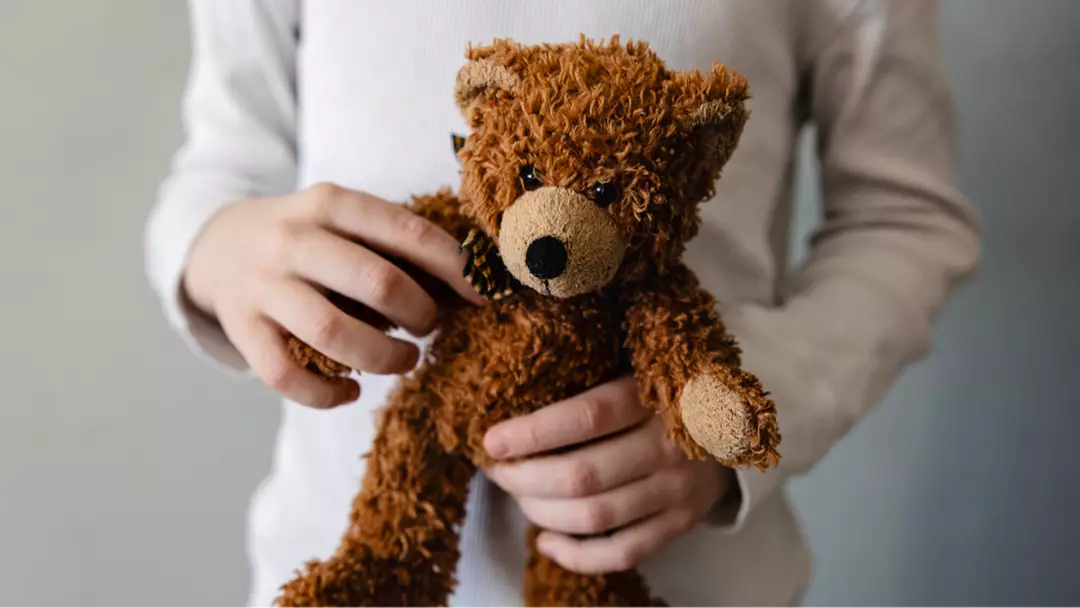
During the holiday season, it might be worth reconsidering the traditional gift of a teddy bear for young children. This timeless present is a staple in many American homes, with countless kids unwrapping one this Christmas. However, a study by French scientists suggests that these plush toys might not be fostering the best perspectives on wildlife in young minds.
According to researchers, teddy bears are an exaggerated version of real animals, characterized by their disproportionately large heads, big eyes, and elongated limbs. The study’s authors advocate for teddy bears that more accurately resemble real animals, hoping to instill a passion for wildlife in children from an early age.
Dr. Nicolas Mouquet, the study’s lead author and an ecologist at the French National Centre for Scientific Research (CNRS), explained: “For many children, their first ‘wild animal’ isn’t spotted in the forest but cuddled in their crib.”

“The features that make teddy bears so lovable, big round heads, soft fur, uniform colours, and gentle shapes, don’t resemble wild bears at all. If the bear that comforts a child looks nothing like a real bear, the emotional bridge it builds may lead away from, rather than toward, true biodiversity.”
In reality, bears in the wild are far from the cuddly image their plush counterparts project. Typically, bear-related fatalities in the US occur when these animals feel endangered by humans. Therefore, they aren’t the type of creature you’d want your child snuggling with at night.
The study surveyed 11,000 individuals, revealing that 43 percent cherished a teddy bear during their childhood. Nonetheless, researchers point out that these toys often mimic human features more than those of actual bears, presenting a missed educational opportunity to teach kids about nature.
Dr. Mouquet added, “Teddy bears follow universal cuteness rules: big heads, round silhouettes, uniform soft fur, neutral colours, and expressive eyes, features that make them instantly lovable.”

“Don’t misinterpret our results, our goal isn’t to get rid of teddy bears, far from it! These toys are wonderful companions. Instead, we think they can be used more thoughtfully.”
Dr. Mouquet’s interest in studying teddy bears is part of a broader inquiry into why certain species receive more attention and protection than others. “Teddy bears are a fun, almost universal way to explore this same bias, because they reveal which traits make us care about certain animals from a very young age,” he concluded.