

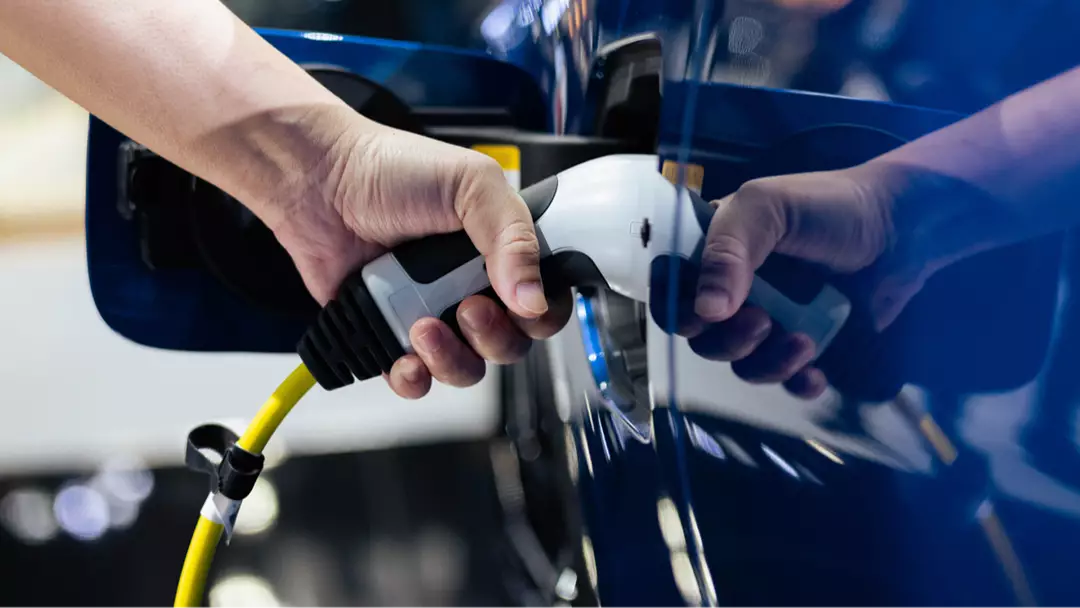
Transitioning to an electric vehicle after years of driving fuel-powered cars can be a significant adjustment for many drivers, as they may not realize that going green also involves adopting a different driving style.
However, many who make the switch to electric vehicles are unlikely to revert, even though the eco-friendly choice comes with numerous questions for new owners.
For instance, what should be done with jump cables now? And with the engine absent in the front, where should one store the spare tire?
These were some of the queries that Philip Berne from Tech Radar faced after replacing his BMW X1 with Kia’s electric SUV, the EV6.
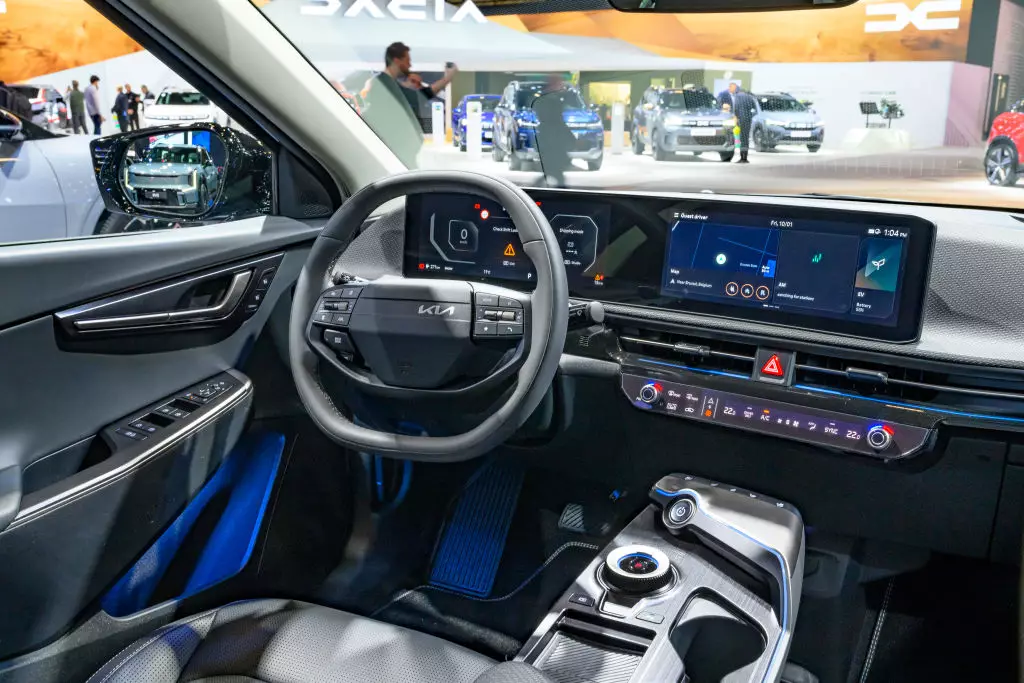
Although plugging in your car might seem more straightforward than visiting a gas station, adopting this new power method requires learning a variety of new things.
Understanding the various charging levels is crucial, as this influences how long it takes to fully charge your car’s battery.
For example, if parking directly outside your home isn’t an option, you won’t be able to quickly charge by installing a ‘Level Two’ outlet, which is convenient for overnight charging, reaching full charge in approximately eight hours.
Otherwise, you might need to rely on a ‘Level One’ charger cable, using a standard three-prong household outlet, which can take several days to fully charge the battery.
Determining which cables are compatible with your vehicle is essential, as newer electric models are moving toward an industry-standard charger.
Berne explained: “Most cars – including my 2022 Kia EV6 – use the so-called J1772 port, though the industry is shifting to Tesla’s NACS standard. The latest Kia EV6 uses NACS, so it works at every Tesla charging station and other compatible chargers.”
For a quick charge, you can utilize the more powerful chargers found at many public rest stops. Often known as ‘Level Three’ outlets, these can charge your battery to 80 percent in just 20 minutes.
However, frequent use of these rapid chargers might diminish one of the main advantages of owning an electric car: lower cost per mile than a traditional gasoline-powered vehicle.
These chargers charge you based on the kilowatt-hour (kWh) consumed, so despite the speed of charging, you might end up spending a similar amount as you would on a full tank of gas.
Berne shared: “My car has a 77.4 kWh battery. If I pay $0.50/kWh, I’d pay $38.70 to drive around 300 miles. I figure that’s roughly equal to paying $4/gallon for gas in my BMW. That’s not terrible, but it’s not exactly a savings.”
To reduce expenses, charging at home significantly lowers your price-per-mile, as the domestic electricity rate is $0.13 per kWh.

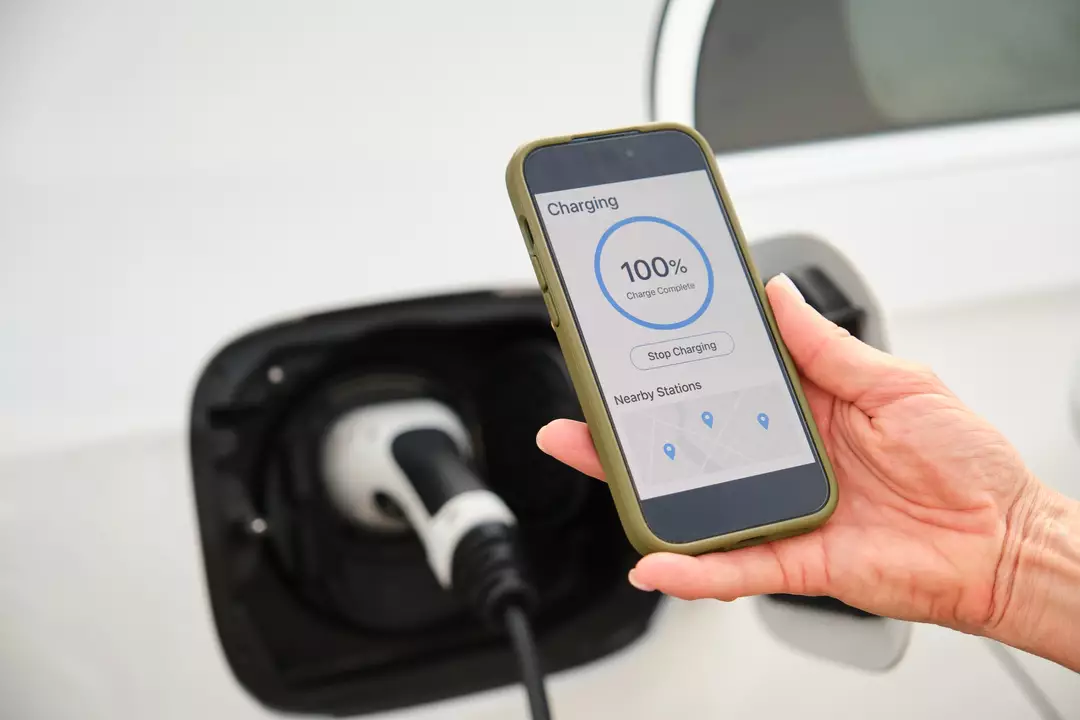
Monitoring public charging stations becomes vital for maintaining your vehicle’s range, resulting in numerous apps cluttering your phone.
Different organizations manage charging stations across the US, each requiring a separate app for access. Consequently, you might end up with multiple apps, each with different log-ins and fees.
Berne offers a useful suggestion: “The first app you need is PlugShare. It’s like Yelp for electric vehicle charging. Users report which stations are actually working, how much they cost, and how fast they charge, saving you from driving to a bad plug.”
It might seem counterintuitive to charge your car without reaching 100 percent, but going beyond 80 percent can be a time-consuming effort.
Electric vehicle chargers rapidly charge your vehicle to 80 percent, but the remaining 20 percent is filled slowly to preserve battery life.
If you’re stopping at a charging station mid-journey, charging up to 80 percent and continuing on your way is often more efficient.
As Berne described with his EV6: “My Kia hits 80 percent in 20 minutes. Getting to 100 percent takes another 20. It is much faster to drive 200 miles, charge for 20 minutes, and get back on the road than to wait for that final 20 percent.”
Unlike gasoline cars, where range estimation requires caution, in favorable weather conditions, electric vehicle range predictions are generally accurate.
While highway driving is typically more efficient than urban driving, electric vehicles can handle traffic without significantly impacting range due to their energy recuperation during braking. However, extensive use of air conditioning and other electronics can reduce mileage.
For those in colder climates, underestimating the car’s range is advisable, as batteries are less efficient in low temperatures, slowing chemical reactions and reducing performance.
To offset this, parking in a heated garage or preconditioning the battery before departure can help. Some cars offer a feature to ‘precondition’ the battery, allowing it to heat up.

If your electric vehicle suffers a flat tire, you might miss your old gasoline car, despite having more space where the engine typically resides. This ‘frunk’ offers additional storage but often lacks a spare tire.
This realization surprised Berne, who noted: “Every EV I’ve seen skips the spare to save weight and space for motors and batteries. If I get a flat, I have to call for a tow. As someone who knows how to change a tire, this makes me wary, but it’s the new normal.”
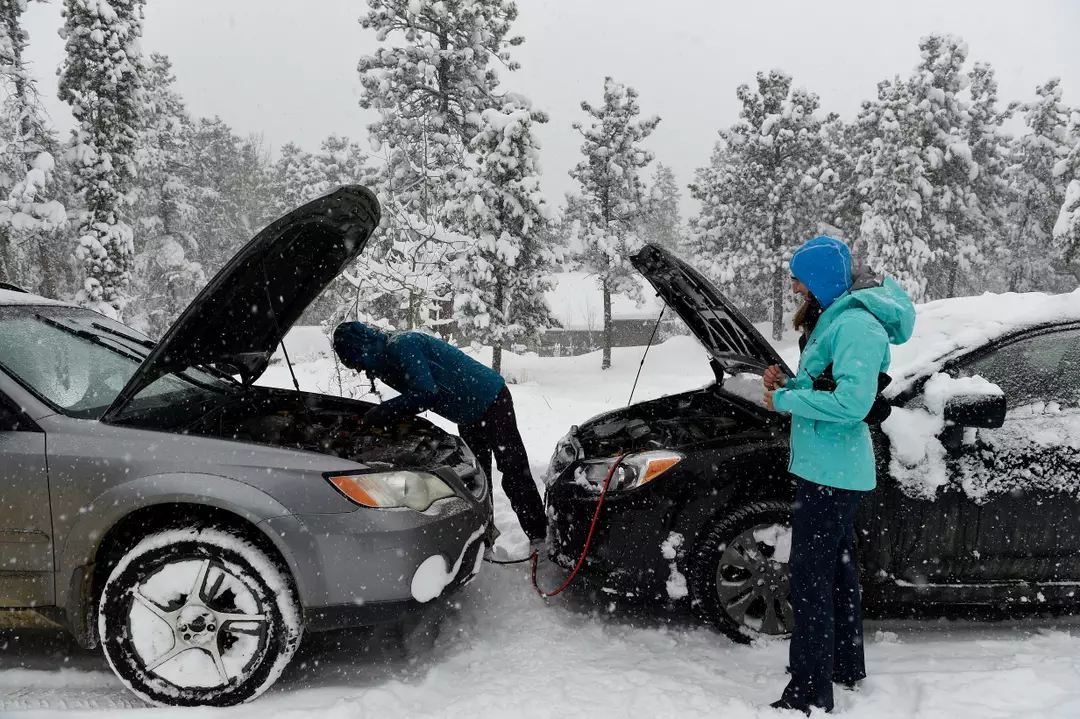
With fewer mechanical components, there are fewer potential issues in electric vehicles, but it’s still wise to keep your old car equipment. Your jump leads, for instance, are worth keeping, even without an internal combustion engine.
Berne admitted to a ‘big mistake’ by discarding his jump cables, explaining: “My EV6 has a 12V battery up front in addition to the big high-voltage battery that powers the motor. The smaller 12V battery powers the electronics, including vital systems such as the starter and the charging system.”
If this battery fails, your car won’t start or charge, so have cables ready, or face a challenging jump start.
Switching from gasoline doesn’t mean sacrificing speed or acceleration; in fact, electric cars can be surprisingly quick.
The instant torque from the battery allows your car to outperform many gasoline vehicles from a standstill. However, this can come at a cost.
Driving fast depletes the battery, and the extra weight of an electric vehicle can quickly wear out tires. Without a spare