

Warning: This article may contain images of deceased animals that some individuals may find distressing.
One of the busiest airports in the U.S. Has recently experienced another shocking incident amidst an already chaotic year.
Staff at Chicago O’Hare International Airport’s border control, who are accustomed to managing an estimated 100 million passengers annually, had an unexpected encounter this month.
A traveler believed it was permissible to carry ‘non-human primate meat’ in their luggage. Picture the customs agent’s shock when they unzipped the bag to discover a carcass inside!
This incident, uncovered by Customs and Border Protection (CBP) Chicago, left even the most experienced officers taken aback.
At O’Hare, which holds the record for the most runways globally with eight, officers detained a passenger arriving from Congo after noticing an unusually heavy suitcase.
Upon opening the bag, officers stumbled upon something far more concerning than a routine customs infraction.
According to CBP, the suitcase contained 11 pounds of beans swarming with live pests, in addition to 17 pounds of unidentified plant material…yet this was only the beginning.
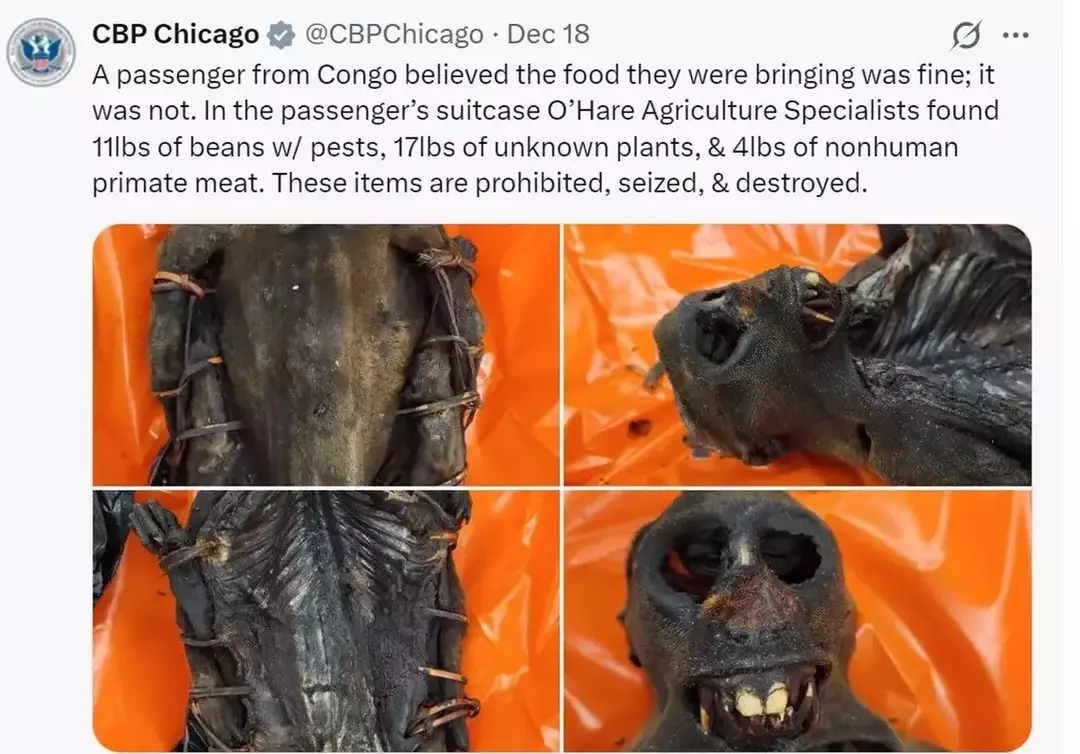
In a social media post on X, CBP revealed that officers also found numerous mummified small primates inside the luggage, with images released by the agency showing the dried animals bundled together.
Approximately four pounds of non-human primate meat were found in the bag, meat that had allegedly been packed into a suitcase and transported thousands of miles from Central Africa to Chicago.
CBP’s statement read: “A passenger from Congo believed the food they were bringing was fine; it was not. In the passenger’s suitcase O’Hare Agriculture Specialists found 11lbs of beans w/ pests, 17lbs of unknown plants, & 4lbs of nonhuman primate meat. These items are prohibited, seized, & destroyed.”
Despite the unsettling nature of the find, CBP confirmed that the passenger—whose identity has not been disclosed—was not charged with any criminal offense.
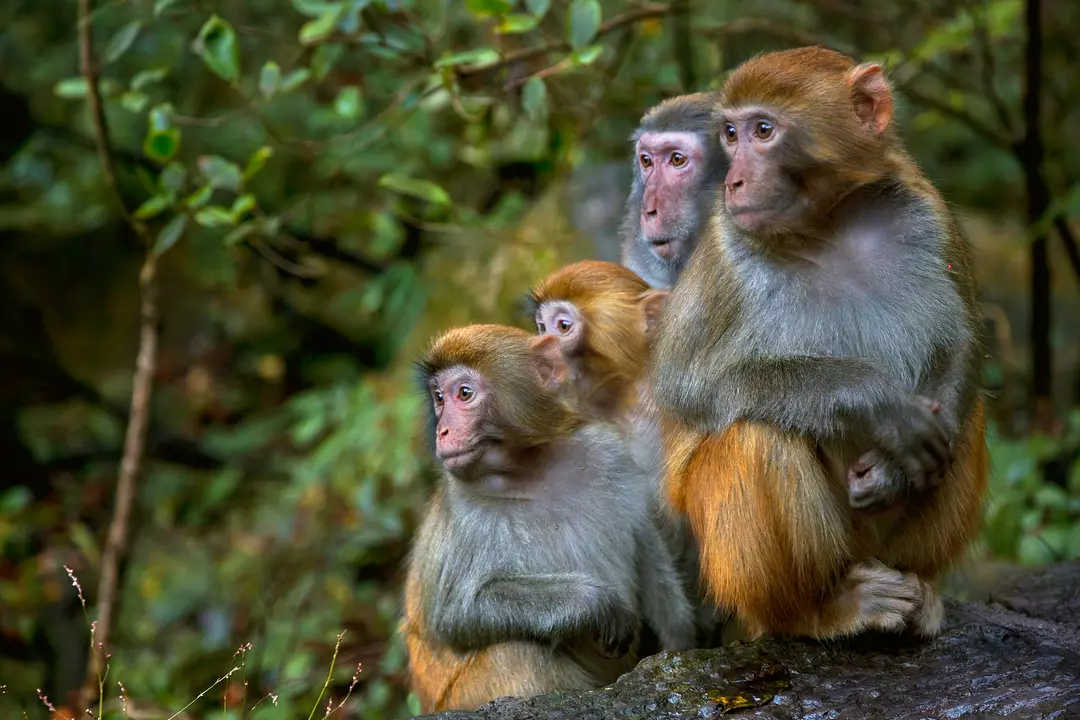
What makes primate meat illegal in the U.S.?
Bushmeat, as it is commonly known, refers to meat sourced from wild animals in particular global regions, including parts of Africa. This category includes non-human primates and other animals like rodents, bats, and duiker—a small type of antelope.
The Centers for Disease Control and Prevention (CDC) cautions that bushmeat can carry viruses and bacteria that may cause serious—and sometimes fatal—diseases in humans.