


Think you’re not on a criminal’s radar? Your distinctive walk might actually make you a target without you even realizing it.
Is it the way you carry yourself? Perhaps how your feet hit the ground or the movement of your arms?
A former Secret Service agent has shed light on this, possibly prompting you to reconsider how you walk.
Evy Poumpouras, who once served in the Secret Service, has protected notable figures such as Presidents Barack Obama and George H.W. Bush. Her commendable service on 9/11 earned her the US Secret Service Medal of Valor, and she spent 12 years with the organization.
In a conversation with podcaster Steven Bartlett on the Diary Of A CEO podcast, she delved into why certain walks make individuals more susceptible to crime, and her insights are certainly eye-opening.

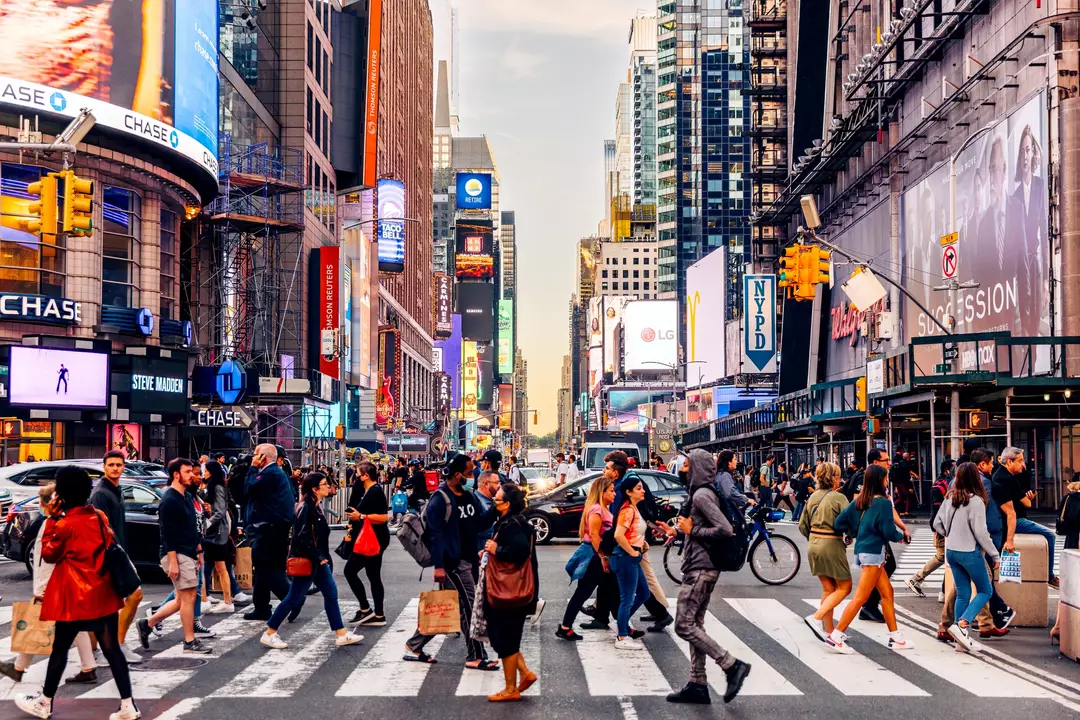
Poumpouras highlighted a study where individuals walking in New York City were recorded.
This footage was then shown to convicted felons in prison, asking them to choose potential victims based solely on their walking style.
Alarmingly, the offenders all chose the same individuals.
Poumpouras mentioned three distinct walking styles: ‘sloppy,’ insecure, and confident.
“One walk was: ‘I’m walking, I’m sloppy, I’m not paying attention, I’m just in my own space. I have really no deliberate purpose in the way I’m moving my body,’” she shared with Bartlett.
This style is what criminals reportedly consider ‘easy prey’.
The second walk doesn’t fare much better.
She described this walk as ‘small, more timid, “I’m kind of not comfortable, I’m not paying attention”’, which also made individuals targets in the study.
Felons distinctly avoided those exhibiting the confident walk—the third type observed in the study conducted in New York.
The reason? They exude deliberateness.
Poumpouras noted that criminals avoided those ‘whose walks weren’t sloppily big, weren’t too small, it was right in the middle, deliberate’.
‘”I’m in control of my body, I’m looking around, I’m present, I own my space,”‘ she illustrated the demeanor of the deliberate walker.
“That person, I want nothing to do with. Those group of people were not picked to be targets,” she explained, echoing the mindset of criminals.
Researchers from the 2013 study suggest the findings might clarify why some individuals face repeated victimization: “[S]ocial predators are attracted to external displays of vulnerability.”
So, it seems it’s time to become more aware and purposeful in our walking habits. Striding confidently might just be the key.