

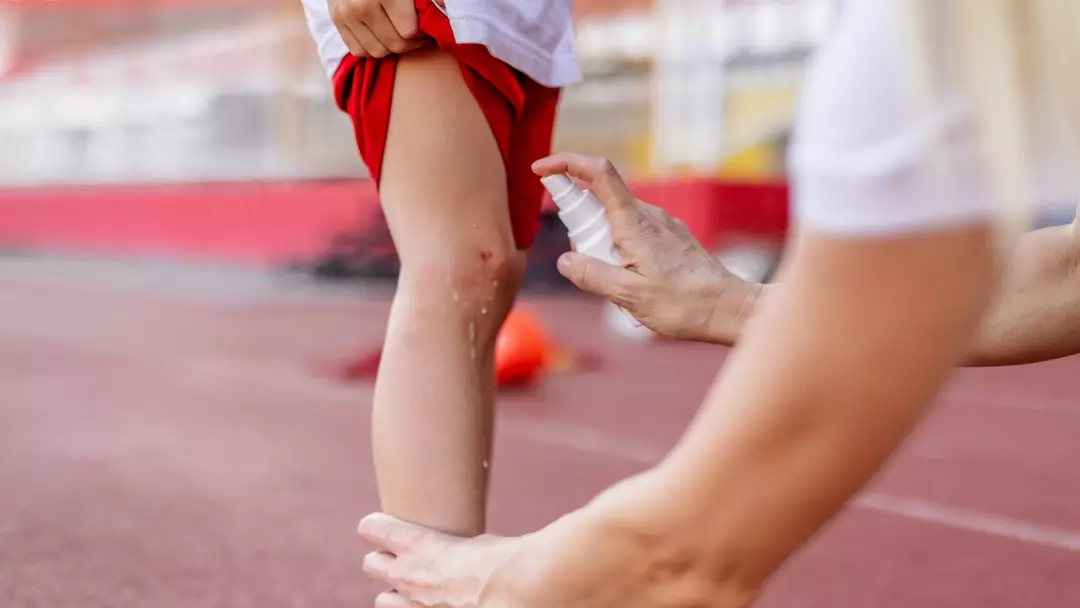
Scientists have announced the development of an innovative spray designed to accelerate the healing process of cuts and wounds.
This powder-based spray is engineered to be applied to a wound, effectively halting the bleeding.
While plasters and bandages are commonly available for wound care, this new invention offers distinct advantages over traditional methods.
Developed by researchers at the Korea Advanced Institute of Science and Technology, its primary application is intended for injuries where conventional bandages may not be sufficient.
But how exactly does this new technology function?
In essence, when sprayed onto a bleeding wound, it interacts with the blood to form a gel, sealing the wound and stopping the bleeding.
This spray is particularly useful for deep or irregularly-shaped wounds, which can be difficult to bandage effectively.
For instance, it may be beneficial in situations such as a car accident where someone sustains a significant leg injury.
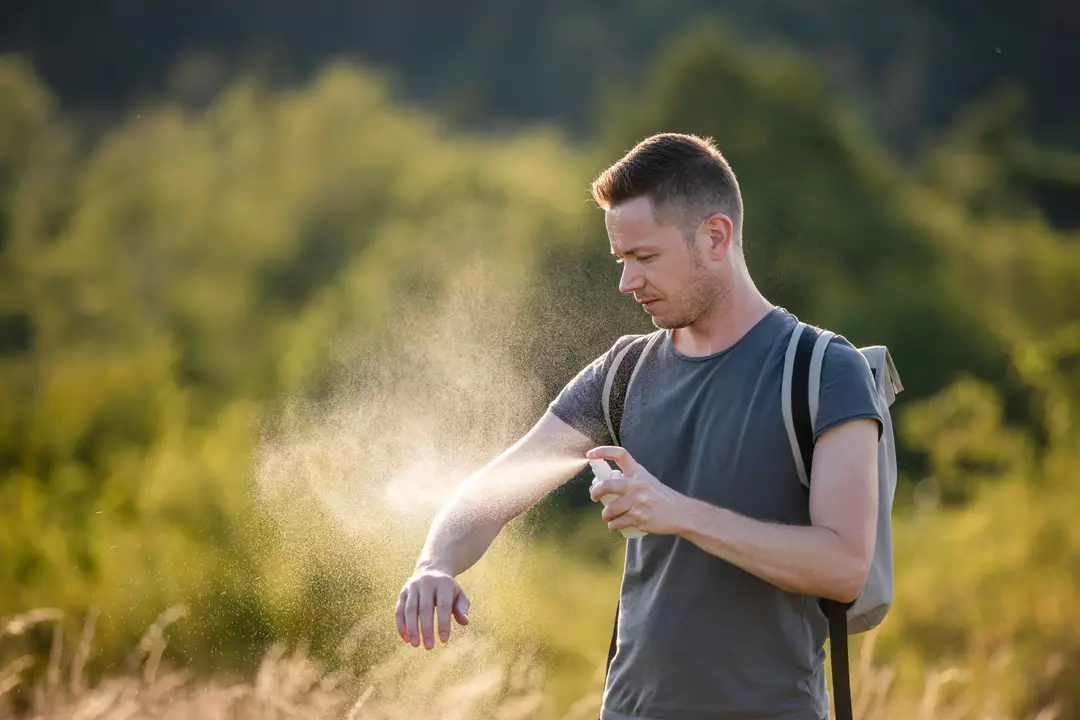
The spray is also more efficient than traditional bandaging, as it simply involves aiming and spraying it onto the wound.
Additionally, its intended use in traumatic situations includes military applications, helping treat injuries that soldiers might encounter in combat.
Kyusoon Park, a PHD candidate and an army major involved in the research, emphasized the technology’s lifesaving potential in wartime.
He stated: “The core of modern warfare is minimizing the loss of human life,” and added, “I started the research with a sense of mission to save even one more soldier.”
“I hope this technology will be used as a life-saving technology in both national defense and private medical fields.”
The research was spearheaded by Professor Steve Park from the Department of Materials Science and Engineering, along with Professor Sangyong Jon from the Department of Biological Sciences.
This powder acts as a ‘hemostatic agent,’ derived from ‘hemo’ for blood and ‘static’ meaning still, effectively stopping blood flow.
The compounds within the powder interact with ‘cations,’ positively charged ions in the blood, triggering a rapid transformation into a gel within one second to seal the wound.
Tested in challenging environments like disaster and combat zones, it is designed to withstand various stressors such as weather and temperature, making it highly applicable in emergency medicine due to its portability and ease of use.