

Warning: This article contains discussions of suicide and substance abuse which may be distressing to some readers.
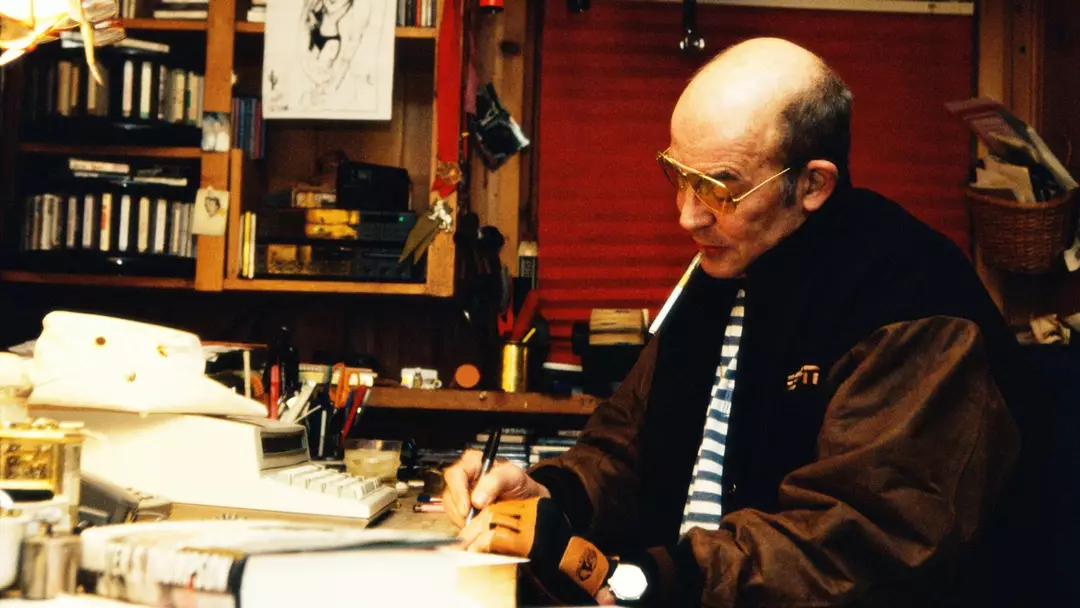
There are few writers who have managed to create their own genre, and even fewer who have made such a monumental impact on literature while indulging in a variety of substances, as Hunter S. Thompson did.
Hunter S. Thompson is renowned for inventing ‘Gonzo journalism,’ a style that blurs the lines between the writer’s experiences and the story itself. He produced some of the most compelling articles and novels that captured the chaos following the 1960s counterculture, often under the influence of a wide array of drugs.
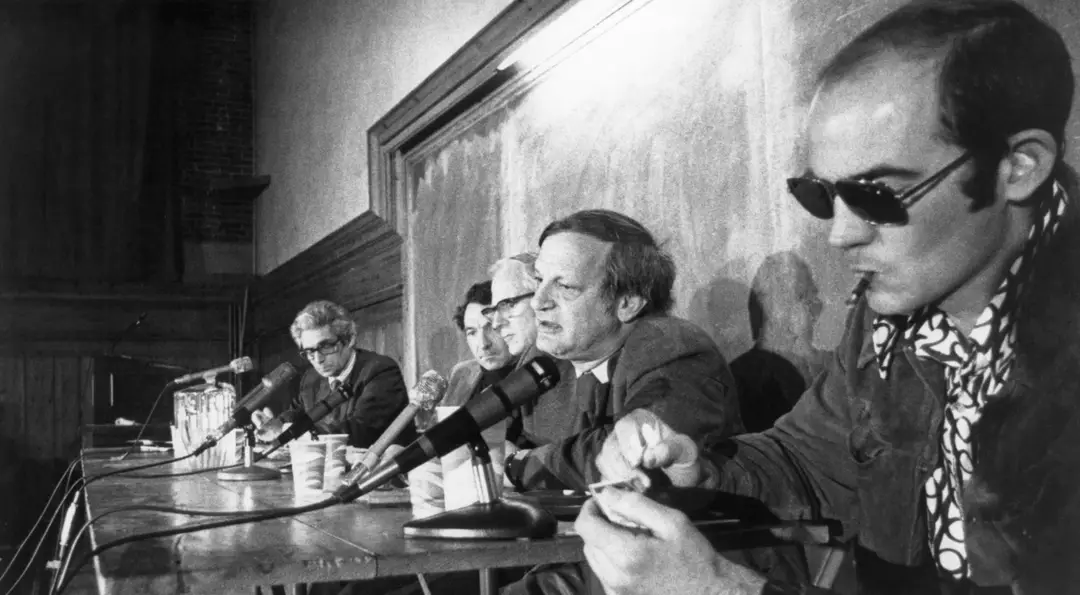
The essence of Gonzo journalism is the journalist becoming part of the story, often serving as an unreliable narrator to delve deeper into the truth. For Thompson, this often meant consuming a mix of drugs while attempting to report on events like a police narcotics conference.
Since Thompson’s passing 20 years ago at the age of 67 by suicide in his Colorado home, Owl Farm, his reputation as a drug-fueled truth-seeker has taken on a life of its own, with stories about his legendary daily routine spreading far and wide.
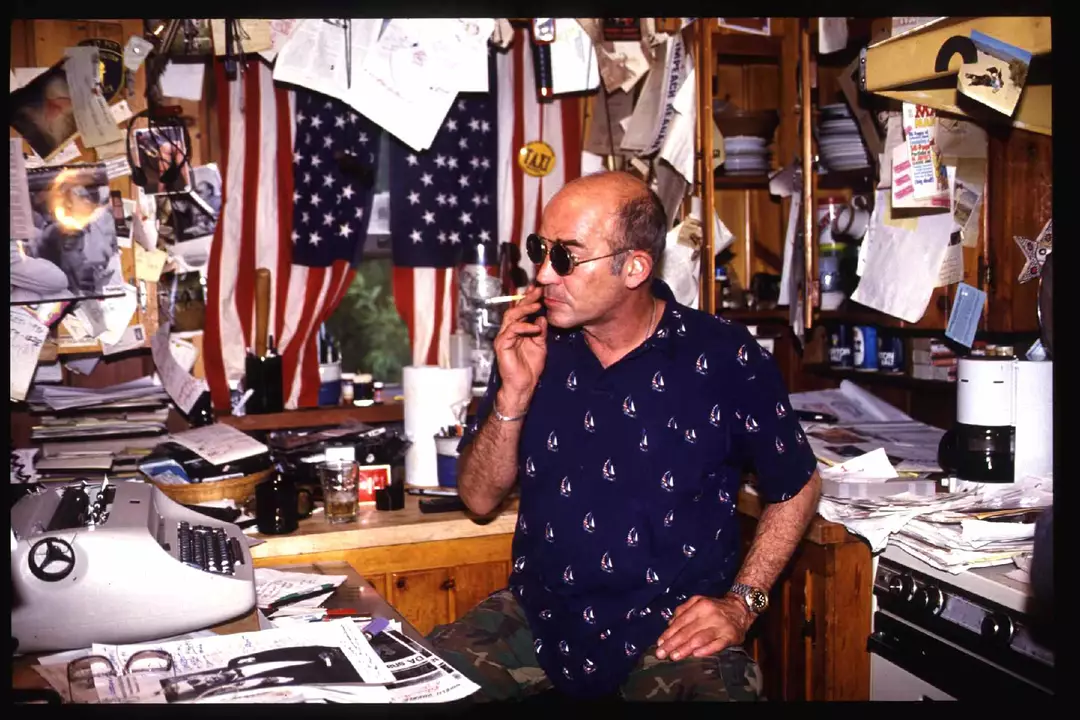
One of the most infamous tales about Thompson is his alleged daily routine, which has often gone viral. According to this account, his morning started with five rounds of cocaine within the first two hours.
This routine supposedly continued with Chivas Regal scotch and more cocaine until midnight, with the schedule noting: “Hunter ready to write.”
This often-cited routine claims the author only ‘starts snorting cocaine seriously’ at 9pm. Various journalists and respected publications, including Joe Rogan, have repeated this story, often attributing it to the outlet.
However, as someone who has extensively studied Thompson’s works and life, I must clarify that this routine is entirely fictional.
To provide context, here is the supposedly real schedule recorded by E Jean Carroll after living with Thompson in the early 1990s.
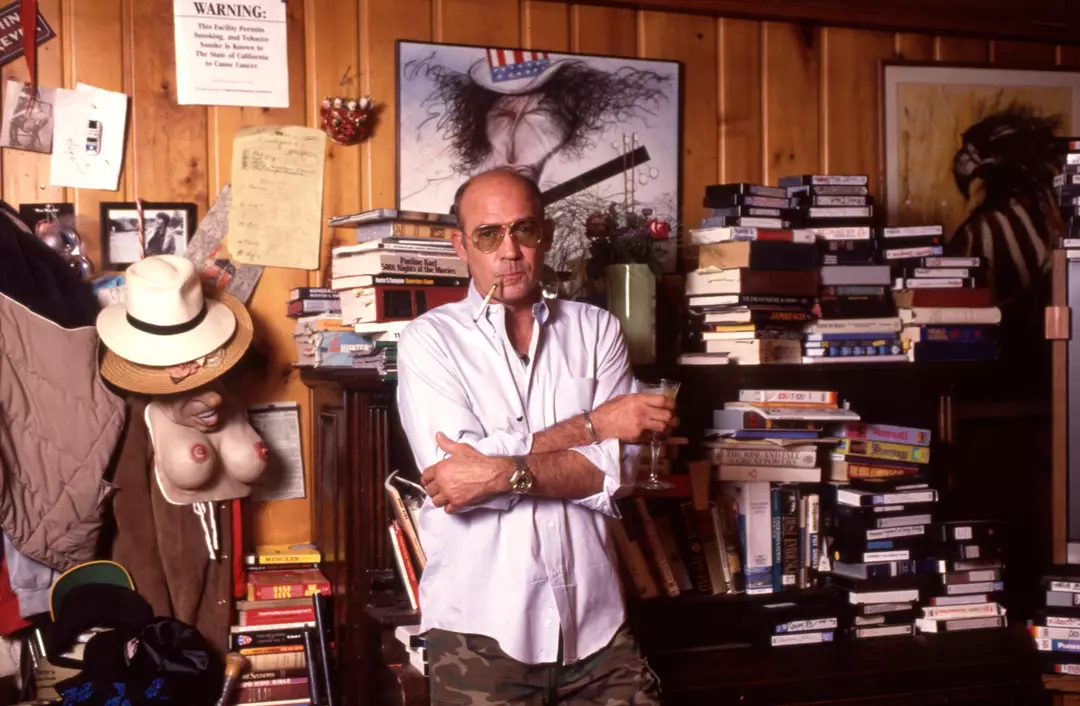
The Times of London, a prestigious publication, attributed Thompson’s supposed schedule to an AP report from 1979. However, this exaggerated routine actually originates from a 1993 biography by Carroll, who stayed at Thompson’s Owl Farm home.
Carroll, who would later be involved in a major legal case against President Trump, published Hunter: The Strange and Savage Life of Hunter S. Thompson the same year her “Ask E. Jean” column debuted in Elle. The biography was inspired by her time with Thompson.
The biography’s opening chapter is an exaggerated portrayal of Thompson’s life, with Carroll expressing disdain for him.

She asserts: “I would give anything if my subject were dead. He should be. Oh, yes. Look at his daily routine.”
Though harsh, this exaggerated narrative aligns with the Gonzo style Thompson championed, incorporating the writer’s persona into the story, while simultaneously poking fun at him.
Thompson, known for his substance use and challenging demeanor, might have appreciated this satirical homage to his style by Carroll.
The biography creatively alternates between fiction and fact to portray both the man and the myth of Hunter S. Thompson. Over the years, this satirical narrative has been mistaken for fact, but it’s likely that Thompson would have relished the irony.
Thompson was known for his outlandish claims, such as alleging in Fear and Loathing on the Campaign Trail that a Democratic candidate was given ‘ibogaine’ by a witch doctor.