

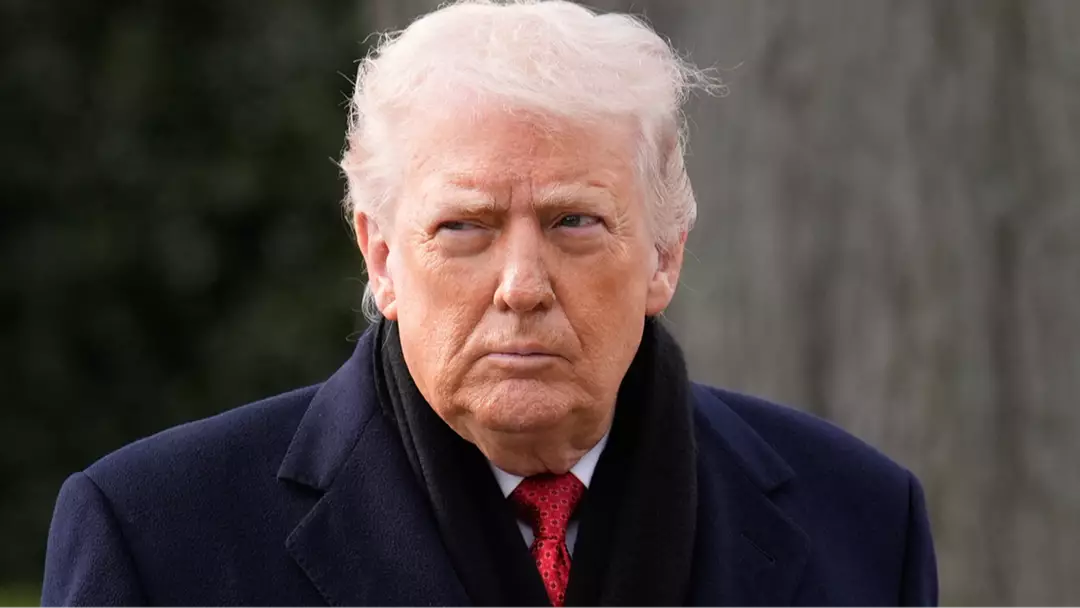
Donald Trump’s second term as President has been eventful, but it seems he hasn’t managed to win over the majority of the US public, according to a recent poll.
More than a year has passed since Trump began his second tenure in the White House, and his time there has been marked by significant activity.
Upon his return to the Oval Office, the 79-year-old swiftly initiated changes across various domains, including immigration laws, global trade policy, and even the White House’s decor.
In addition to these actions, Trump claims to have taken measures to avert wars globally and save countless lives.
However, he has also made military threats towards several countries, among them Iran, Mexico, Venezuela, and, more surprisingly, Greenland, a member of NATO.
The President has recently faced criticism from European allies due to his persistent claims that the US should annex Greenland, which is a self-governing region under Denmark’s ownership.

The Trump administration justifies this stance by claiming it is necessary to prevent Greenland from being influenced by China or Russia.
In terms of immigration policy, Trump has faced significant backlash due to the perceived aggressive tactics of ICE agents in various communities across the nation.
Some supporters, however, argue that Trump is merely fulfilling his campaign promises regarding immigration.
The widespread criticism across different areas of his presidency seems to be reflected in an AP-NORC poll from January, which assessed his overall approval rating.
The poll revealed that only about four in ten US adults approve of Trump’s job performance so far.
This figure is consistent with his approval rating from March 2025, when he resumed office.
According to the poll, as of January 8, 2026, 59 percent of US adults disapprove of President Trump’s job handling, while 40 percent approve.
The majority of American adults also disapprove of his management of several key issues, according to the survey.

The poll included a note about its margin of error, stating: “All surveys have some amount of uncertainty. We include a margin of sampling error to help capture some of that variability. Each poll has its own margin of sampling error. Subgroups, like younger or older adults, have bigger margins of error.”
Efforts have been made to reach the White House for their comments.