

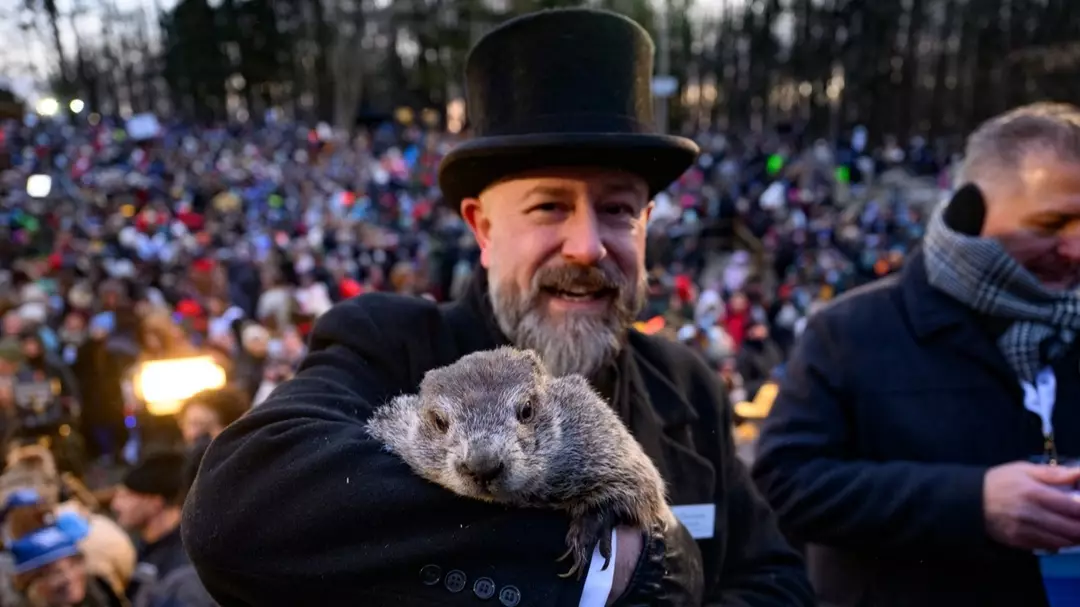
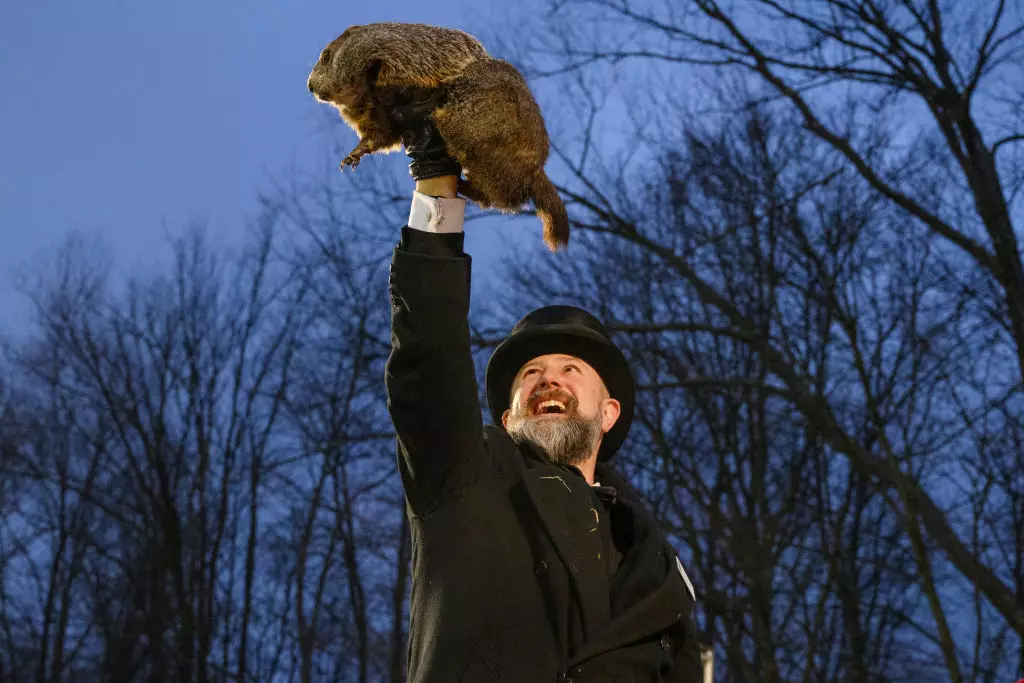
Every February, a unique event takes place in rural Pennsylvania where a group of men wearing top hats turn to a groundhog to predict the weather.
On the surface, it seems quite bizarre. However, this is Groundhog Day: a tradition that has endured through centuries of superstition, migration, religious influences, and human persistence.
Though Groundhog Day is now famous for its crowds, media coverage, and internet memes, its roots are more peculiar than most realize.
Before Punxsutawney Phil gained fame, the date was linked to Candlemas, a Christian holiday celebrated on February 2. People once believed that the weather on Candlemas could forecast the remainder of winter, encapsulated in an old English folk rhyme:
If Candlemas be fair and bright,
Come, Winter, have another flight;
If Candlemas brings clouds and rain,
Go Winter, and come not again.
Initially, there were no animals involved in these traditions. The use of animals came later when the custom reached Germany, where a hedgehog was chosen to predict the weather. If the hedgehog saw its shadow, it signified a longer winter. Upon migrating to the US, German settlers opted for a groundhog due to the scarcity of hedgehogs.
The town of Punxsutawney, Pennsylvania became part of this tradition in the late 19th century. The first reference to Groundhog Day appeared in a local newspaper in 1886, and by 1887, people began gathering at Gobbler’s Knob, establishing a new tradition. Over time, the event shifted focus from serious weather forecasting to a celebration of its own eccentricity.
Now, in 2026, the tradition persists.
When Punxsutawney Phil emerges from his burrow, marking the midpoint between the winter solstice and the spring equinox, tradition holds that seeing his shadow means six more weeks of winter. Conversely, no shadow indicates an early spring.
This year, Phil followed his usual pattern. According to Fox 5, he saw his shadow, suggesting six more weeks of winter are on the horizon, a prediction that comes as no surprise to anyone familiar with early February weather.
Groundhog Day, despite its dubious accuracy, has extended its reach beyond Pennsylvania. Variations of the event now occur across the US and Canada, featuring playful alternatives like Washington DC’s Potomac Phil.