

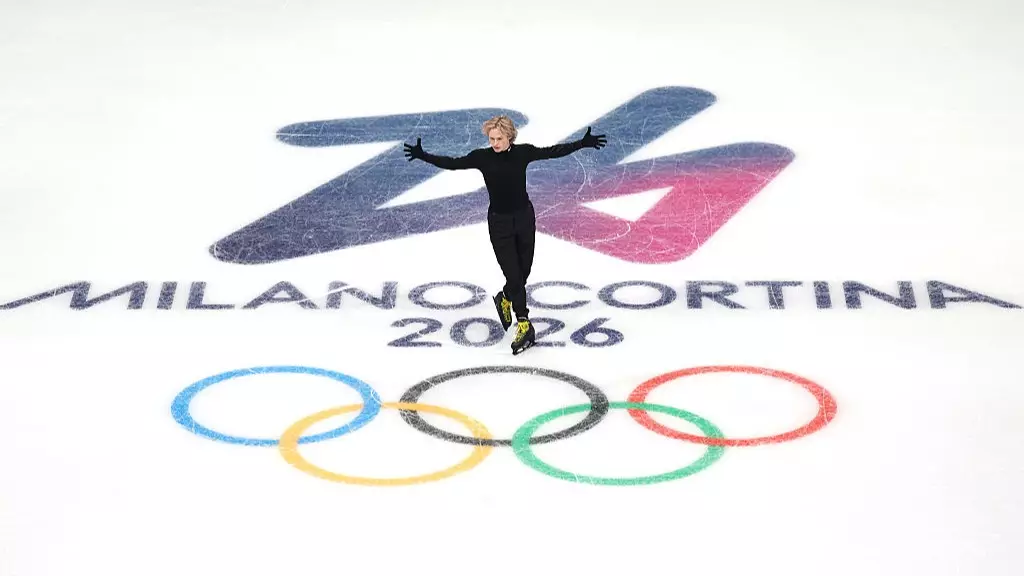
With the 2026 Winter Olympic Games set to commence in Italy, many are curious about the financial rewards athletes receive for their performances on this prominent global stage.
Approximately 2,900 athletes will compete in events across Milan and Cortina d’Ampezzo from Friday, February 6, to Sunday, February 22.
Over 90 National Olympic Committees are expected to participate in 43 different sports, ranging from figure skating to Alpine skiing, bobsleigh to curling, and snowboarding to biathlon.
Team USA aims to surpass their outcome from the Beijing 2022 Games, where they finished third, trailing Germany and the victorious Norway.
The United States secured a total of 25 medals, comprising nine gold, nine silver, and seven bronze.
If you assume Olympic athletes earn substantial incomes, you might want to reconsider.

The International Olympic Committee, which is an independent, non-profit organization governing the games, does not compensate athletes for participation.
The US government also does not fund its athletes, although it does offer cash rewards for those who win medals.
Globally, countries offer varying incentives for medalists; in South Korea, male athletes are exempt from mandatory military service, for example.
In contrast, countries like the UK offer athletes a stipend for Olympic training but provide no monetary reward for winning medals.
The financial awards for Olympic athletes depend on the medal type and vary by country.
According to CBNC, during the 2024 Paris Summer Olympics, US athletes received $38,000 for a gold medal, $23,000 for silver, and $15,000 for bronze.
Conversely, Hong Kong offers the highest rewards: approximately $768,000 for gold, $384,000 for silver, and $192,000 for bronze.
Australia offers the lowest, with payouts of $13,000, $10,000, and $7,000 for gold, silver, and bronze, respectively.
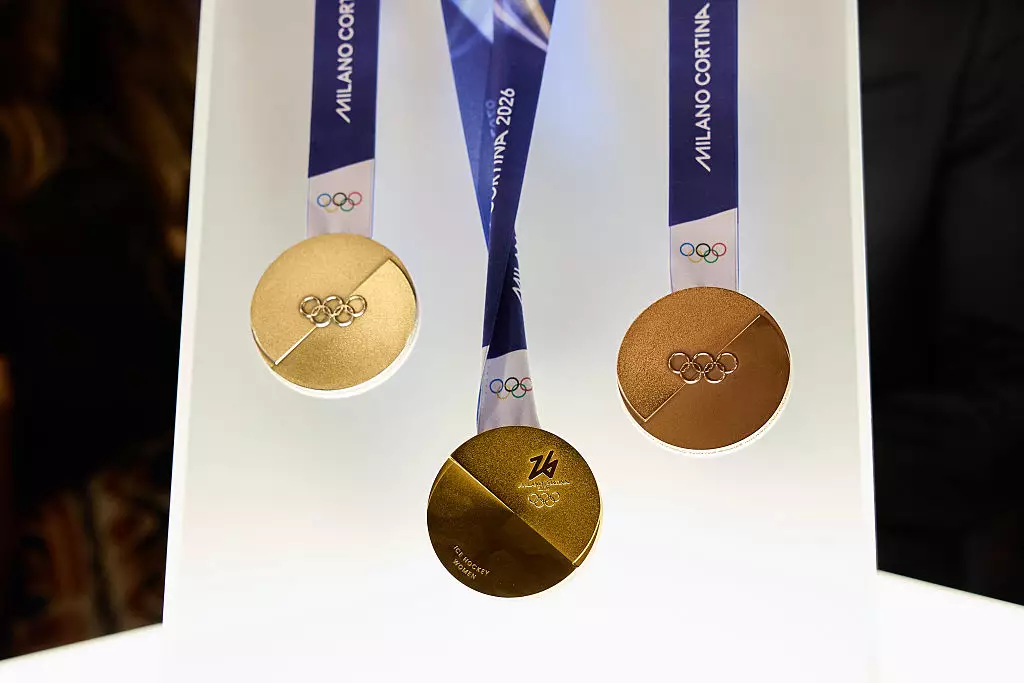
For the first time, Team USA athletes competing in this year’s Milan Cortina Olympic games and future events will receive a $200,000 payout thanks to Ross Stevens, the founder of Stone Ridge Holdings Group.
Athletes will be granted $200,000 for each Olympic Games they partake in, as reported by the Wall Street Journal.
However, they won’t receive this money immediately; they are given $100,000 twenty years after their first Olympic qualification or at age 45, whichever occurs later.
The remaining $100,000 is distributed to their families posthumously.
This arrangement provides athletes with some financial stability beyond their Olympic careers.
“I do not believe that financial insecurity should stop our nation’s elite athletes from breaking through to new frontiers of excellence,” stated Stevens.

To supplement their income, Olympians often rely on sponsorships and endorsements, capitalizing on the global attention they receive.
This is a chance for athletes to amass significant earnings, similar to Eileen Gu, who became the youngest Olympic champion in freestyle skiing at 18, securing two gold medals and one silver at the 2022 Winter Olympics in Beijing.
As reported by Sports Illustrated, by age 22, Eileen was ranked as the fourth highest-paid female athlete in 2025 by Forbes, earning a staggering $23.1 million.
Her lucrative brand endorsements include deals with Red Bull, Porsche, Louis Vuitton, and watchmakers IWC Schaffhausen.
The American-Chinese athlete, born in California, chose to represent China in the 2022 Games and continues to do so this year.