

If you are planning a trip to Europe soon, you may encounter some disruptions upon landing at the airport.
The most challenging aspect of a holiday is often the travel itself, with the stress of packing, airport security checks, and navigating large airports.
Nevertheless, these hassles are worthwhile, whether you’re savoring gelato in Italy or seeking the winter sun in Spain.
Unfortunately, if you are prone to airport stress, there is some concerning news if you are traveling to one of 29 European countries this year.
This is due to the European Union’s introduction of a new entry/exit system for travelers from outside the EU.
Instead of passport stamps, border officials will now electronically log the entry and exit of non-EU travelers in certain European nations.

This change signifies the end of passport stamping, which many travelers cherished as mementos. Unfortunately, those days are over.
Additionally, American tourists (and others) will be required to provide biometric data, such as fingerprints and facial scans.
The goal is to prevent overstaying, identity fraud, and the misuse of visa-free travel.
The EU asserts that this system will reduce waiting times at borders, offering faster checks, self-service options, and the ability to submit information in advance.
However, some passengers have already faced ‘hours-long’ delays at certain airports, such as in Geneva, Switzerland, due to the new system.
According to a report by the BBC, an organization representing airports has predicted that queue times could be as long as six hours during the summer months.

Some airports might delay the new system during peak periods until September to ease congestion.
While some countries started implementing it in early October, the full rollout is set for Friday, April 10.
This comprehensive implementation could lead to more uniform border checks, though there may be initial challenges for both staff and travelers.
Travelers are advised to plan for extra time, remain patient, and anticipate a different arrival process from previous experiences.
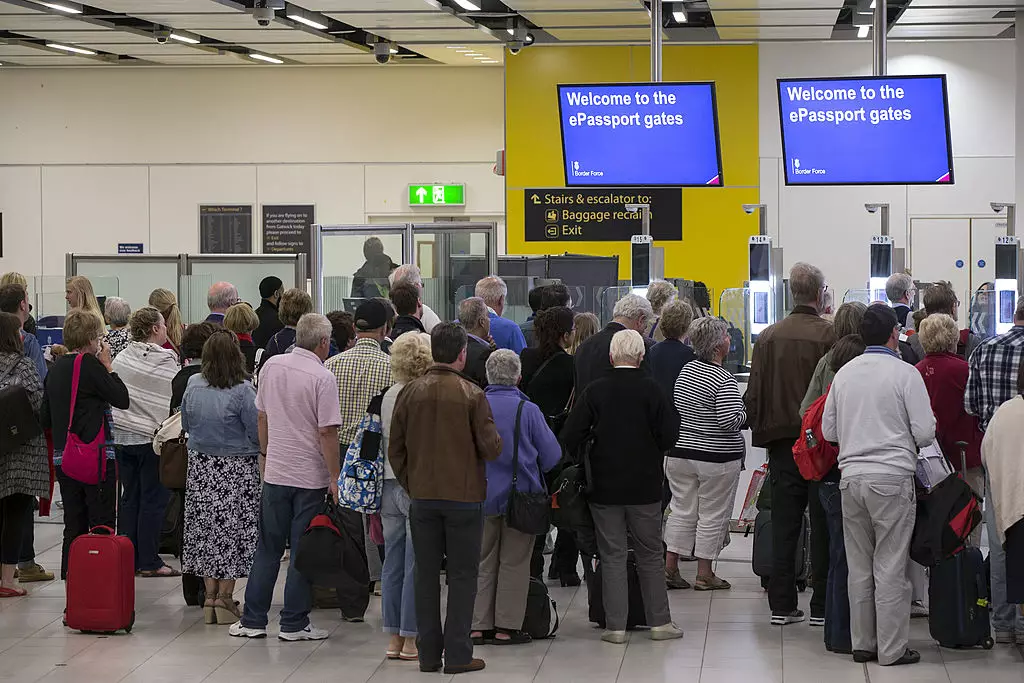
The new ESS system will be implemented across 29 European countries, so it’s important to be informed and prepared.