

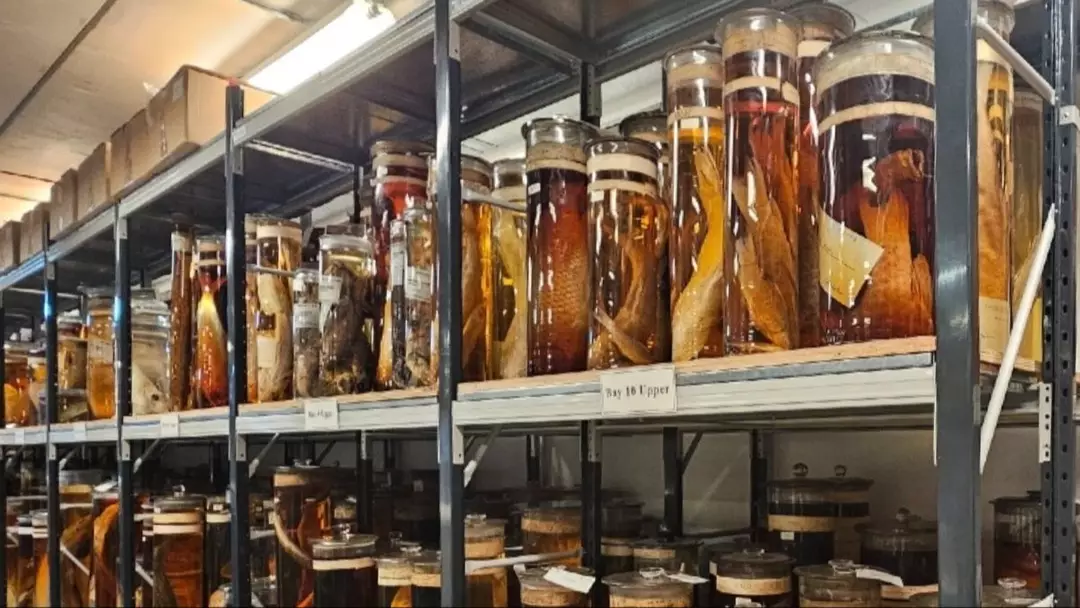
Scientists have delved into the preserved specimen jars collected by Charles Darwin during his voyage to the Galapagos, which had remained untouched for nearly two centuries.
These specimens, housed in London’s Natural History Museum (NHM), were studied using lasers to gain insights into the samples collected during Darwin’s journey on the HMS Beagle.
Darwin’s observations and collections in the Galapagos Islands significantly contributed to his development of the theory of natural selection and evolution. He gathered various specimens, including fish and reptiles, which helped shape his revolutionary ideas.
Previously, the type of preservation fluid in the jars was unknown because testing it would require opening the jars, risking the loss of preservation integrity. Dr. Sara Mosca of the STFC Central Laser Facility explained: “Until now, understanding what preservation fluid is in each jar meant opening them, which risks evaporation, contamination, and exposing specimens to environmental damage.”
“This technique allows us to monitor and care for these invaluable specimens without compromising their integrity,” she added.
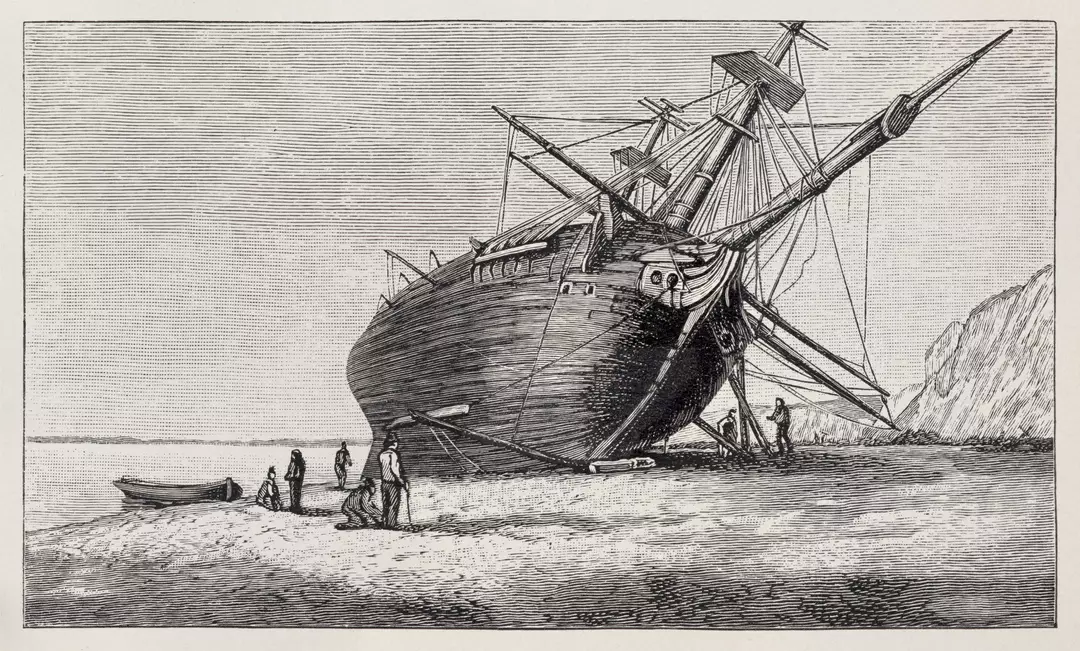
Researchers opted for a non-invasive method using lasers to analyze the fluid without the need to open the jars.
NHM research technician Wren Montgomery stated, “Analyzing the storage conditions of precious specimens, and understanding the fluid in which they are kept, could have huge implications for how we care for collections and preserve them for future research for years to come.”
The study revealed that the 46 specimens employed different preservation fluids based on the species. Mammals and reptiles were typically fixed in formalin and stored in ethanol, with the team accurately identifying 80 percent of the fluid samples using their laser technique.
Invertebrates were often preserved in formaldehyde or buffered formaldehyde, sometimes including glycerol or phenoxetol to maintain the integrity of delicate tissue samples, such as jellyfish.
Interestingly, the study showed that the preservation mixtures varied according to the prevalent practices at the time the specimens were jarred.
Montgomery, Mosca, and their colleagues noted, “Over time, the variability in recipes… has led to considerable heterogeneity across collections, with mixtures of ethanol, methanol, glycerol, and formaldehyde commonly encountered in unknown proportions, further altered by potential evaporation and contamination over time.”
The use of spatially offset Raman spectroscopy (SORS) allowed the team to determine not only the preservation fluids but also the materials of the jars themselves, offering insights into historical storage techniques.
Through this method, lasers measure the ‘excitement’ in a material’s molecular structure by analyzing the light reemitted by the molecules, similar to how light reflects off a mirror, providing a molecular ‘fingerprint.’
By taking two Raman measurements at the source and one away, scientists could gather the necessary information without the jars obstructing their view.