

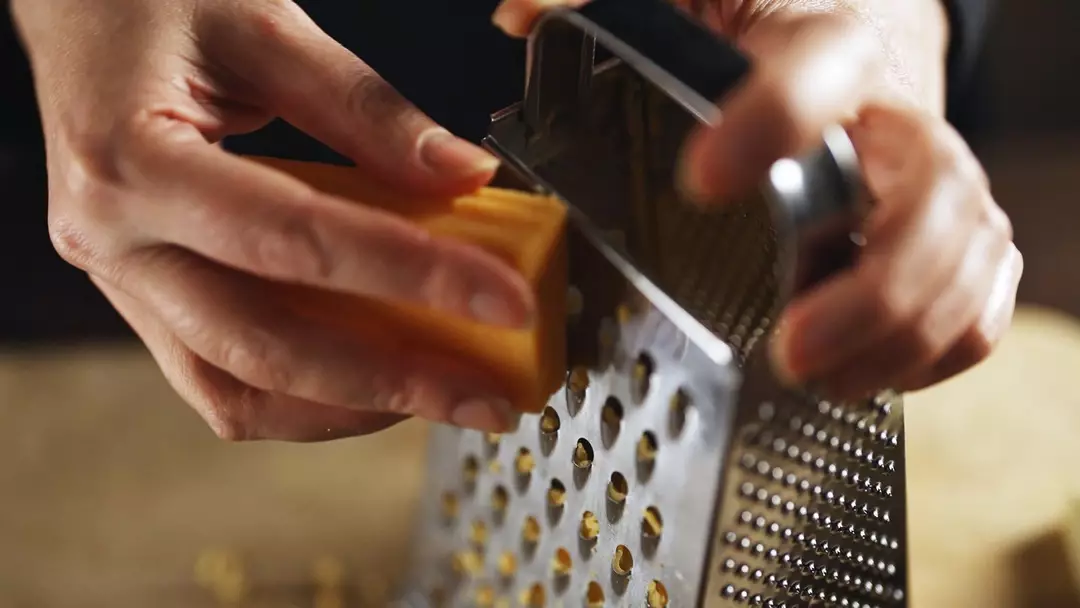
A culinary specialist has revealed the mystery behind the fourth side of a cheese grater, a kitchen tool that has puzzled many for years.
For those who have owned a four-sided cheese grater, questions have persisted regarding its various sides and their true functions.
Typically, one side of the grater is designed for large, coarse cheese shreds, while another is intended for finer grating. There’s also a side that slices. However, the side with spike-like features often leaves users confused.
Attempting to grate cheese on this particular side usually results in a mushy consistency on the surface, with no gratings falling through the holes.
This poses the question, what is its purpose?
Many curious individuals on Reddit forums such as r/CasualUK and r/Cooking sought clarification.
One Redditor asked: “What is the fourth side of a box grater for?”
The user described the sides they use most frequently, noting the coarse shred side, the finer shred option, and the side for slices. They were perplexed by the side that seems impossible to clean without getting hurt.
“I’ve been cooking for most of my life and have never used that side,” they added. “Is there a special trick I’m missing? Or do I already own a tool that performs better?”
Josh Archibald, the executive chef of culinary development at Tillamook, shared insights with Good Housekeeping, explaining that each grater side serves a specific purpose for different cheese types.
The side labeled by the outlet as ‘rough, raspy pinholes’ is said to be perfect for grating hard cheeses like Parmesan, as well as ingredients like chocolate, ginger, nutmeg, citrus, and garlic.
Archibald advises considering the role of cheese in your dish before choosing a grater side: “Is the cheese an ingredient in a batter or dough? Is it a key component of the final dish over chips, pasta, or potatoes? How much heat will the dish receive?”
Martha Stewart also provides guidance on her website regarding the uses of a grater, a tool dating back to the 1540s.
Stewart notes that the side with the smallest holes, resembling teeth, yields the finest cheese strands.
She suggests it can be used for grating ‘nutmeg and zesting citrus’, but warns that it is the most likely to cause knuckle injuries if not handled carefully and can be challenging to clean, so it should be used with caution.