


Bruce Willis’ wife has shared the concerning signs of dementia that the actor exhibited before his unexpected diagnosis.
In 2023, the family of the former action star announced that he was diagnosed with frontotemporal degeneration (FTD).
FTD is a rare form of dementia that affects the frontal lobes of the brain, impacting behavior and language skills. Unfortunately, there is no treatment to cure or slow the progression of the disease.
According to Alzheimer’s Disease International, there are over 55 million people worldwide living with dementia, with projections indicating an increase to 139 million by 2050.
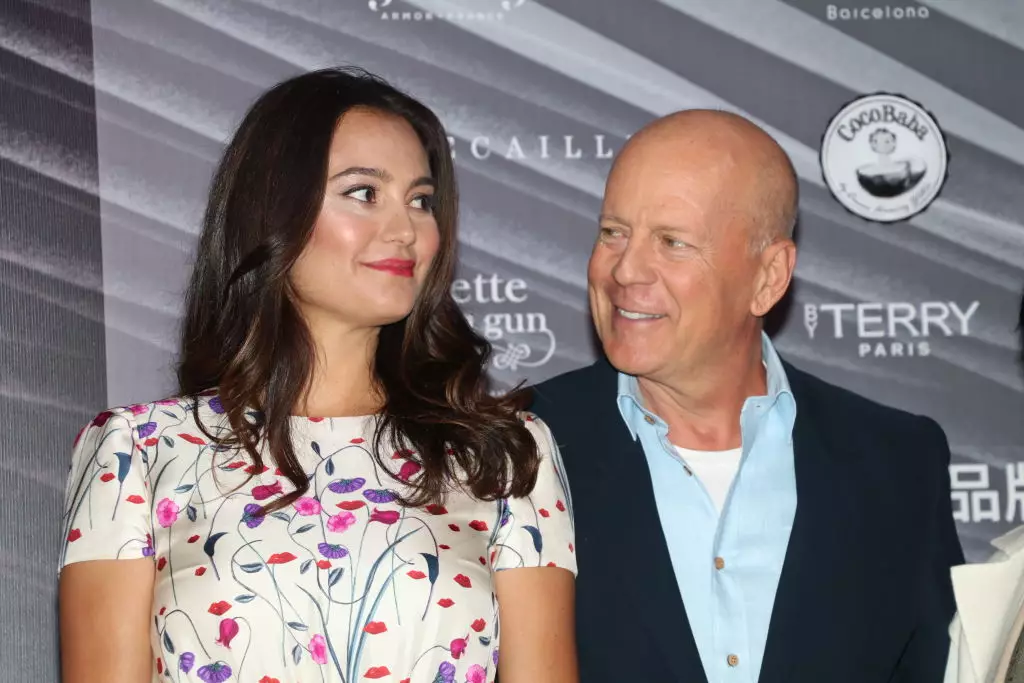
Bruce Willis’ wife of 16 years, Emma Heming Willis, spoke about the actor’s ‘alarming’ initial symptoms in a recent television interview.
During an interview’ Diane Sawyer, Emma mentioned that identifying when her husband’s symptoms began was ‘really gray,’ but it commenced with subtle yet unusual changes in his routine.
“He would always love taking the girls to school. And then those school runs just started to not happen as much,” she recalled, referring to their two daughters, Mabel Ray Willis, 13, and Evelyn Penn Willis, 11.
Instead of engaging in his usual fatherly activities, Emma noted that he would ‘say nothing.’
“For someone who was very talkative and very engaged, he was just a little more quiet and when the family would get together, he would kind of just melt a little bit,” Emma continued.
Emma found it challenging to understand, wondering if the miscommunications could be related to Bruce’s hearing loss in one ear, a result of a stunt during the first Die Hard film.
The second ‘haunting’ symptom she observed was the return of his childhood stutter. Bruce had battled a speech impediment and could ‘hardly talk’ in his youth, as he disclosed in a biography.
“I started noticing that Bruce’s stutter did reappear. I definitely started noticing it rev up a little bit more,” Emma recalled.
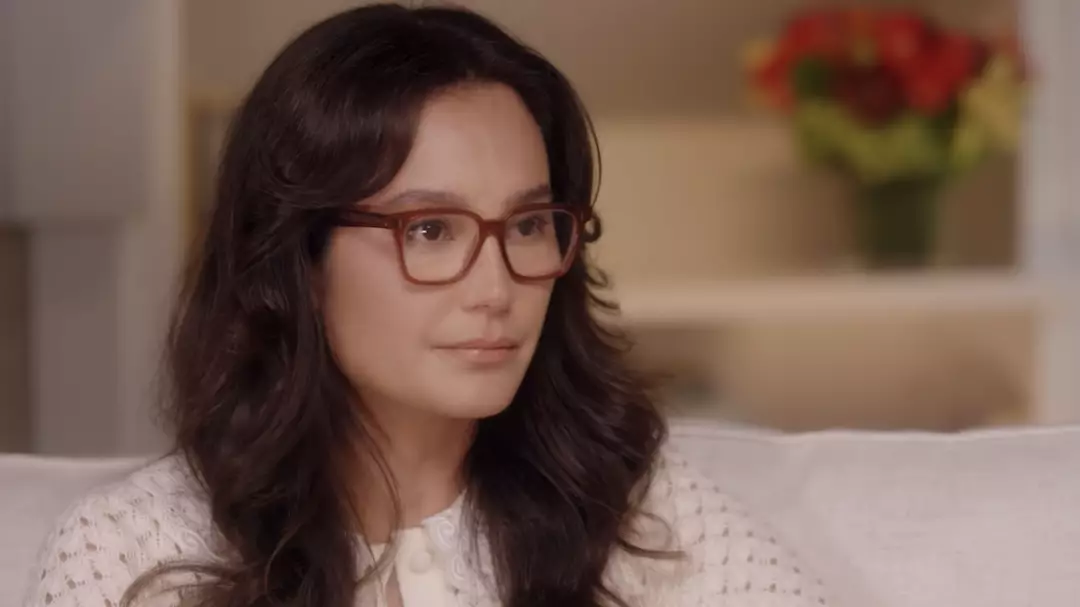
The most troubling shift, however, was the disappearance of his typically ‘very warm and affectionate’ character.
Instead, he appeared ‘removed’ and ‘very cold,’ a transformation that Emma described as ‘alarming and scary.’
The couple also began facing ‘marital issues’ that they had not encountered before.
When discussing these issues with Willis and asking about his well-being, Emma mentioned he would ‘just dismiss it,’ leading to ‘bumpy and very confusing’ times.
In another part of the interview, Emma disclosed that Willis is still physically active and overall healthy, although his brain is ‘failing him.’
The family has had to find new ways to communicate with him as his ‘language is going.’ However, they sometimes catch glimpses of the Bruce they once knew when the ‘twinkle in his eye’ briefly returns.
“Not days, but we get moments,” Emma explained. “It’s his laugh, right? He has such a hearty laugh. And sometimes you’ll see that twinkle in his eye, or that smirk, and I just get transported.”
She added: “And it’s just hard to see, because as quickly as those moments appear, then it goes. It’s hard. But I’m grateful. I’m grateful that my husband is still very much here.”
After taking on the role of Willis’ primary carer, Emma was motivated to write a book detailing her family’s journey, titled The Unexpected Journey: Finding Strength, Hope, and Yourself on the Caregiving Path.
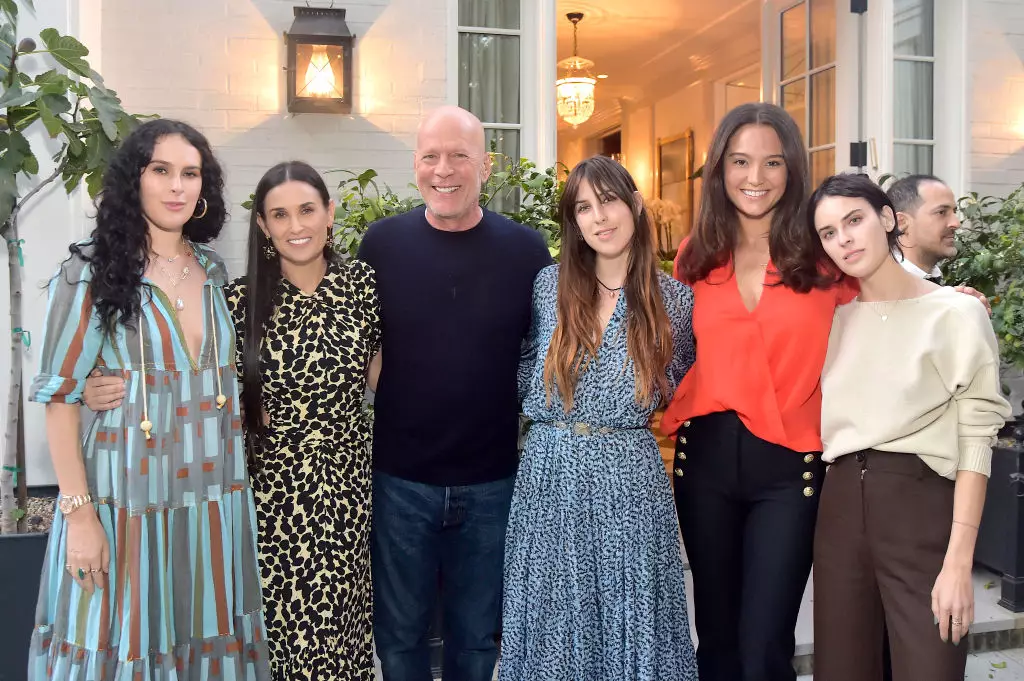
Reflecting on her transition to being Willis’s carer, she said: “Those early stages were deeply isolating. I struggled with a sense of powerlessness, feeling as if I had no control over what was happening to my family.
“At the same time, I was grappling with grief, the loss of the life I had known, all while raising our two young daughters.”
When the family publicly disclosed Willis’ diagnosis in 2023, they were ‘met with an outpouring of kindness and global support’, according to Emma.
She now wishes she had ‘taken the leap of faith and asked for help sooner,’ noting: “Everything changed when I found the right information, resources, and community to lean on.
“I began to realize that, even in my new role as a care partner, I still had agency. And with that, I started to find joy, see beauty, and choose hope.”