

A 36-year-old woman believes her life was saved by her dog, Ceto, who alerted her to a critical symptom that resulted in her breast cancer diagnosis. Chase Johnson shares her Labrador-Retriever mix with her husband, Ben Byrn, 48, and they were already aware of Ceto’s special nature.
Previously, Ceto had signaled to Ben that something was amiss with his health by behaving anxiously and following him closely, leading to Ben’s colon cancer diagnosis.
In January 2021, Ceto’s anxious behavior reappeared.
Chase, an attorney from North Carolina, described Ceto as normally calm and relaxed. “Ceto is a pretty calm dog; he never gets anxious and is always pretty chill,” she said.
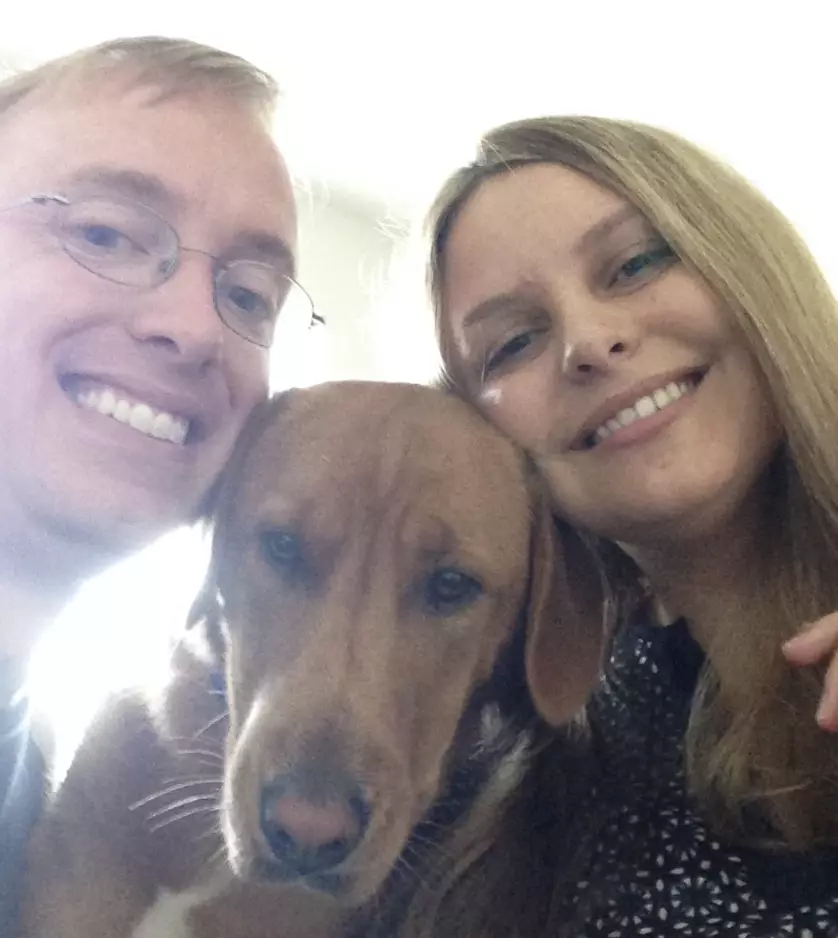
“We were trying to figure out what was going on, until he got so worked up one day and poked his nose to my breast,” Chase explained.
When Ceto nudged Chase’s breast a second time, it caused her pain. “He did it a second time, which hurt; that is when I started searching and found the lump,” she added. “If he had not done that, I would not have found it.”
This prompted Chase to visit her doctor. She recalled, “I told them that I had found a lump, but they told me I was too young for cancer.”
Discontent with this initial response, Chase sought a second opinion from a physician associate at Duke University Hospital, though the physician initially agreed with the first assessment.
“Again, I was not satisfied with that answer,” said Chase. “I told her how Ceto had alerted my husband to the fact that he had cancer, so she agreed to send me for a mammogram.”
Following several appointments, Chase was diagnosed with triple-negative breast cancer, a particularly aggressive form.
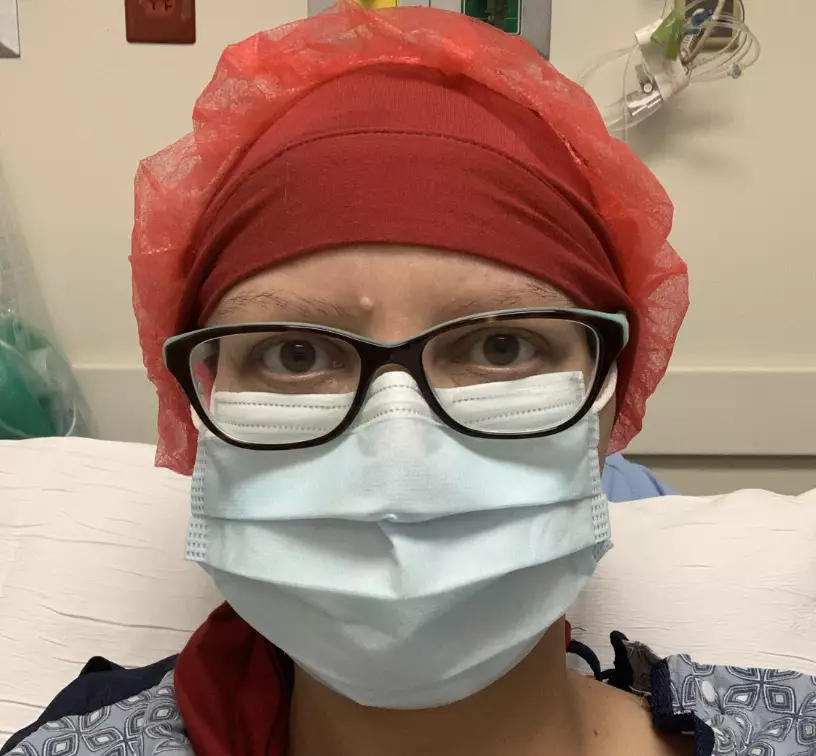
Thanks to her quick action, Chase underwent chemotherapy, radiotherapy, a lumpectomy, and lymph node removal, all of which were successful. Currently, she shows no signs of cancer, a scenario that might have been different had she delayed seeking medical advice.
Chase said, “After my diagnosis, I met with my oncologist, she said if I had waited till May, that we would be having a very different conversation, and I may not have survived.”
Reflecting on her experience, Chase emphasized, “If I didn’t have Ceto, and if I didn’t have that past experience with my husband, I might not be here.”
“You have to be your own advocate,” she advised. “I was told by experts that I was too young and cancer didn’t hurt – then I received this diagnosis.”
She is now participating in a Cleveland Clinic clinical trial for a preventive breast cancer vaccine.
G. Thomas Budd, MD, principal investigator of the study, remarked: “It’s a hopeful time for all of us concerned about this serious disease.”
He noted the developments in treatment, stating, “For triple-negative breast cancer, until just a few years ago, chemotherapy was our only systemic option beyond surgery and radiation.”
“Recently, immunotherapy has shown benefit when combined with chemotherapy, which makes exploring a vaccine strategy even more significant.”