

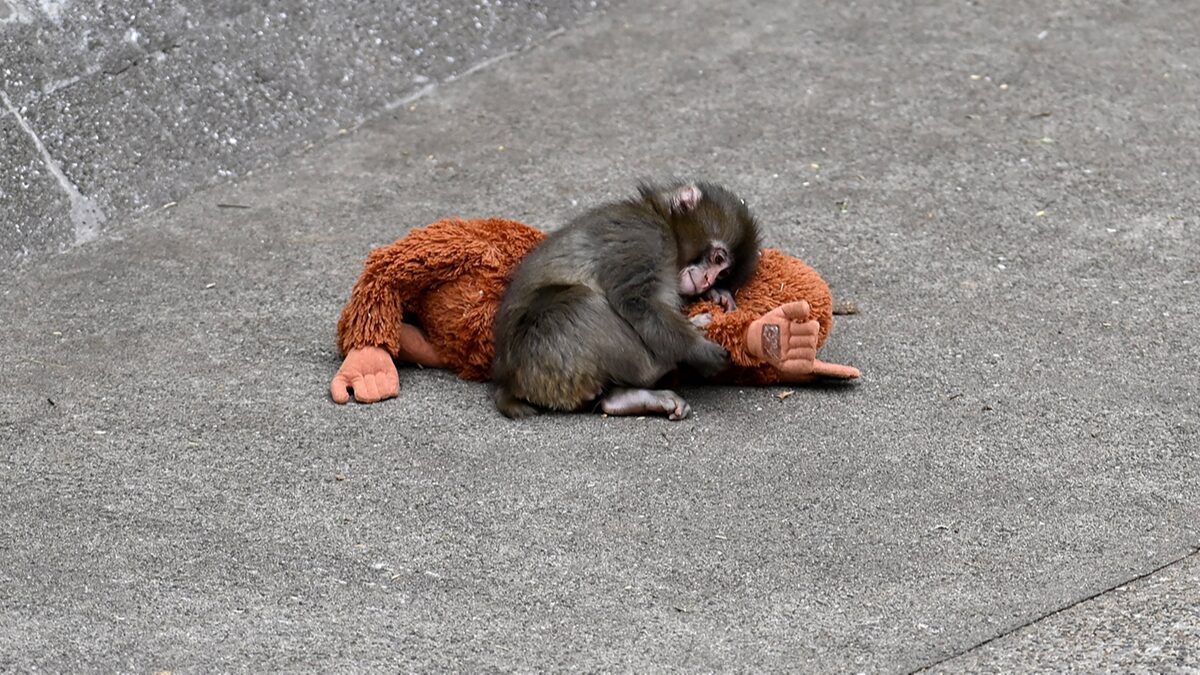
Zookeepers caring for Punch the Monkey have shared a new update on how he’s doing after visitors voiced concerns about his welfare.
Punch has drawn widespread attention in recent days, particularly because of the soft toy he’s often seen holding.
Born in July last year, the young monkey was rejected by his mother and appeared to take comfort in a teddy bear as he adjusted.
The Japanese macaque has been living with a troop since last month. After footage circulated online showing Punch appearing to be “bullied” by other macaques, many people worried about what the animal has already been through so early in life.
Zookeepers tried to reassure the public, saying that “although Punch has been scolded many times by other monkeys, no single monkey has shown serious aggression toward him”.
Even so, questions have continued—both about “the health conditions of the Japanese macaques and the environment of the facility”—with some visitors pointing out that a number of monkeys seem to have lost patches of fur since arriving.
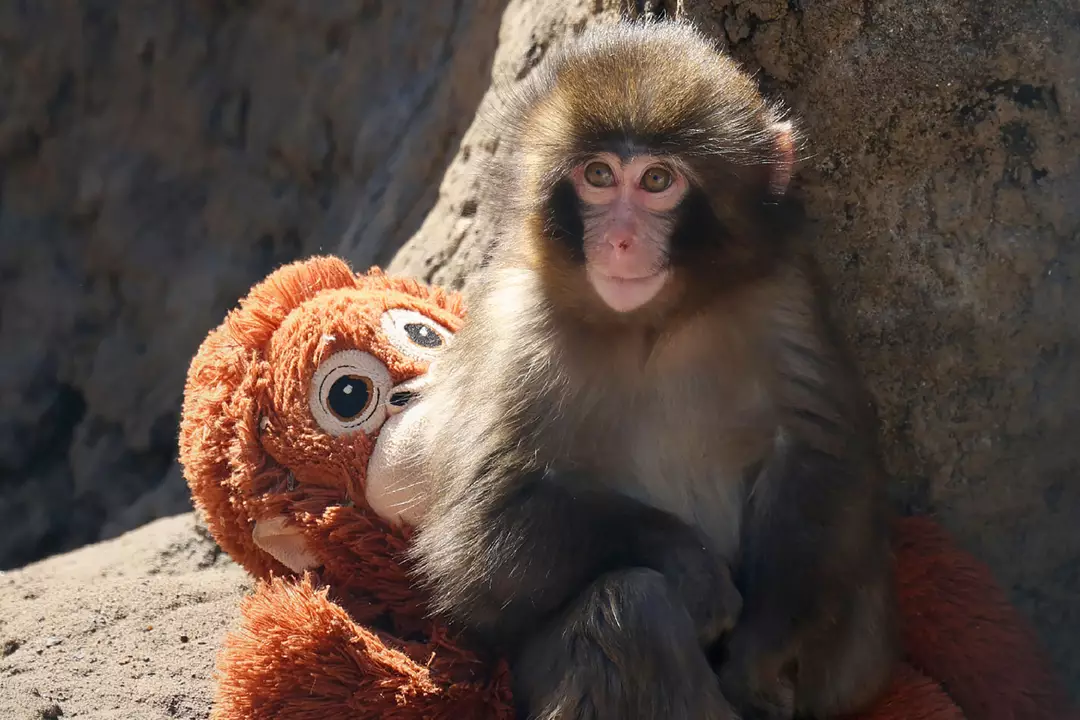
Ichikawa City Zoo and Botanical Garden, where Punch and other macaques are housed, has since addressed the concerns in a post on X.
A spokesperson said: “A lot of visitors are currently coming to the zoo to see baby monkey, Punch. Many of them ask us about the health of the Japanese macaques, and we would like to explain their current condition and our plans. A few macaques in the troop exhibit significant hair loss, or alopecia.”
The zoo added that, based on a veterinarian’s assessment, the monkeys’ food intake and weight are considered appropriate and that there are no obvious signs of illness.
“We believe the main cause is excessive grooming habits. To improve this issue and promote healthy group life, three staff members have been working together since June 2025 to develop approaches and conduct testing,” the statement continued.
“Animal welfare is the top priority in the current environment, and we are doing our best to improve the monkeys’ living conditions.
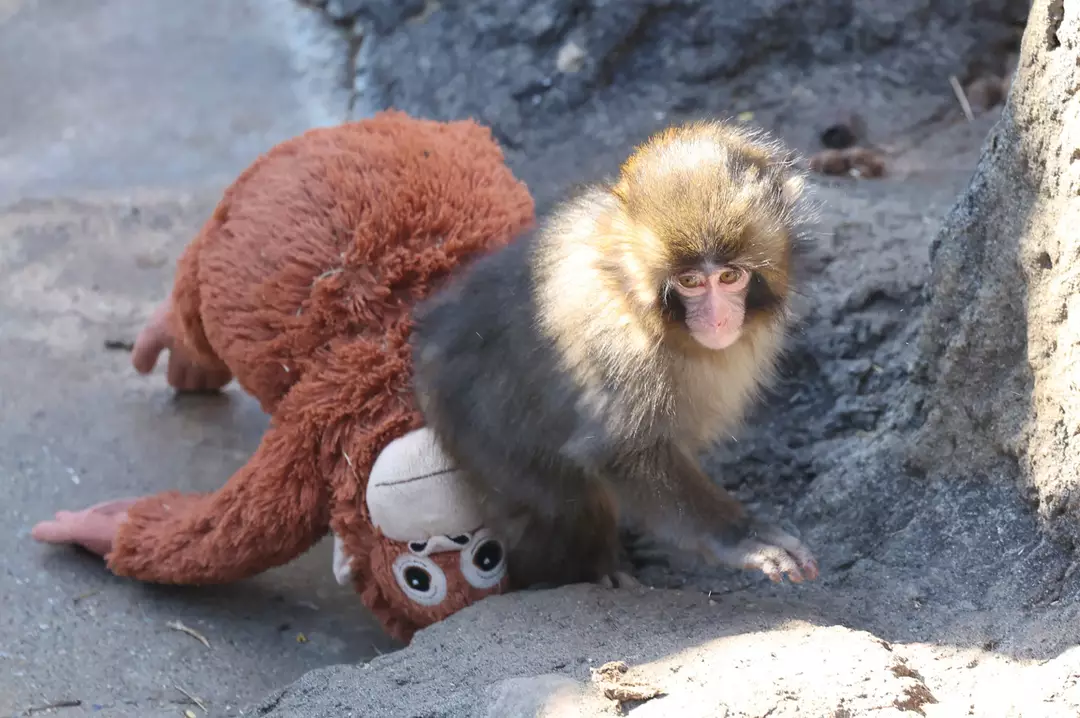
“Four rooms are always open at the back, which is invisible to visitors, and Punch also uses this space to hide.
“Also, many of the trees provided for environmental enrichment have become excellent play tools, especially for the young monkeys, including Punch. We are always seeking the best ways to imrpove the environment. However, Punch is currently trying to integrate with the troop.”
The zoo also noted that making a major overhaul to the “monkey mountain” habitat could be disruptive for the group and could potentially affect Punch’s integration, including increasing the risk that he might be targeted by other macaques.
The statement concluded with: “For this reason, we would like to prioritize Punch becoming a member of the troop safely while improving the monkeys’ health conditions as much as possible.”