


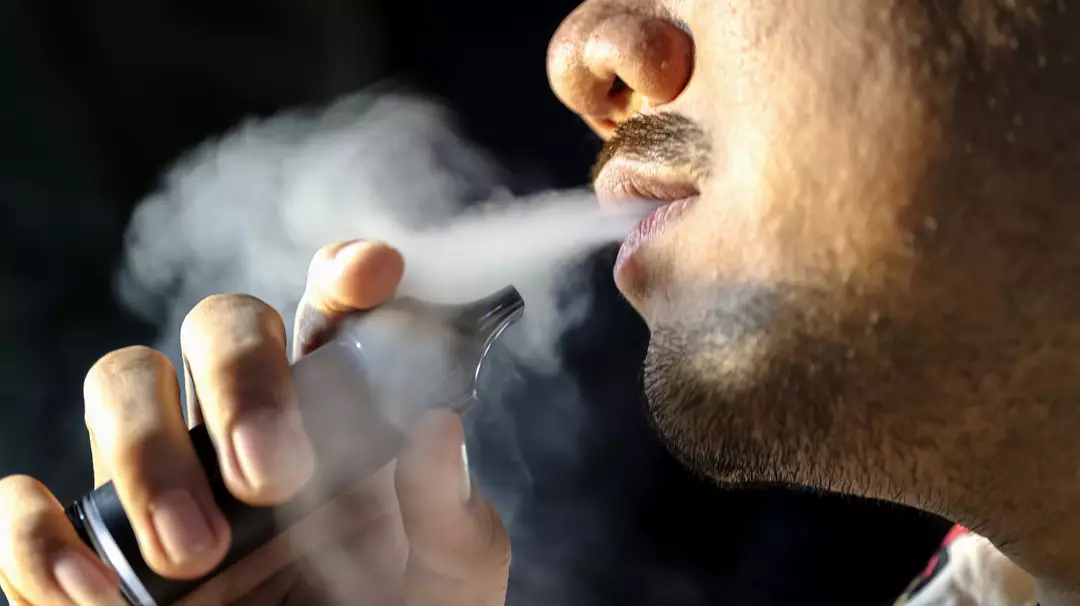
A striking simulation has laid out what could happen to your body if you vape daily for 30 consecutive days.
Vapes were once widely promoted as a “safer” option for people trying to move away from cigarettes, but the full picture of how these nicotine-based products affect the body is still developing.
Because of that uncertainty, health professionals continue to warn about potential harms linked to vaping — and one simulation that’s been making the rounds online illustrates several risks people should keep in mind.
In the video, posted by Untold Healing, the creator breaks down how brain chemistry may shift after just a single puff of a blue raspberry vape.
“Nicotine floods your brain receptors within seven seconds, triggering dopamine release,” the simulation went on to say. “You’re brain is rewiring itself to need that hit.
Researchers have suggested nicotine can reach the brain in as little as 10 seconds, meaning the body may be impacted almost immediately after inhalation.
Many people assume traditional smoking causes more harm than vaping, but that doesn’t mean inhaling flavored vapor is without consequences.

The simulation also claims that lung irritation and damage can begin within just a few days, and that after several weeks of daily vaping some users may experience issues such as coughing, wheezing, and shortness of breath.
It further points to potential cardiovascular effects, stating that heart rate may rise by around four beats per minute and that the risk of a heart attack could increase as well.
By the 30-day mark, the simulation suggests a person may become “fully dependent,” which can make quitting significantly harder.
Commenting on concerns surrounding e-cigarettes, Michael Blaha told John Hopkins Medicine: “People need to understand that e-cigarettes are potentially dangerous to your health. Emerging data suggests links to chronic lung disease and asthma, as well as associations between dual use of e-cigarettes and smoking with cardiovascular disease. You’re exposing yourself to all kinds of chemicals that we don’t yet understand and that are probably not safe.”
For anyone thinking about starting vaping, it’s worth remembering that the long-term effects are still being studied, and medical guidance continues to evolve as more data emerges.
Dr Andrew Freeman, speaking with the University of Utah, emphasized the lungs aren’t designed for recreational inhalation of substances: “Our lungs are not a good organ to absorb substances for recreational use. They are an incredible organ, providing our bodies with vital oxygen and exchanging carbon dioxide, all while protecting us from infections and other harmful elements from our environment.”
He also warned that lung capacity naturally declines with age, making it even more important to protect respiratory health early on.
“If people don’t take care of their lungs, they really suffer more difficulties breathing later in life due to habits such as vaping.”