

With Spring Break nearly here, the CDC has released updated international travel guidance for Americans, warning that 32 countries — including several in Europe — currently present a higher polio risk.
The US Centers for Disease Control and Prevention issued a level 2 notice, advising travellers to ‘practice enhanced precautions’ when traveling to a list that includes Spain, Finland, Germany, and Poland, along with the U.K.
Among the recommended steps, the agency says travellers should confirm their polio vaccinations are current and notes that eligible individuals can receive a single-dose booster.
Polio was once close to elimination following a major worldwide immunization push launched in 1988. But infections have been climbing again, in part because the poliovirus spreads very easily and can cause ‘a crippling and potentially deadly disease that affects the nervous system.’
After reaching very low levels in 2023, Wild Poliovirus Type 1 (WPV1) cases increased sharply in 2024 — especially in Pakistan and Afghanistan — with global wild polio totals rising from 12 in 2023 to 99 in 2024.
Health officials attribute much of that rise to instability in border areas (including Khyber Pakhtunkhwa), heavy cross-border movement, and “missed children” during immunization drives.
Still, experts say the more significant concern is Circulating Vaccine-Derived Poliovirus (cVDPV), which most often emerges where vaccination coverage is very low.
A paper published in the Italian society of infectious and tropical diseases explains that the oral polio vaccine (OPV) contains a weakened live virus. In communities with limited vaccine uptake and poor sanitation, that weakened virus can circulate and, over an extended period, mutate into a form capable of causing paralysis.
This vaccine-derived form is linked to more paralysis cases each year than the wild strain, fueling major outbreaks across parts of Africa (including Nigeria and DR Congo) and more recently in Gaza and Yemen as conflict has weakened public health systems.
People who are unvaccinated in wealthier countries can also be vulnerable. Poliovirus has been found in wastewater in places such as New York, London and Hamburg, signaling wider local circulation than many might expect.
In this locations, falling vaccination rates in certain communities have created openings for the virus — often introduced through travel — to spread undetected via sewage monitoring.
Most residents and visitors are protected through the Inactivated Polio Vaccine (IPV) because of strong routine childhood immunization programs, but those without vaccination protection face a much higher risk.

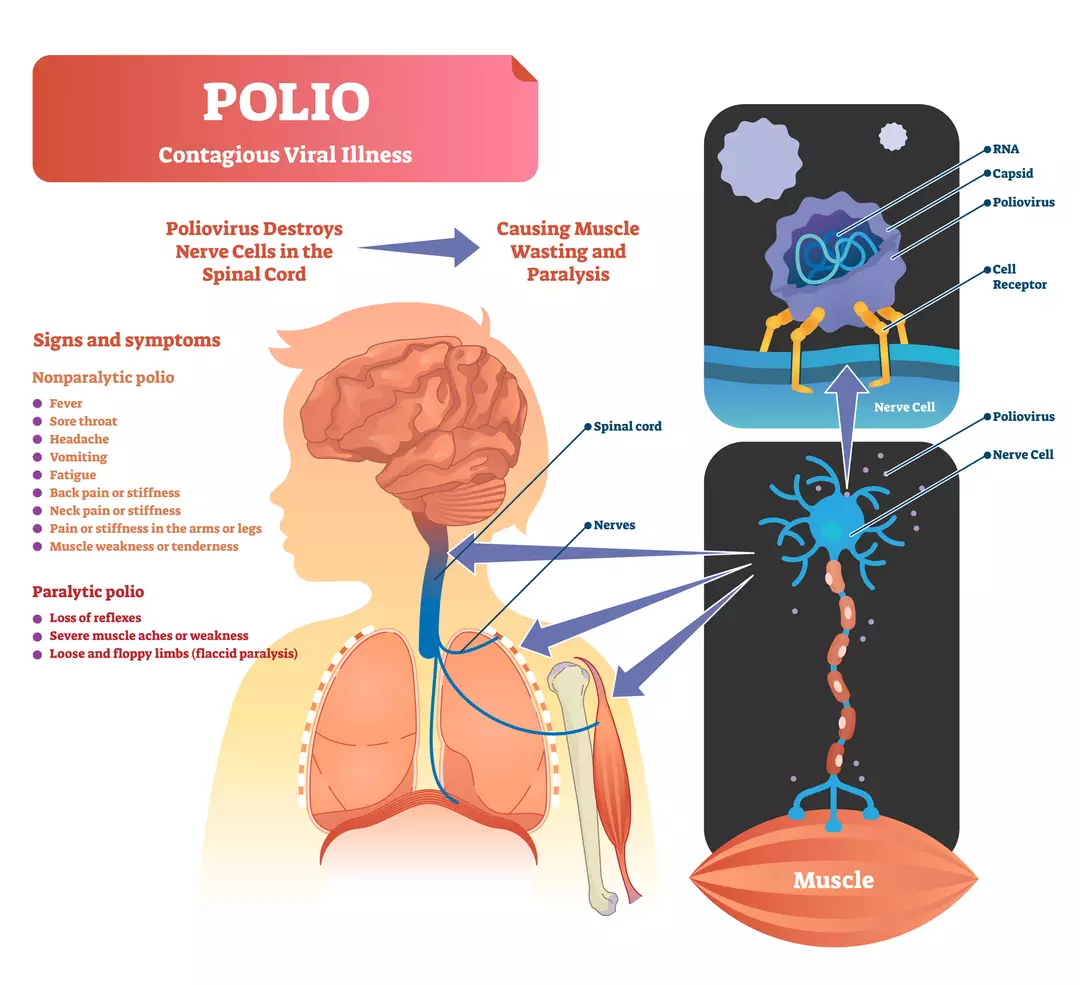
Another challenge is that many infections cause few or no noticeable symptoms. When symptoms do appear, they can resemble a common viral illness, including fever, fatigue, nausea, headache, nasal congestion, and sore throat.
In a smaller number of cases — including that of former US President Franklin D.Roosevelt — infection can progress to permanent paralysis, leaving him reliant on a wheelchair after contracting the disease.
The polio shot is usually administered in four childhood doses, and for decades this program has kept wild poliovirus largely under control in the United States. But with vaccine hesitancy increasing, and Health and Human Services head Robert F.Kennedy having actively tried to revoke approval of the polio vaccine in 2022, that protection is becoming less certain.
That is why the CDC’s latest guidance encourages travellers going to areas with confirmed cases to double-check they are fully vaccinated before departure.
The full list of countries is as follows:
Afghanistan, Algeria Angola, Benin, Burkina Faso, Cameroon, Central African Republic, Chad, Côte d’Ivoire, Democratic Republic of the Congo, Djibouti, Ethiopia, Finland, Gaza, Germany, Ghana, Guinea, Israel, Niger, Nigeria, Pakistan, Papua New Guinea, Poland, Senegal, Somalia, South Sudan, Spain, Sudan, Tanzania, United Kingdom, Yemen, and Zimbabwe.