

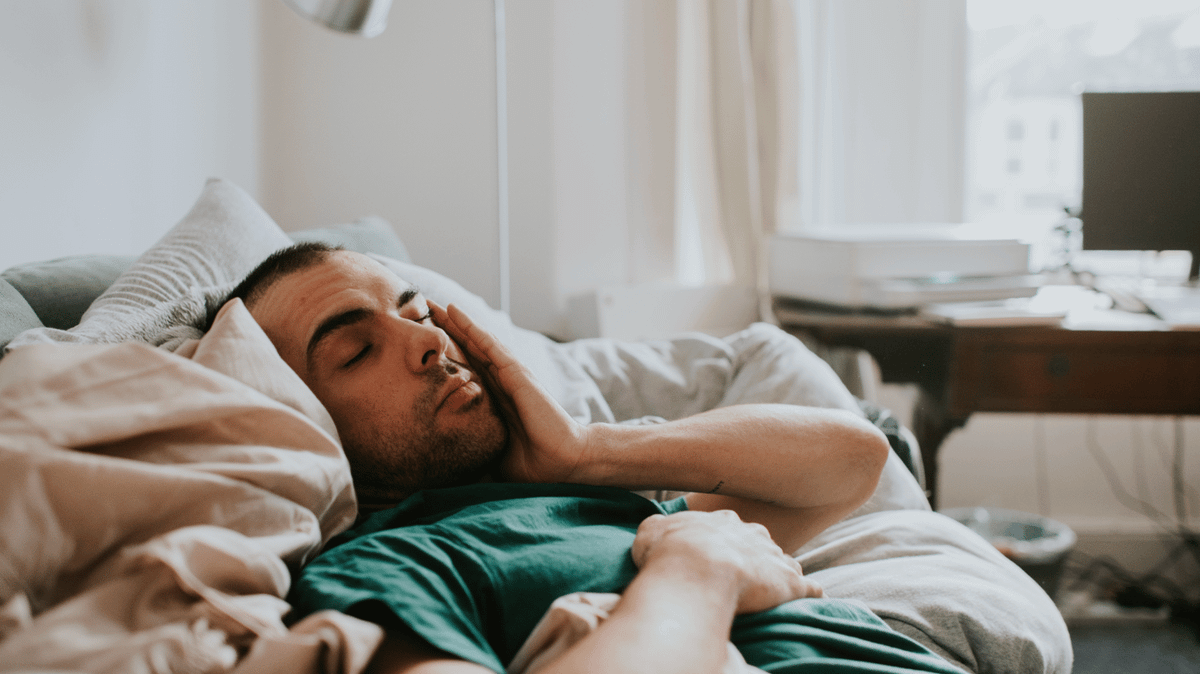
Ever feel like you are falling into an abyss when you’re nodding off? Well, according to one doctor it’s pretty common, and here’s why.
It’s a familiar and frustrating moment: you’re exhausted after a long day, you start to drift off, and then your body suddenly jerks as if it’s been startled—leaving you wide awake again and trying to fall asleep from scratch.
Even though the sensation can be unsettling, a doctor has explained that it’s usually nothing serious. In fact, while certain factors can make it more likely to happen, he says it’s generally “totally harmless”.
Doctor Amir Khan, who regularly appears on ITV daytime shows such as Good Morning Britain and Lorraine, addressed the issue on Instagram, breaking down what’s going on when that sudden jolt hits.
He explained: “Have you ever felt you’re falling just as you nod off? That sudden jolt awake is actually called a hypnic jerk and, as you drift into sleep, your muscles relax, and sometimes your brain interprets that as falling.
“It’s a misinterpretation, so it sends a quick signal to your body to catch you, and that’s why you twitch awake. Now, some scientists think it’s an ancient survival reflex, back to when we slept in trees.”
The health expert continued: “A sudden twitch might have stopped us from actually falling. It’s totally harmless. More common when you’re stressed, have caffeine late or you’re just super tired.
“Next time it happens, don’t panic. It’s just your brain being quirky. Totally normal. Totally harmless.”
These sensations—often referred to as “hypnic jerks” or “hypnagogic jerks”—most commonly happen as you’re first falling asleep, though they can also show up closer to the point where the body transitions into deeper sleep stages.
And while the classic version happens right at the start of the night, sleep specialists note that similar jolts can occur at other points during the night as your sleep cycles shift.
“It tends to occur in stages one or two of sleep and disappear in stage three, which refers to rapid eye movement sleep. In other words, they occur when a person transitions from a wakeful state to a sleeping state,” Medical News Today states.
If you want to reduce the chances of it happening, experts commonly suggest cutting back on stimulants and sleep disruptors—particularly caffeine, nicotine, and alcohol—especially in the hours leading up to bedtime. Lowering overall use during the day may also help.
It’s also generally recommended to avoid vigorous exercise right before sleep, and to keep a consistent routine by going to bed and waking up at roughly the same time each day.