

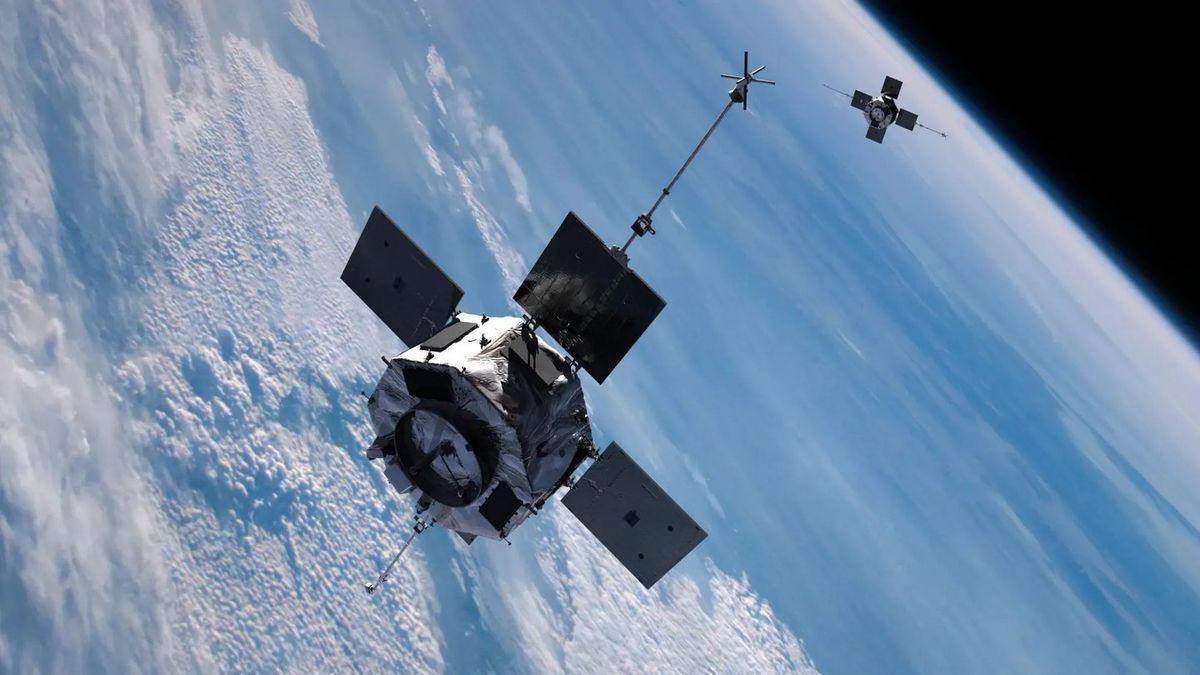
A 1,300 pound spacecraft is due to crash down to Earth today (Tuesday March 10), nearly 14 years after launching.
After a week of dramatic-sounding space headlines—ranging from alien-related speculation to fresh talk of a possible “city-killer” asteroid—this development is far less alarming than it might seem.
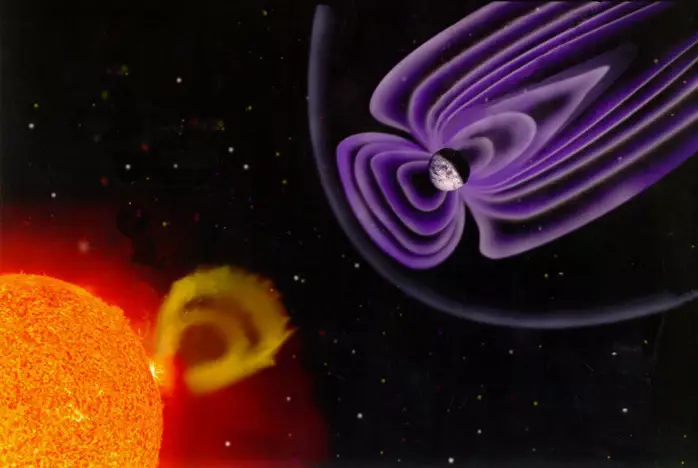
In August 2012, NASA launched two spacecraft toward the Van Allen belts, the doughnut-shaped regions of highly energetic charged particles held in place by Earth’s magnetic field about 40,000 miles above the planet.
Planned as a two-year effort, the 1,323-pound Van Allen Probe A and its twin, Probe B, were tasked with improving scientists’ understanding of how particles in the belts are added and depleted over time.
Instead, both probes continued operating for nearly seven years. The mission concluded once the spacecraft ran out of fuel and was no longer able to keep itself oriented toward the Sun.
NASA says the project produced “several major discoveries” about the way the radiation belts function, “including the first data showing the existence of a transient third radiation belt, which can form during times of intense solar activity.”
Now, Probe A is reaching the end of its journey, with re-entry expected at approximately 7.45 pm EDT on Tuesday.
NASA expects most of the spacecraft to disintegrate as it passes through the atmosphere, though it noted that “some components are expected to survive re-entry.”
The space agency added: “The risk of harm coming to anyone on Earth is low – approximately 1 in 4,200.
“NASA and Space Force will continue to monitor the re-entry and update predictions.”
Although the mission itself went well beyond its original timeline, Probe A’s return is happening sooner than early projections suggested.
When operations wrapped up in 2019, estimates indicated the probes wouldn’t fall back into Earth’s atmosphere until around 2034.
So what changed, and why is Probe A coming back roughly eight years earlier than expected?
NASA says the earlier calculations were made before the current solar cycle, which has turned out to be much more active than anticipated.
“In 2024, scientists confirmed the Sun had reached its solar maximum, triggering intense space weather events.
“These conditions increased atmospheric drag on the spacecraft beyond initial estimates, resulting in an earlier-than-expected re-entry,” NASA adds.
Once Van Allen Probe A re-enters—largely burning up in the atmosphere—its counterpart, Probe B, will continue on without it.
Probe B isn’t expected to re-enter before 2030, meaning it will remain in orbit for several more years on its own.
And if you glance up at the night sky after this evening, you might briefly consider the remaining probe continuing solo for the first time since the pair launched together.