

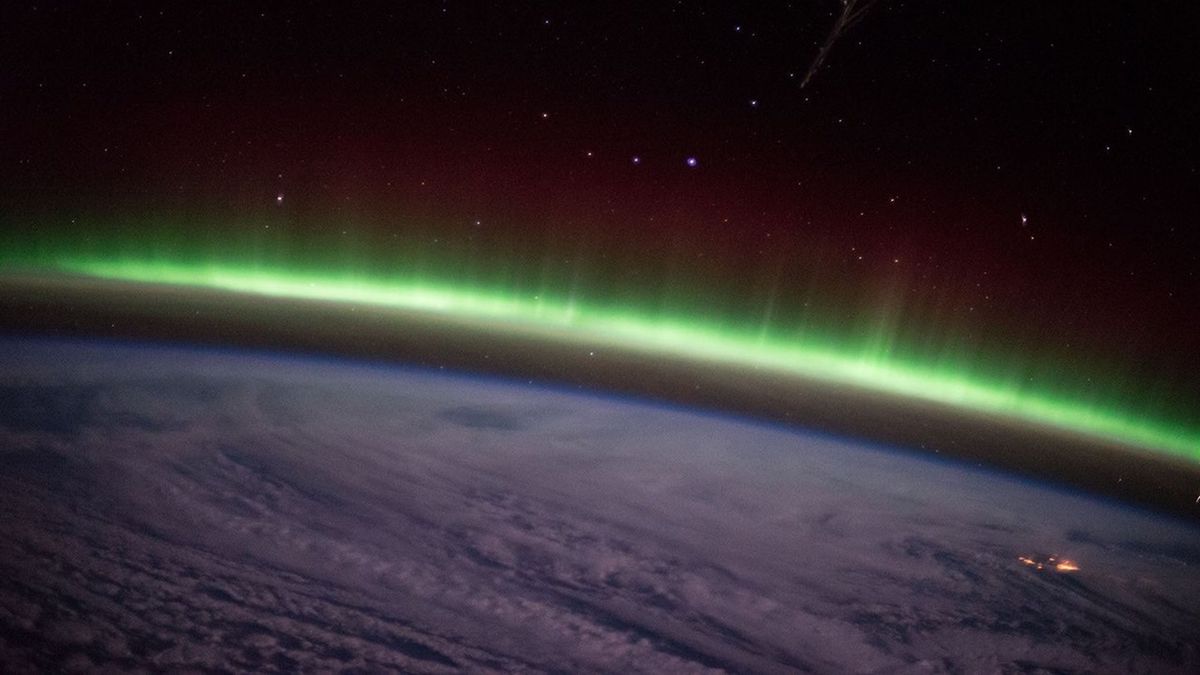
NASA researchers think they’ve pinpointed a temporary kind of “space battery” operating inside Earth’s magnetic shield — the protective system that helps guard the planet from the Sun’s charged particles.
Space stories have been coming thick and fast lately, from a NASA probe expected to re-enter the atmosphere, to fresh attention on asteroid YR4 and the arrival of interstellar comet 3I/ATLAS.
Amid all that, a major finding much closer to Earth may have slipped under the radar.
In January, scientists analysing observations from NASA missions reported progress on a long-running question: what powers a particular form of aurora called auroral arcs.
Auroral arcs are the narrow, luminous ribbons that can stretch across polar skies, often showing up as vivid green bands.
People sometimes spot them more easily during geomagnetic storms, when solar activity agitates Earth’s magnetic environment.
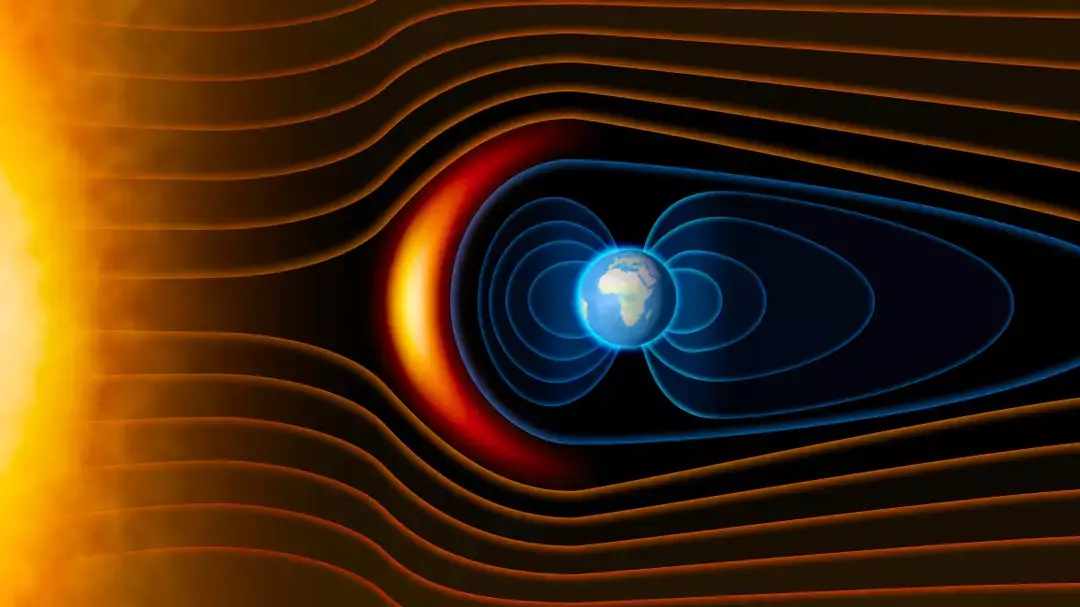
Earth sits inside an enormous magnetic “bubble” known as the magnetosphere. NASA explains that this structure is ultimately generated deep inside the planet, where the movement of molten iron in the outer core drives a process called the geodynamo.
The geodynamo produces the global magnetic field that helps block the solar wind — an ongoing flow of charged particles streaming outward from the Sun.
When that solar material reaches Earth, the magnetosphere typically diverts most of it away from the planet.
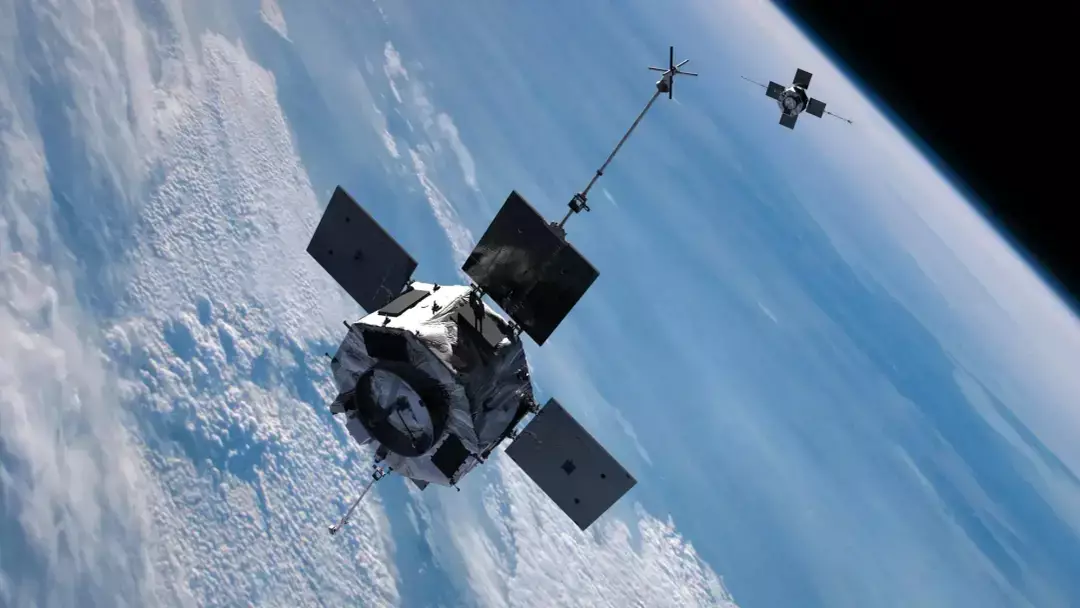
But not all particles escape. Some become captured in two ring-shaped radiation zones around Earth known as the Van Allen Belts, which were closely examined by NASA’s Van Allen Probes.
Launched in 2012, the twin spacecraft were designed to investigate how energy and radiation behave in near-Earth space and how conditions change during solar events.
Probe A is believed to have re-entered in recent days, after around seven years of active science operations followed by many more years drifting in orbit.
Its counterpart, Probe B, is expected to remain in space longer, with estimates suggesting it could stay off-Earth until about 2030.
Crucially, Earth’s magnetosphere isn’t a static barrier. When solar activity disturbs it, energy can move through the system along magnetic field lines.
Those travelling disturbances are known as Alfvén waves.
New research published in Nature Communications argues these waves could be the long-missing ingredient needed to explain auroral arcs.
The idea is that Alfvén waves ride along Earth’s magnetic field lines and can generate or intensify electric fields high above the planet.
Those electric fields then drive electrons downward into the upper atmosphere.
As the electrons collide with oxygen and nitrogen, the atmosphere emits light — producing the familiar green auroral glow seen from the ground, and the thinner, structured arcs detected from orbit.
Under this framework, Alfvén waves effectively behave like a short-lived “space battery,” supplying the energy for the electric fields that set the aurora in motion.

It’s also important to separate this “battery” effect from Earth’s core protection. The magnetosphere and the planet’s overarching magnetic field are what reduce the impact of harmful charged particles.
The proposed “space battery” is a mechanism operating inside that broader protective system, not the shield itself.
During geomagnetic storms, the same magnetic architecture that normally deflects incoming solar particles can also channel energy along field lines toward the poles.
When that energy is transferred to atmospheric particles and released as light, auroras appear.
Put another way: auroral arcs aren’t the defence mechanism — they’re a visible consequence of Earth’s magnetosphere interacting with the Sun.
The concept also aligns with observations beyond Earth. As NASA notes: “Similar particle acceleration has been observed by NASA’s Juno spacecraft around Jupiter.”
The research team, led by Sheng Tian of the University of California, Los Angeles, suggests Alfvén waves could help power auroral arcs at Jupiter as well — and potentially on other worlds where auroras shine.