

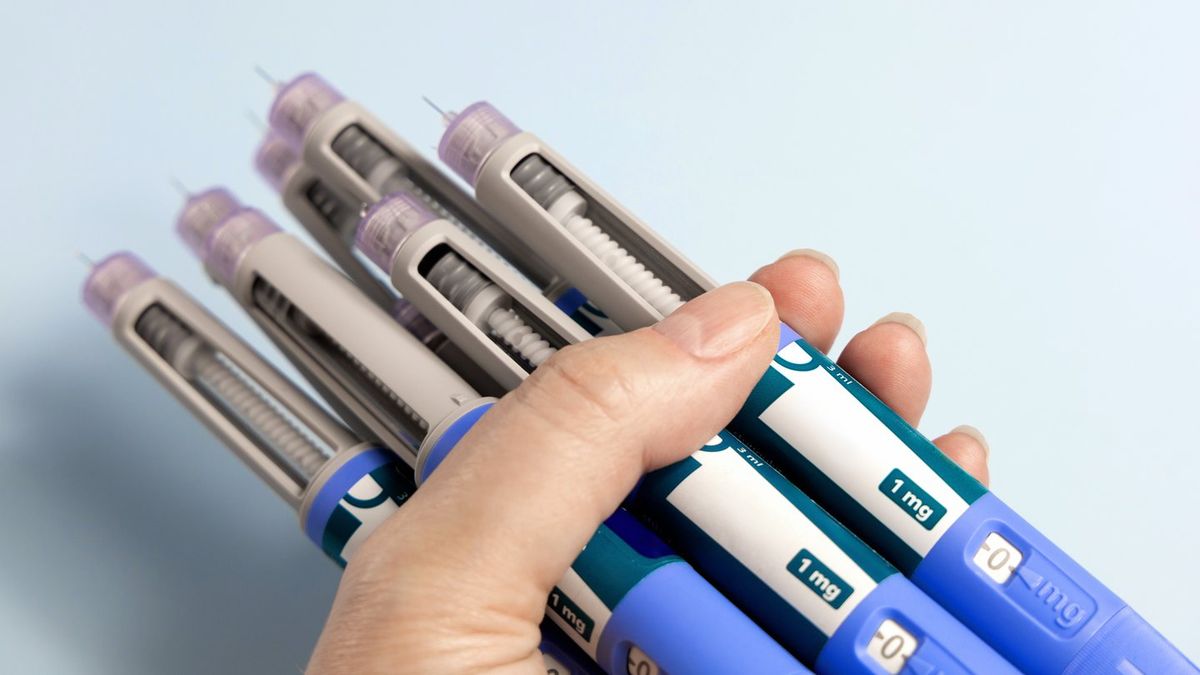
Breakthrough GLP-1 medications such as Ozempic, Mounjaro, and Wegovy have already enabled millions of people worldwide to change long-ingrained eating patterns, but researchers now believe they could have an even more far-reaching use.
Each year, more than 100,000 people in the US die due to drug or alcohol addiction—an alarming number that only hints at the wider damage substance abuse causes to families and communities across the country.
Now, evidence suggests these same drugs—best known for treating type 2 diabetes and supporting weight loss—may also reduce the risk of substance addiction, according to research from Washington University School of Medicine in St Louis.
What stood out most wasn’t simply that GLP-1 drugs appeared to help with specific dependencies, but that they seemed to work broadly across substances. The study’s senior author, Ziyad Al-Aly, MD, said the medication worked “against all major substances”.
The researcher explained: “In addiction medicine, a lot of treatments target just one thing — for example, a nicotine patch helps with smoking, but not alcohol — but there is no medication that works across addictive substances, let alone all of them.”
To investigate further, Al-Aly’s group in St Louis reviewed outcomes for more than 600,000 US military veterans living with type 2 diabetes. The goal was to build on earlier observational work and patient reports suggesting GLP-1 medication users faced lower risks of addiction and drug-related death.
The analysis found veterans taking GLP-1 drugs experienced significantly fewer overdoses. They also had reduced emergency-room visits, fewer hospital admissions, and even fewer suicide attempts.
Al-Aly, who also serves as Chief of Research and Development at the VA Saint Louis Health Care System, said: “The revelation about GLP-1 medication is that it really works against all major substances.”
He then described why a drug designed for diabetes and weight management might influence addiction: “It works uniformly, not because it acts against alcohol or opioids or nicotine specifically, but because it is likely acting against the craving itself. It blunts that craving that pulls people toward whatever they’re addicted to.”
His interest in the topic grew after patients told him that, while using GLP-1 treatments, they noticed a sharp reduction in tobacco or alcohol consumption—or stopped altogether.
That raised an even bigger question: could GLP-1 drugs help with dependencies where there are currently no approved pharmaceutical options, such as methamphetamine addiction?
Sharing what he believes the findings indicate, Al-Aly said: “What our study suggests is something broader: GLP-1 drugs may also quiet what I call ‘drug noise,’ the relentless craving that drives addiction across substances.
“That cross-substance signal points to a shared biology underlying addiction, and it opens the door to a fundamentally different approach: not treating one addiction at a time, but targeting that common biologic signal, that common craving across addictions. Moving beyond food noise to drug noise, GLP-1s are quieting the roar of addiction.”
Crucially, the reduced risks were seen even without additional addiction-focused interventions. In the study, veterans recorded the following decreases in addiction risk: 18 percent for alcohol, 14 percent for cannabis, 20 percent for cocaine and nicotine, and 25 percent for opioids.
Even with results that appear promising—especially in a field where many tools are used after a crisis event, such as Narcan for opioid overdoses—GLP-1 drugs are still not approved as addiction treatments.
Rob Stransky, president of the telemedicine company NiceRX, said: “GLP-1s are not currently FDA-approved for [addiction] treatment, and it’s unlikely insurance companies would cover such treatment unless approval is granted.”