

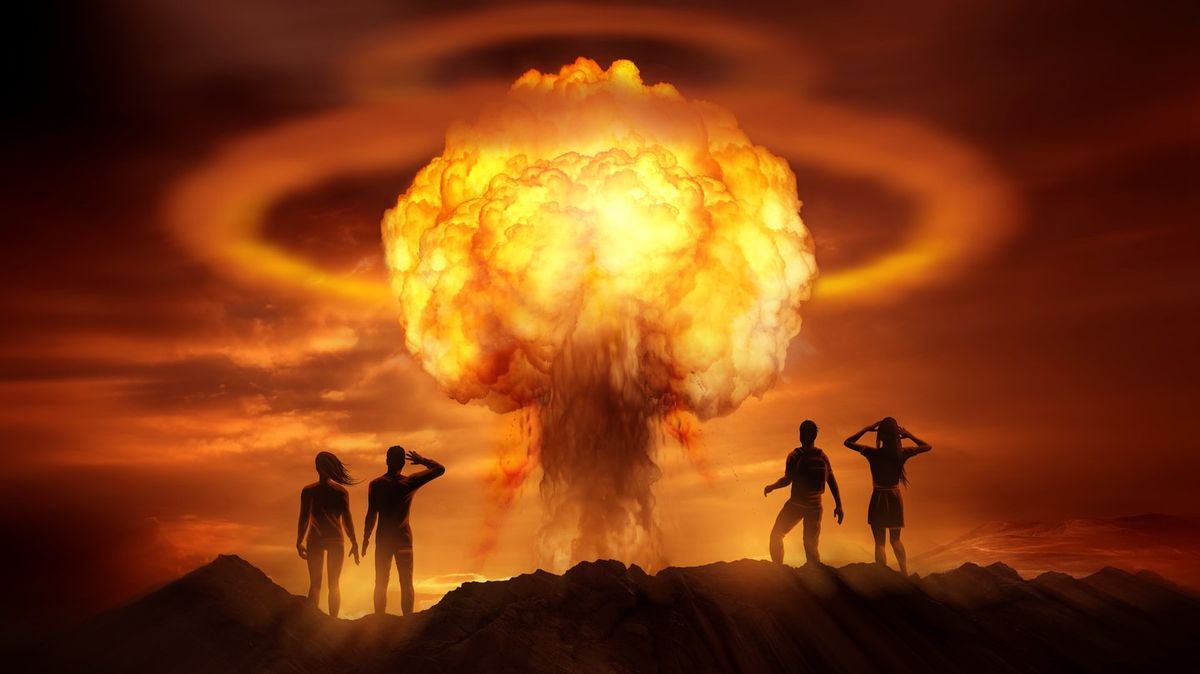
Surviving a nuclear strike is an ordeal no person or animal should ever have to face. But as major powers become increasingly entangled in volatile conflicts, it’s a scenario that could, one day, confront ordinary people.
If you’re outside the immediate fireball and the core blast zone—an area that, for a modern weapon around a megaton yield, could obliterate everything within roughly three miles—the first thing you’re likely to register is an intense, blinding flash.
Anyone who happens to be looking toward the detonation from as far as 10 miles away could suffer temporary blindness lasting minutes, or potentially permanent vision damage—all within the first instant after the explosion.
Those who can still see may then watch the mushroom cloud surge upward at speeds exceeding 100mph. At that point, you have only moments to react, and an instinctive choice many people make could prove deadly.

The natural urge is to put distance between yourself and a towering, burning cloud. For many, that means sprinting to a car and trying to drive away.
In reality, that decision may increase your chances of dying. One reason is that a nuclear detonation can produce an electromagnetic pulse (EMP) capable of disabling electronics, including key vehicle components.
An EMP Commission report has stated that two out of every three vehicles already on the road could be knocked out immediately. Combined with flash-induced blindness, that kind of sudden failure can trigger widespread collisions and gridlock in seconds.
And if you run to your car after seeing the flash, you may be overlooking what becomes lethal soon after: the blast wave.
Brooke Buddemeier, a health physicist and radiation specialist at Lawrence Livermore National Laboratory, said in 2017 that a car offers little real protection in this scenario.
He said: “Don’t get in your car. Don’t try to drive, and don’t assume that the glass and metal of a vehicle can protect you.”
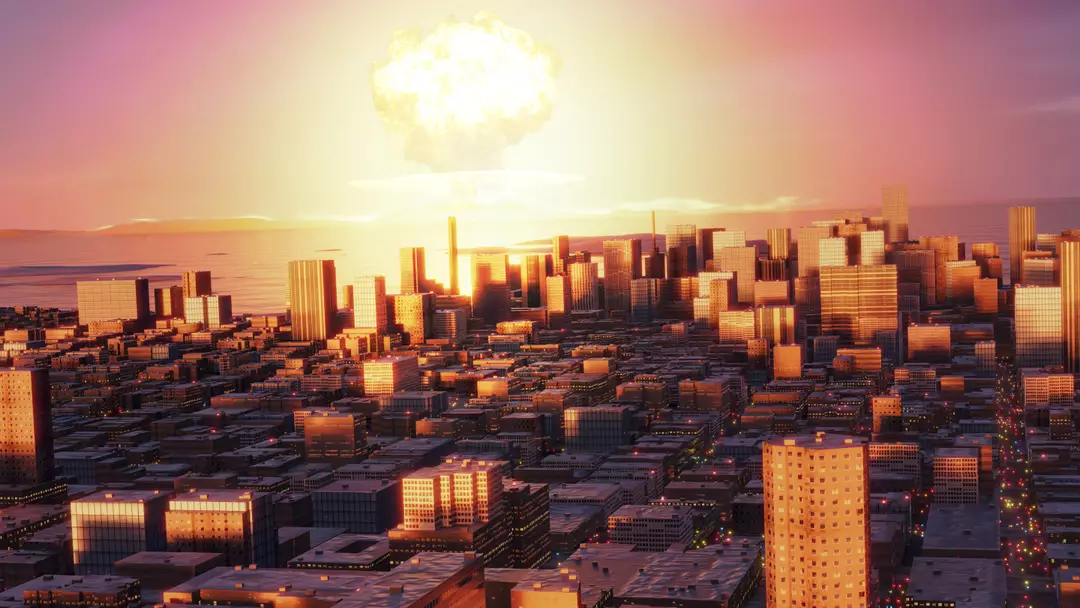
How fast the blast wave reaches you depends on distance: it could arrive within seconds, or take a couple of minutes. Within roughly seven miles, it may hit in under 30 seconds, with enough force to collapse structures and turn flying debris into lethal shrapnel.
Anyone caught outside in that region also risks severe third-degree burns from the blast’s thermal radiation. The heat can be so intense and so immediate that skin and underlying tissue are catastrophically damaged, a trauma sometimes described as “degloving.” A vehicle does not shield you from that kind of heat exposure.
Then, moments later, the dangers compound. Windshields can blow out, and glass damage can extend far from the center—an average-yield detonation can break windows for at least 12 miles. And that still isn’t the final, lingering threat.
After the initial violence comes fallout: radioactive material that you can’t see but can seriously injure or kill you. Even if your car somehow still runs after the EMP and the blast effects, it’s unlikely to outrun the spreading contamination.
The nuclear expert explained: “The fireball from a 10-kiloton explosion is so hot, it actually shoots up into the atmosphere at over 100 miles per hour. These fission products mix in with the dirt and debris that’s drawn up into the atmosphere from the fireball.”

If escaping by vehicle isn’t the answer, what is?
Buddemeier said that a simple rule should guide your actions:
Buddemeier said that there is one mantra you should follow, ‘go in, stay in, tune in.’
In practice, that means moving immediately into shelter the moment you see the flash. You may have only seconds before the blast wave arrives, but depending on where you are, you could have up to about five minutes to reach the best available protection.
The priority is a sturdy, substantial building—something that can take some of the blast’s force and, crucially, place dense material between you and the radiation. Once inside, you should remain sheltered for as long as 48 hours.
“We’re talking about are things like salt- or sand-size particles,” Buddemeier said. “It’s the penetrating gamma radiation coming off of those particles that’s the hazard.”
As time passes, radiation levels can drop as isotopes decay, which is why staying put matters. If possible, block or seal ventilation paths that pull outside air directly into your space, and gather enough food and water to last for two days.
“Get inside … and get to the center of that building. If you happen to have access to below-ground areas, getting below ground is great,” the expert said, with basements generally offering stronger shielding from radiation than above-ground rooms.
Finally, if you have access to a radio or any functioning communication device, “tune in” for official guidance—assuming emergency systems and authorities are still able to broadcast instructions.