

A diver has reportedly located what could be a “lost” US nuclear weapon connected to a frightening Cold War-era mishap.
Few objects demand constant accounting quite like a nuclear bomb, yet one was inadvertently discarded during a US Air Force flight in the early days of the Cold War.
On 13 February 1950, a US bomber encountered serious trouble mid-mission and ultimately released its weapon into the ocean.
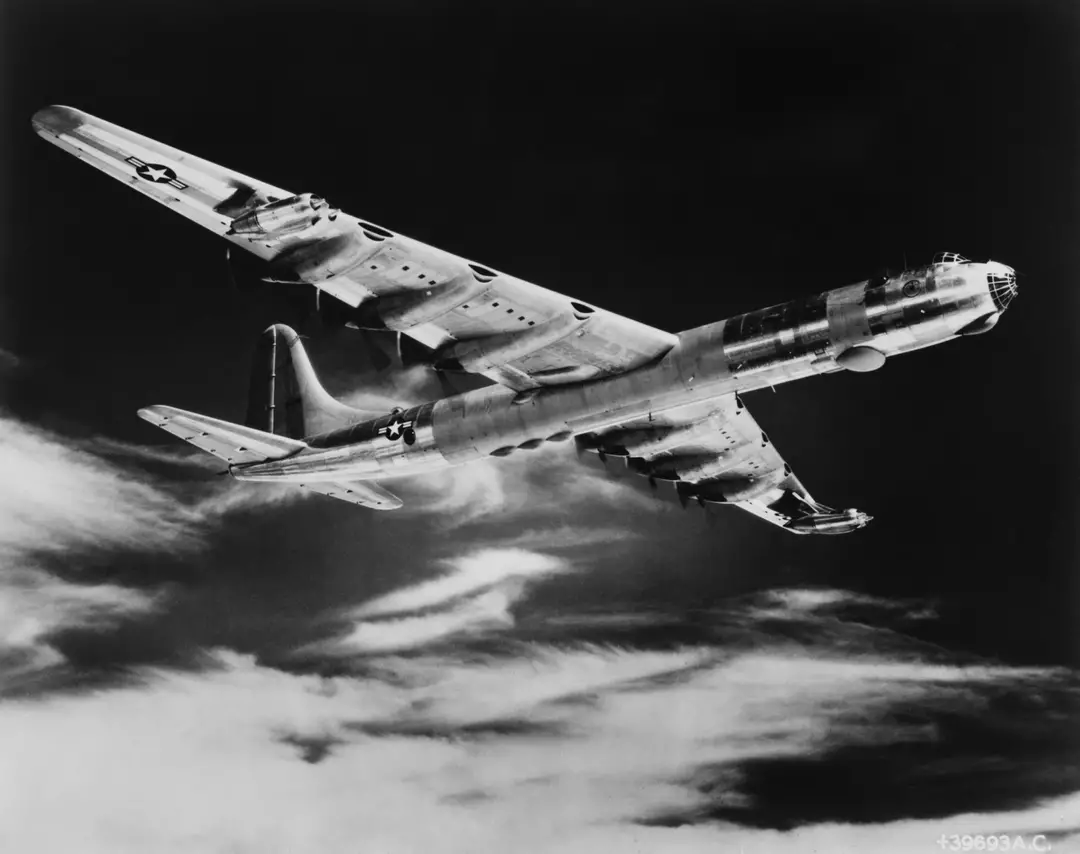
The aircraft was a Convair B-36B, a huge strategic bomber used to carry nuclear payloads before intercontinental ballistic missiles became the primary delivery system.
It had been traveling from Texas to Alaska as part of a simulated nuclear strike scenario when ice built up on the wings and at least one of its six engines caught fire.
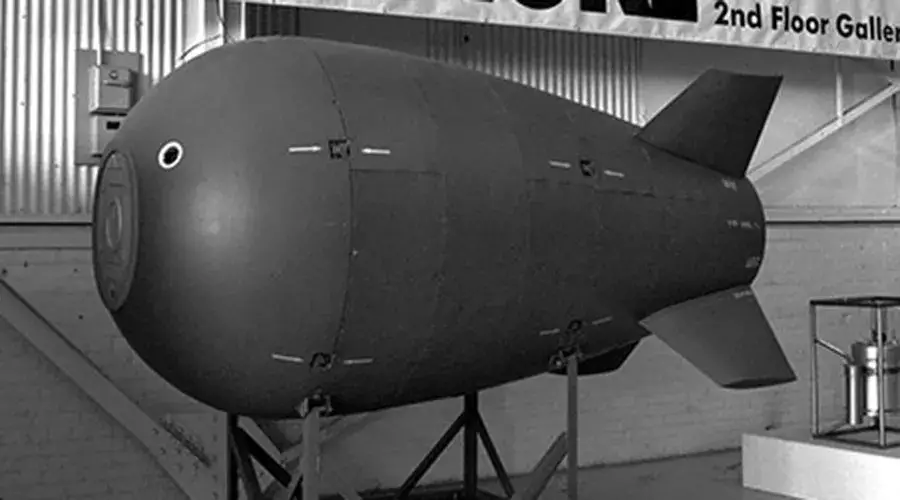
With the situation worsening, the 17 crew members decided to bail out. Before doing so, they jettisoned a Mark IV bomb into the sea.
Officials later noted the weapon itself was not “live.” It contained lead, uranium, and TNT to mirror realistic conditions for training, but it lacked the plutonium required for a nuclear detonation.
Decades later, diver Sean Smyrichinsky said he came across an unusual object while harvesting sea cucumbers.
He estimated it was about 12 feet long and described it as having a bagel-like form—so strange, he initially suspected it might be something otherworldly.
“I came up telling all my buddies on the boat ‘Hey, I found a UFO. It’s really bizarre.’ And I drew a picture of it, because I didn’t have a camera,” said Smyrichinsky.
Describing the object, he said: “It resembled a bagel cut in half, and then around the circle of the bagel these bolts all molded into it, like half spheres. It was the strangest thing I had ever seen.”
Speaking to the Vancouver Sun about the strange discovery, he said: “Nobody had ever seen it before or heard of it. Nobody ever dives there. Then some old-timer said: ‘Oh, you might have found that bomb’.”
In 2016, the Canadian Armed Forces said they would send a vessel to examine the reported find.
While again stressing that the device was not armed, they added: “Nonetheless we do want to be sure and we do want to investigate it further. A team specialising in unexploded ordnance will determine what risk, if any, the object poses and whether it should be retrieved from its resting place or left as is.”
Still, not everyone is convinced the underwater object is the long-missing weapon from 1950.
Aviation historian Dirk Septer said’s Robin Levinson-King that the US Navy had searched for the bomb after the incident, partly to ensure the Soviet Union could not recover it.
Septer also argued that, based on his review of the flight path and the original search operation, Smyrichinsky’s discovery does not match the expected location of the jettisoned bomb.