


A new study has explored how the way we walk may signal elements of our mood and personality.
Scientists from the Advanced Telecommunications Research Institute International in Japan set out to understand whether different walking styles can act as clues to how someone is feeling.
Because gait is part of body language, it can shape first impressions—sometimes before we’ve even spoken—especially for people who are attuned to nonverbal cues.
So what patterns did the researchers identify?
One of the clearest findings was that a fast pace combined with pronounced arm swings may be associated with anger.
In contrast, slower steps, minimal arm movement, and a more slumped posture were linked with sadness.
For happiness, the study suggested a more buoyant, springy quality to the walk.

“An individual’s gait can reveal their emotional state from a distance, enabling social decision-making – such as whether to approach or avoid them – before their facial expressions become visible,” the study said.
It added: “While facial expressions can be consciously controlled, gait represents a spontaneous and habitual motor behaviour that may provide reliable cues for one’s internal emotional state.”
The findings were published in the journal Royal Society Open Science.
Detailing how emotion may show up in movement, the paper noted: “Angry gait involves exaggerated arm swings, whereas sad and fearful gaits involve reduced arm movement.”
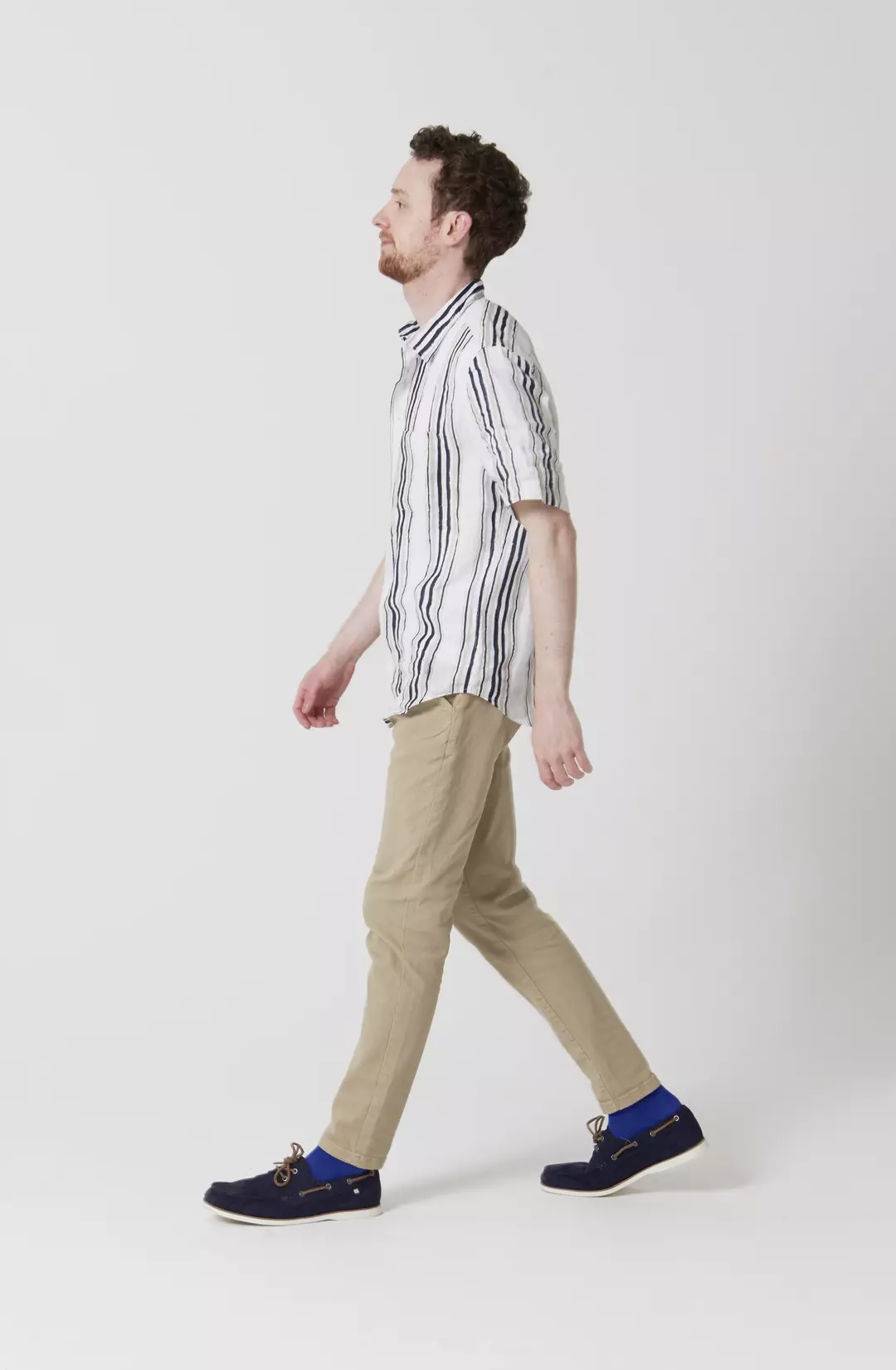
They added: “We observed clear differences in specific movement patterns, especially the arm–leg swing patterns, across perceived emotions, suggesting that these patterns serve as perpetual clues.”
To test the idea, the researchers designed an experiment that relied on controlled performances.
Actors were instructed to walk a set distance while expressing one of five states: anger, sadness, fear, happiness, or a neutral walk.
A motion-capture system then recorded how key areas of the body moved throughout each walk, building a detailed picture of each gait.
Afterward, the recorded walks were shown to a separate group of participants, who were asked to identify the emotion being portrayed.
The team found that viewers were often able to make the correct call, with arm motion standing out as one of the strongest signals guiding people’s judgments.
The work also fits alongside earlier research into arm movement and emotion, including a University of Portsmouth study that looked at whether subtle differences in how people swing their arms might relate to a higher likelihood of aggression.