

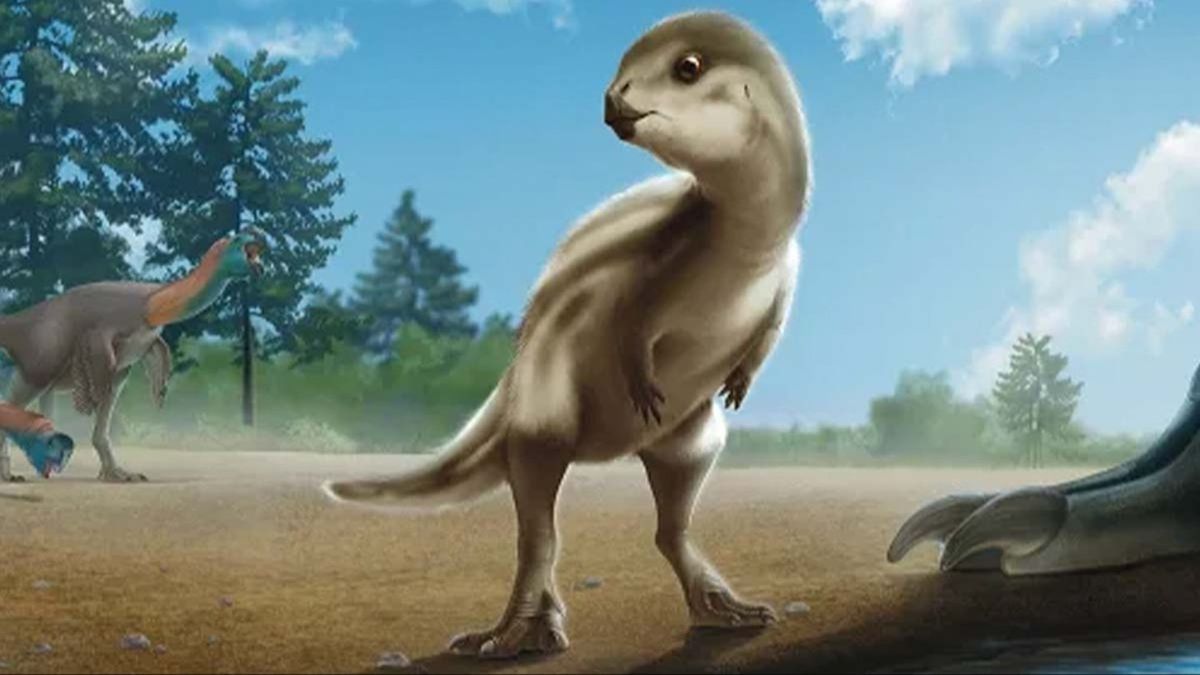
Researchers in South Korea have identified a dinosaur species previously unknown to science.
Most people carry a familiar mental picture of the animals that dominated the planet in the distant past.
It’s easy to imagine iconic giants battling it out—T. Rex and Stegosaurus locked in a dramatic struggle—although the reality is more complicated, not least because T. Rex lived far later than Stegosaurus.
And while the mass extinction ended the reign of many dinosaur groups, some lineages endured and remain all around us today in the form of birds.
Now, a fresh discovery is adding another detail to that long history.
The newly described dinosaur has been nicknamed Doolysaurus, after fossils were examined using X-rays on South Korea’s Aphae Island.
The work was led by Jongyun Jung, a visiting postdoctoral researcher at the University of Texas’ Jackson School of Geosciences.
“Dooly is one of the very famous, iconic dinosaur characters in Korea. Every generation in Korea knows this character,” said Jung.
“And our specimen is also a juvenile or ‘baby,’ so it’s perfect for our dinosaur species name to honor Dooly.”
Jung described the moment the team realised how much of the animal was still concealed within the rock.
“When we first found the specimen, we saw some leg bones preserved and some vertebrae.
“We didn’t expect skull parts and so many more bones. There was a fair amount of excitement when we saw what was hidden inside the block.”
The dinosaur’s full scientific name is Doolysaurus huhmini, with the species name recognising Korean palaeontologist Min Huh. The study was published in the journal Fossil Record on March 19.
The fossil itself was first uncovered in 2023 by study co-author Hyemin Jo, with the formal description now released.
Based on the team’s analysis, Doolysaurus lived roughly between 113 million and 94 million years ago, during the mid-Cretaceous.
Close study of its anatomy led researchers to place the animal among thescelosaurids—small, two-legged plant-eaters known from parts of what are now East Asia and North America, and which may even have worn a fuzzy-looking covering.
The specimen was identified as a juvenile after palaeontologists found growth marks in a section of femur bone.
With early results in hand, researchers are planning more trips back to Aphae Island, hoping the site could yield further fossils—potentially even additional new species.
“We’re expecting some new dinosaur or other egg fossils to come from Aphae and other small islands.”