

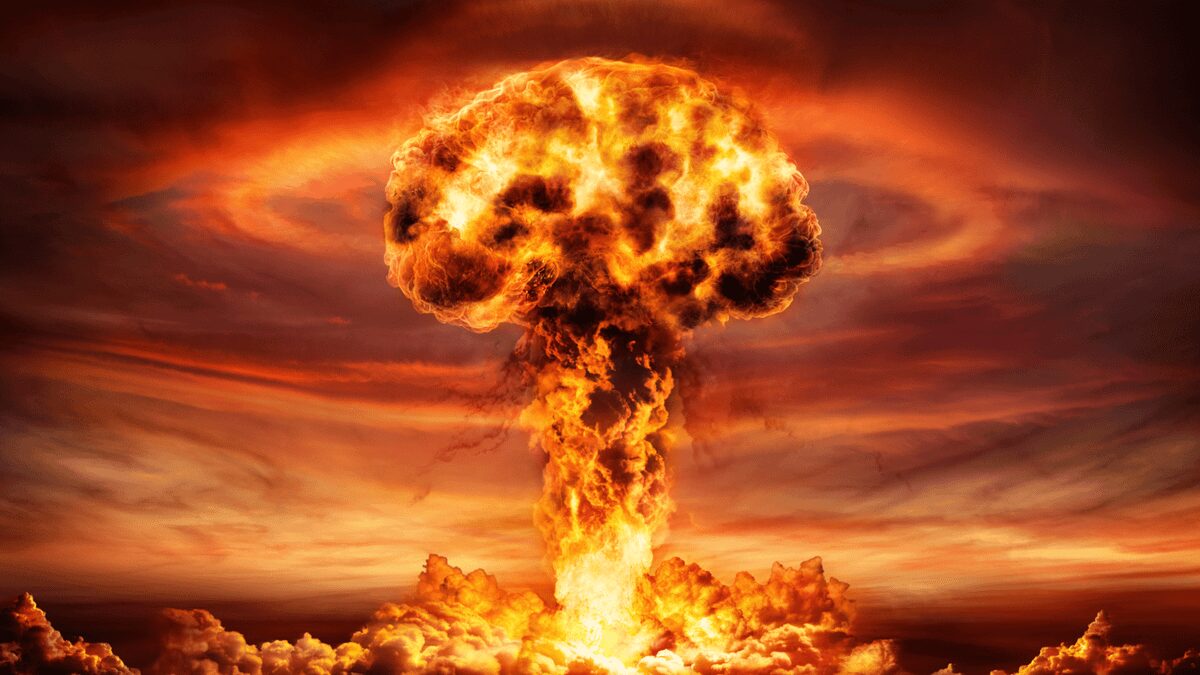
A straightforward survival guideline could make the difference between life and death in a nuclear strike — and it might be worth knowing ahead of 2026.
To be clear, there’s no certainty that anything like this will happen. But with global instability dominating the news, the subject of nuclear risk has a way of resurfacing more often than people would like.
Russia’s full-scale invasion of Ukraine in 2022 continues to shape security fears in Europe, while conflict and political brinkmanship in the Middle East also remain high.
Last month’s joint US-Israel military operation on Iran was reportedly driven by the Trump administration’s belief that the Iranian regime was working toward a nuclear weapon.
With that context in mind, it may be useful to understand the so-called “10-80-10” rule — a framework that suggests your initial reaction in a crisis could heavily influence your chances of survival.
The concept, cited by Psychology Today, is a psychological model describing how people tend to behave when faced with a catastrophic event such as a nuclear attack.
Researcher John Leach explains that the first group — roughly 10 percent — are the people who anticipate danger and manage to stay composed when it arrives.
According to Psychology Today, they avoid rushing into action immediately, instead “acting until they’ve sized up the situation” and then making decisions based on what’s actually happening.
In many emergencies, this calm minority often becomes the group that takes initiative, steps into leadership, and helps others who are overwhelmed or unsure what to do next.
That ability to stay clear-headed is presented as one of the most important advantages in a life-threatening scenario.
The largest group, around 80 percent, are described by Leach as being “stunned and bewildered” if a nuclear attack occurs.
In practical terms, that means many people may freeze, struggle to process information, or become disoriented — reactions that can delay critical choices in the first moments after an incident.
The final 10 percent, the theory suggests, effectively surrender to the situation. Psychology Today warns this group may act in ways that are self-defeating, noting their “irrational behavior will be counterproductive and often ruinous”.
One common instinct during a disaster is to jump in the car and try to flee as quickly as possible.
But Brooke Buddemeier of Lawrence Livermore National Laboratory previously said in 2017 that a vehicle offers no meaningful protection and can even put you at greater risk.
“Don’t get in your car. Don’t try to drive, and don’t assume that the glass and metal of a vehicle can protect you,” he stated.