

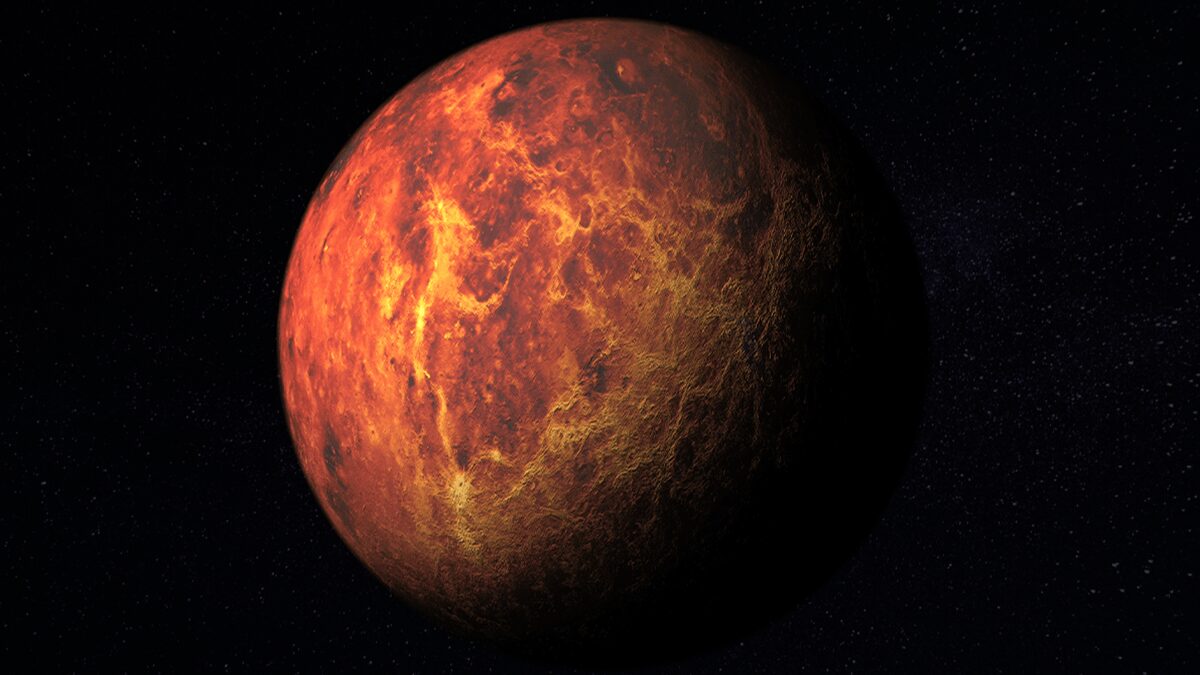
Astronomers have shared new evidence of a world beyond our Solar System that appears to have an atmosphere — something many researchers previously thought couldn’t happen under its extreme conditions.
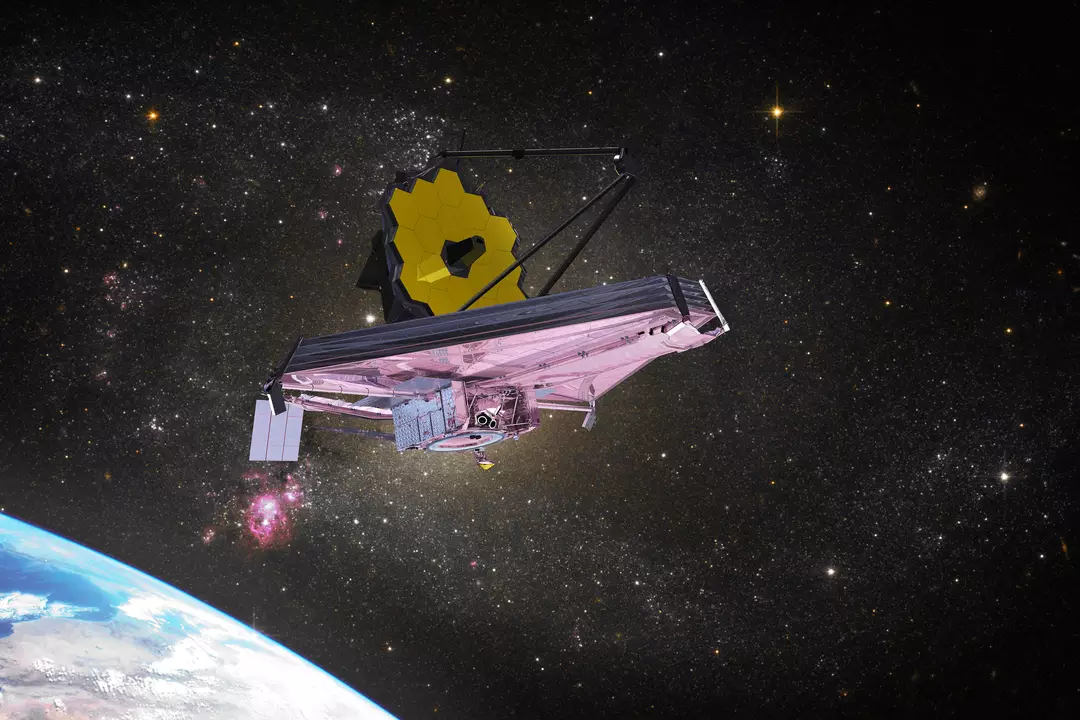
Using NASA’s James Webb Space Telescope, Carnegie scientists carried out the observations and reported the results in The Astrophysical Journal Letters.
The planet, known as TOI-561 b, is rocky and now joins Earth in at least one key way: it seems to be surrounded by gas. Beyond that, it is very different — described as roughly twice as dense, while also being intensely hot and sitting extremely close to its host star.
That tight orbit is what makes it stand out. Earth takes about 365 days to complete one trip around the Sun, which defines our year.
TOI-561 b, however, completes an orbit in just 10.56 hours, meaning it circles its star more than 30 times faster than Earth does.
For a long time, scientists expected a planet like this to be too hot for any gases to remain bound for long. But the new data suggests the atmosphere may be acting like a system that shifts heat around the planet, leading to temperatures that are lower than earlier models predicted.
“Based on what we know about other systems, astronomers would have predicted that a planet like this is too small and hot to retain its own atmosphere for long after formation,” said Carnegie Science Postdoctoral Fellow Nicole Wallack, the study’s second author. “But our observations suggest it is surrounded by a relatively thick blanket of gas, upending conventional wisdom about ultra-short-period planets.”
While the result initially raised more questions, the team noted the planet may not be composed the way a similar-sized Earth-like world would be — potentially containing lighter materials that affect its overall density.
“It’s not what we call a super-puff – or ‘cotton candy’ planet – but it is less dense than you would expect if it had an Earth-like composition,” said Carnegie Science astronomer Johanna Teske, the lead author of the study.
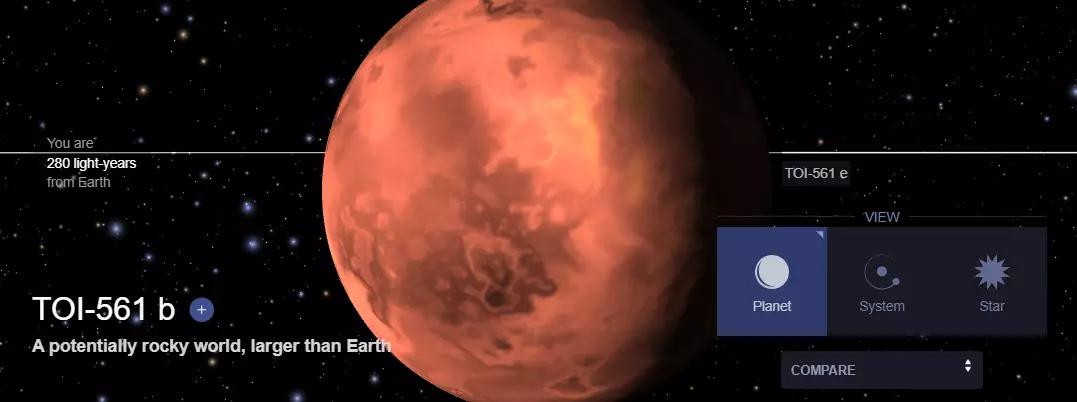
Teske also noted that TOI-561 b travels around an ancient star — around twice the age of the Sun — that is relatively low in iron and located in the Milky Way’s thick disk. That setting raises the possibility that the planet formed in a chemical environment unlike the one that produced the planets in our Solar System.
To investigate further, the researchers used Webb’s Near-Infrared Spectrograph (NIRSpec) to estimate the temperature on the planet’s dayside — the hemisphere permanently facing its star.
They expected the dayside to be about 4,900 degrees Fahrenheit, but measured roughly 3,200 degrees Fahrenheit instead — nearly 2,000 degrees Fahrenheit cooler than anticipated — which supports the idea that heat is being transported around the planet.
Teske said the result was ‘really exciting’ because it helps open the door to tackling the team’s next set of questions.