


Your fingernails can offer clues about what’s going on inside your body, and one doctor has explained the kinds of changes worth paying attention to.
Anyone who’s been scheduled for surgery will likely remember being asked to remove any nail polish from fingers and toes before an operation.
That request isn’t about personal preference or hospital rules for the sake of it. One practical reason is that clear, visible nails can help clinicians observe certain signs that may reflect how you’re doing physically.
Nail changes aren’t automatically a cause for alarm—many are harmless and temporary—but in some situations they can flag an underlying condition that needs checking.
To help people understand what they might be seeing, Dr Giuseppe Aragona, GP and medical adviser for Prescription Doctor, outlined what different nail appearances could mean and when it’s sensible to seek medical advice.

Speaking to Metro Online, Dr Aragona said yellowing nails can point to a fungal infection, particularly when they appear “thickened and slow-growing”.
He added that there are other, less common possibilities too, explaining that “in rarer cases they can be linked to conditions such as chronic respiratory disease or lymphatic disorders, particularly if accompanied by swelling elsewhere”.
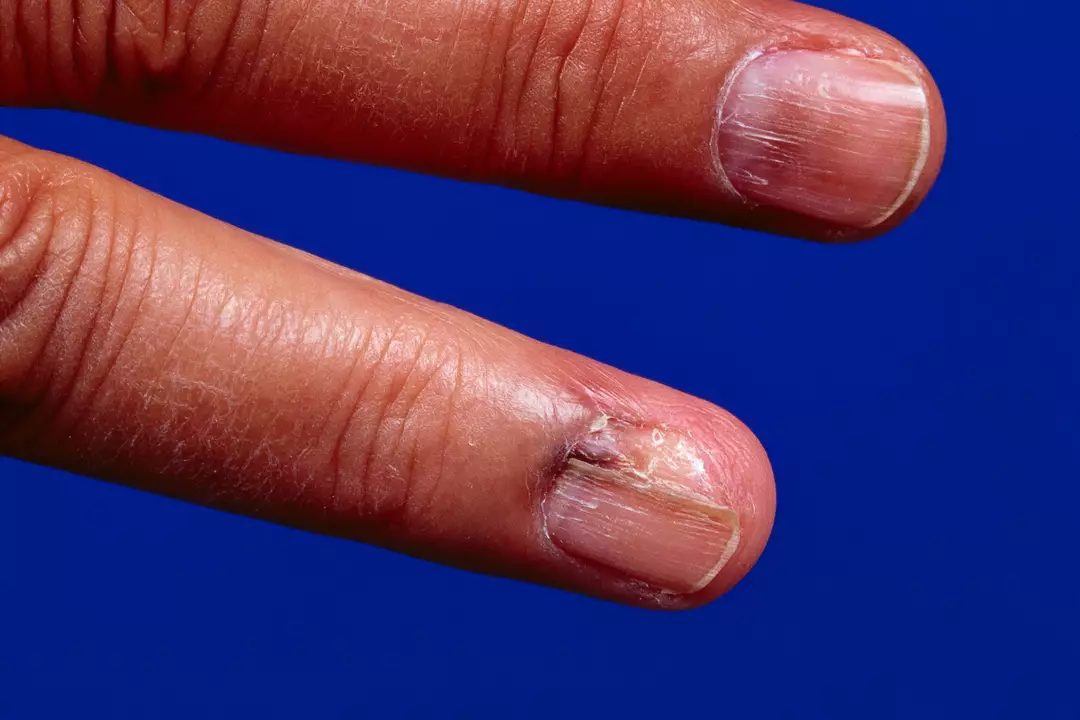
Another change that should prompt caution is a dark, shadow-like line running along the nail. If a streak appears and you can’t easily explain it, it’s worth arranging a medical assessment.
“Dark lines or streaks running along the nail should always be taken seriously, particularly if they are new, changing, or irregular,” Dr Aragona warned.
“While they can occur in people with darker skin as a benign feature, they may in some cases represent a melanoma under the nail and would warrant prompt assessment,” he added.
That said, not every dark line indicates cancer. Streaking can also appear after an injury, due to certain medications, or because of inherited traits—however, getting it examined is still the safest option if it’s new or evolving.
White spots are another common concern, often mistakenly linked to low calcium. Dr Aragona said that explanation doesn’t hold up, and that the marks are usually nothing more than the result of minor knocks to the nail.
One condition doctors may also look out for is koilonychia—more commonly known as “spoon nails”—where the nail plate becomes indented rather than growing flat.
Cleveland Clinic says of the condition: “Koilonychia is indented nails. Instead of growing straight, your nails look concave, like spoons. In many people, koilonychia is a sign of iron deficiency.”
It adds: “Usually, you can get rid of spoon nails by treating the underlying cause.”
Alongside iron deficiency, spoon-shaped nails can also be associated with anaemia. Dr Aragona noted that doctors typically interpret nail changes in context, considering them “alongside symptoms such as fatigue or breathlessness”.