

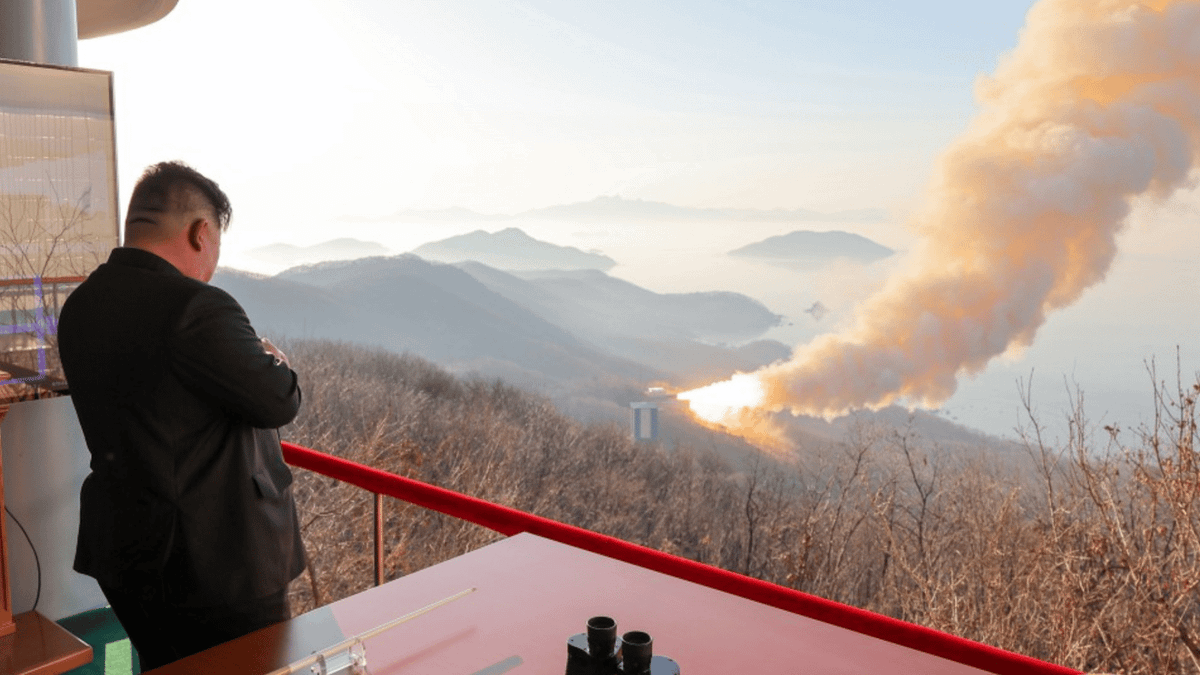
Kim Jong Un has marked what North Korea says was a successful test of a new long-range missile propulsion system, claiming it strengthens the country’s ability to strike the continental United States and signaling another escalation in its military ambitions.
State footage on Sunday showed the North Korean leader observing the trial of a high-thrust solid-fuel engine from a distance, later praising the outcome as another upgrade to the nation’s missile capabilities. Regime media framed the test as a notable advance in preparations for any potential conflict with the US.
According to the Korean Central News Agency (KCNA), the trial involved a newly developed carbon-fiber composite engine. KCNA said it can generate a maximum thrust of 2500 kilotons, which it described as around a third stronger than earlier propulsion systems tested for intercontinental ballistic missiles (ICBMs).
The test comes shortly after Kim told the country’s parliament that North Korea would retain its nuclear arsenal, arguing it is needed to deter the US from carrying out the same “state terrorism and aggression” as he claims it has in Iran.
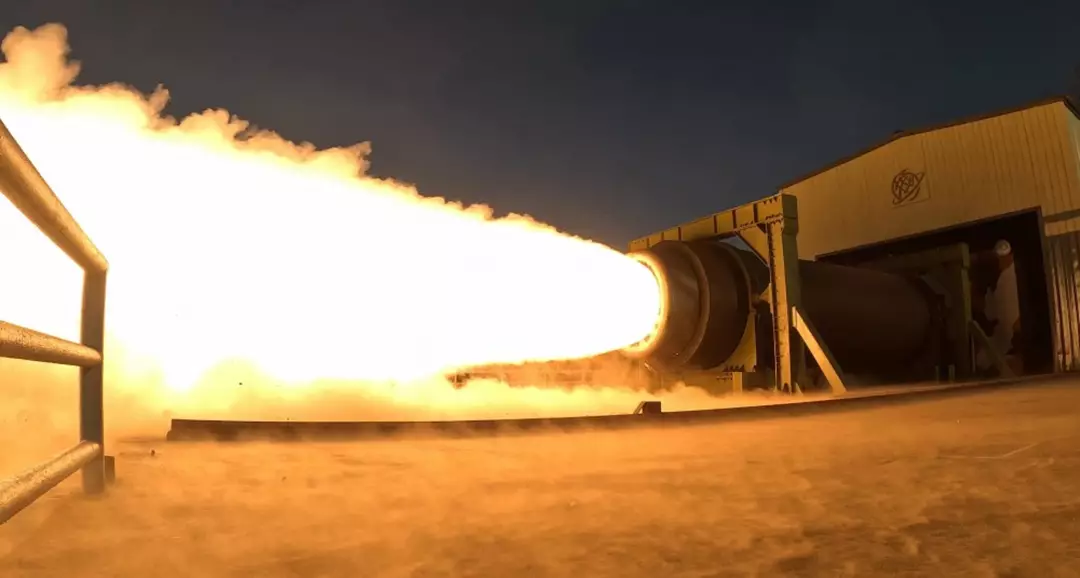
KCNA said the solid-fuel engine work fits into a new five-year defense plan focused on the “continuous renewal of strategic strike” capacity.
Kim reportedly called the test “of great significance” for that plan and tied it to broader efforts to update the armed forces. At the same time, he said there remain “major tasks” ahead to raise both the size and sophistication of the military.
Analysts following the program said the 2500-kiloton engine is likely intended for North Korea’s Hwasong-20 ICBM, which was displayed at a military parade in October 2025.
They also noted that higher thrust can complicate interception, because it may support more advanced payload configurations—such as multiple independently reentry vehicles (MIRVs).

Such systems have featured in modern conflicts, including strikes attributed to Iran during the war involving Israel and the US, where a single rocket can separate into multiple smaller, targetable warheads or decoys on entry to an opponent’s airspace—designed to strain even sophisticated air-defense networks.
Hong Min of the Korea Institute for National Unification told AFP that the solid-fuel engine test demonstrated North Korea’s “resolve to acquire missiles capable of hitting targets around the globe.”
He added: “Given the increased maximum thrust, this indicates its intention to possess ICBMs with global strike range, as well as the ability to overwhelm missile defence systems.”
Adding to regional concern is the possibility that the Hwasong platform could carry a nuclear warhead, and that the more powerful engine could extend the range and performance of a future weapons system capable of reaching the US.
However, experts cited by the Independent have cautioned that even if Pyongyang can launch a missile reliably, it still faces a critical technical hurdle: ensuring any warhead can withstand the intense heat and stress of re-entering the atmosphere.