


Experts are taking a close look at President Donald Trump’s proposed White House Ballroom renovation, pointing to what they say are notable design problems in the plans.
Plans for the controversial new ballroom wing have been submitted to the National Capital Planning Commission (NCPC) and the Commission of Fine Arts, with a vote on whether to accept the proposal scheduled for Thursday, April 2.
While the US Commission of Fine Arts signed off on the project in February, the renovation still has to clear the final stages of the approval process before construction can proceed.
The NCPC received around 32,000 messages about the proposal. Architect Donna Wax described the 22,000-square-foot space as a ‘fascist take on classism’, while another comment said: “The size and design of the proposed White House Ballroom are hideous. I object to the decision to ruin the American public’s historical legacy.”
In the lead-up to the final vote, additional architects and preservation-focused critics have outlined why they believe the design risks falling short—both aesthetically and functionally.
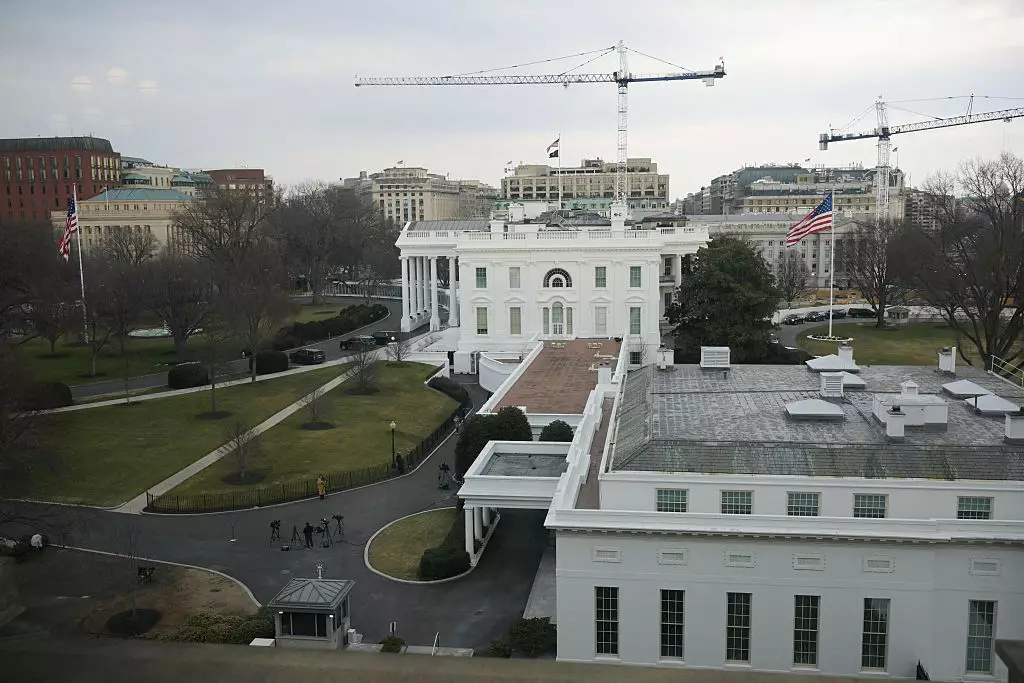
Just days before the approval decision, the outlet analysis argued the addition could disrupt the overall look and visual harmony of the White House complex.
One concern raised is that the West Wing would appear overly large and heavy in comparison to the East Wing, changing the balance of the site.
Critics also say the proposal undermines the original intent of architect Pierre L’Enfant, who positioned the building to preserve a view toward the US Capitol as a symbolic link between the White House and Congress.
“The ballroom is literally an imposition between two branches of our government,” said David Scott Parker, an architect on the board of the National Trust for Historic Preservation, per the outlet.
The proposed East Wing expansion is described as roughly 60 percent larger than the White House residence, a change that would draw the eye and make the new construction the dominant feature.
Other details flagged in the analysis include a large staircase placed prominently at the front of the planned structure, despite documentation indicating the ballroom is accessed via a side entrance.
There are also questions around the volume of columns included in the design, with the suggestion that they could reduce the amount of natural light entering the ballroom.

Defending the pace of the proposal, White House staff secretary Will Scharf—who also chairs the NCPC—told the outlet the speed reflects Trump’s approach to getting things done, saying: “If not for President Trump, his desire to move quickly, and his raising the money to fund this, a project like this could languish for years with no decision or action.”
He also argued that without Trump pushing the process forward, ‘we could still be debating it at NCPC meetings 20 years from now.’
Trump has previously said the ballroom—estimated to cost between $300 million and $400 million—would not use taxpayer money and would instead be financed privately by investors.
He wrote in a Truth Social post at the time he announced his plans to build the extension: “I am pleased to announce that ground has been broken on the White House grounds to build the new, big, beautiful White House Ballroom. Completely separate from the White House itself, the East Wing is being fully modernized as part of this process, and will be more beautiful than ever when it is complete!
“For more than 150 years, every President has dreamt about having a Ballroom at the White House to accommodate people for grand parties, State Visits, etc. I am honored to be the first President to finally get this much-needed project underway — with zero cost to the American Taxpayer! The White House Ballroom is being privately funded by many generous Patriots, Great American Companies, and, yours truly. This Ballroom will be happily used for Generations to come!”