


An air traffic controller has pointed to multiple red flags that appeared before a devastating mid-air crash that claimed 67 lives.
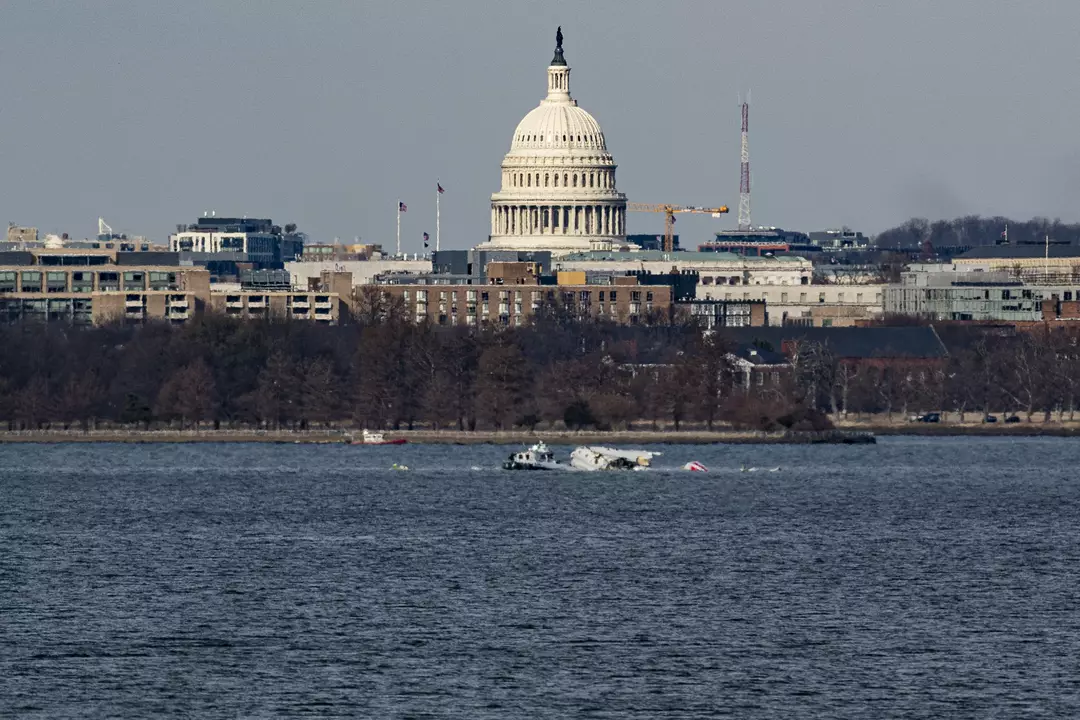
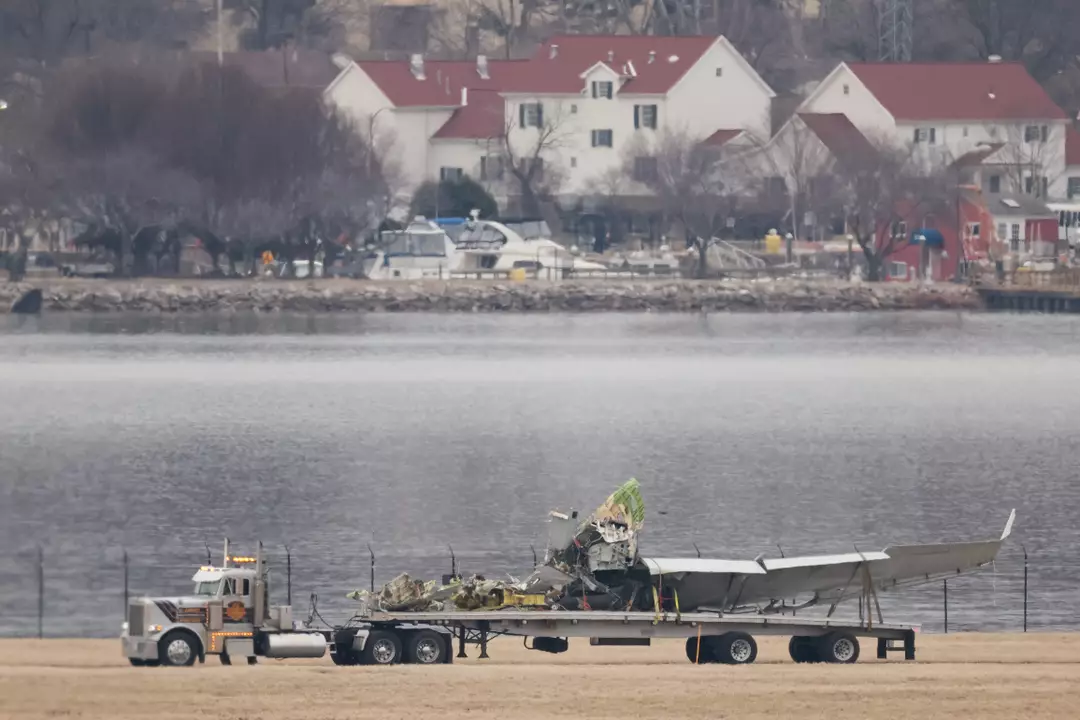
The incident took place in Washington DC on January 29 2025, involving a US Army helicopter and an American Airlines aircraft.
Everyone aboard both vehicles died, including three people in the Black Hawk helicopter and 64 passengers and crew on the commercial flight.
Video captured the moments leading up to the impact, showing the two aircraft converging before a blast illuminated the night sky.
More than a year later, an air traffic control specialist says the disaster was preceded by signs that something was seriously wrong.
Emily Hanoka spoke about what led up to the collision during an interview with CBS 60 Minutes on Sunday.
She said: “The warning signs were all there.You had frontline controllers ringing that bell for years, and years, saying this is not safe.
“This cannot continue. Please change this and that didn’t happen.”
Hanoka explained that teams at Ronald Reagan Washington National Airport airport were already operating at the edge of what they could handle, yet were still expected to keep traffic flowing.
“Controllers formed local safety councils and every time that a controller made these safety reports, another controller was compiling data to back up the recommendation,” she said. “And many recommendations were made, and they never went too far.”
She noted the scale of the workload, with around 800 flights using the airport’s largest runway daily, putting significant strain on the system.
Hanoka said: “Some hours are overloaded, to the point where it’s over the capacity that the airport can handle.”
She added: “There was definitely a pressure. If you do not move planes, you will gridlock the airport.”
Hanoka also alleged that the wider operation showed clear weaknesses, saying protections and processes were not as robust as they needed to be.
She said controllers regularly depended on a demanding method known as a ‘squeeze play’.
The maneuver involves departures and arrivals happening only seconds apart on the same runway, leaving little margin for error and requiring exact timing and coordination.
“This is what has to happen, in order to make this airspace work,” she said. “And it did work. It worked until it didn’t.”
After the crash, Transportation Secretary Sean Duffy said: “The tragedy over the Potomac one year ago revealed a startling truth: years of warning signs were missed, and the FAA needed dire reform.”