

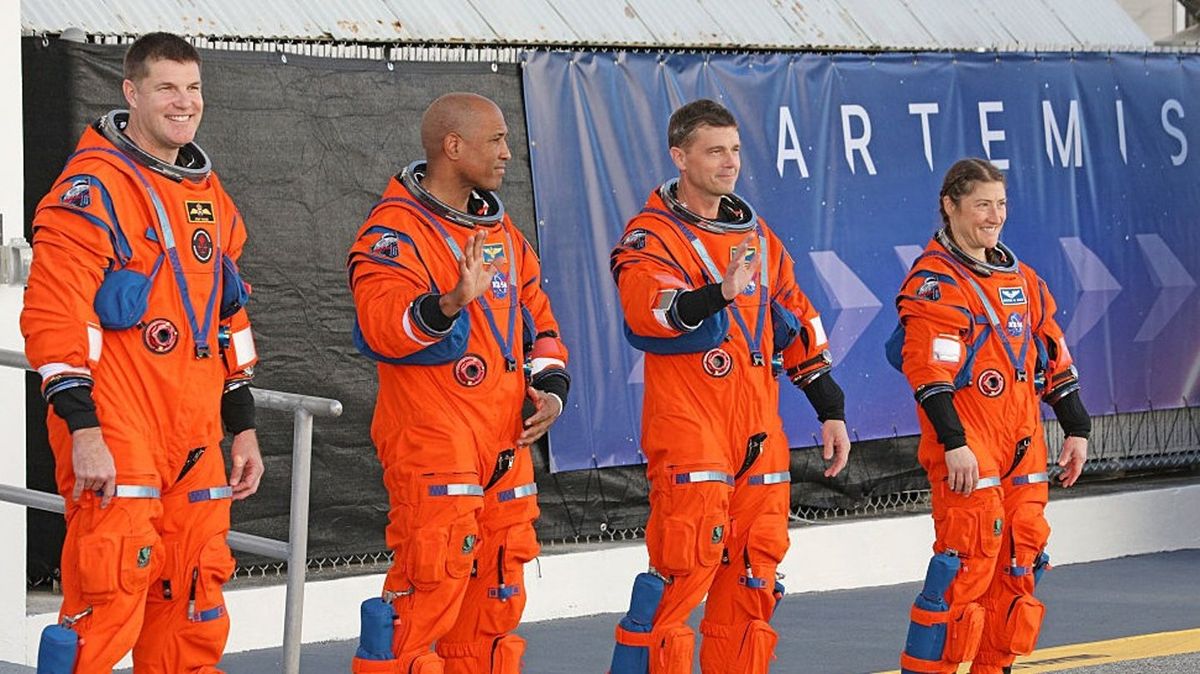
NASA’s first human Moon mission in more than 50 years is just days away, and when the Artemis II crew blast off from the agency’s Kennedy Space Center in Florida, a former NASA scientist has explained they will experience a feeling of ‘pressure’.
If you’re currently thinking, “uh, duh? Of course there’s pressure when you’re the first astronauts to blast off to the moon in half a century,” then you have a fair point – but we’re not talking about societal pressure here.
In this case, the Artemis II team — NASA astronauts Reid Wiseman, Victor Glover, and Christina Koch, alongside Canadian Space Agency (CSA) astronaut Jeremy Hansen — are expected to notice something much more literal: a physical sensation linked to the sheer force of launch.

Most people will never get to experience a rocket launch firsthand, but former NASA scientist Dr. John DeWitt — who spent two decades working at the NASA Johnson Space Center — has shared what the first moments should feel like for those inside.
Weightlessness might be the part everyone associates with spaceflight, yet the initial climb away from Earth can feel like the opposite. Dr. DeWitt explained that the rocket’s acceleration creates a strong push on the body as the vehicle powers upward.
He described how the astronauts will ‘feel pressure as the rocket ascends to the sky’, due to the acceleration of the engine as they take off.
The crew will ride inside the Orion spacecraft, launched atop NASA’s Space Launch System (SLS) — which the agency describes as ‘part of NASA’s backbone for deep space exploration and Artemis’.
According to NASA, SLS is uniquely capable of sending Orion, astronauts, and the necessary cargo moonward in a single launch, largely because it can deliver greater payload mass, volume, and departure energy than any other single rocket.
That intense, heavy feeling isn’t expected to stick around for the whole journey, though. Dr. DeWitt said it should fade once the spacecraft reaches orbit.
“Once they reach space orbit, that pressure will disappear,” Dr. DeWitt explained.
“The sophisticated engineering design of the Orion capsule will maintain the environment, such as oxygen, humidity, and temperature, to be similar to being on Earth,” he added.
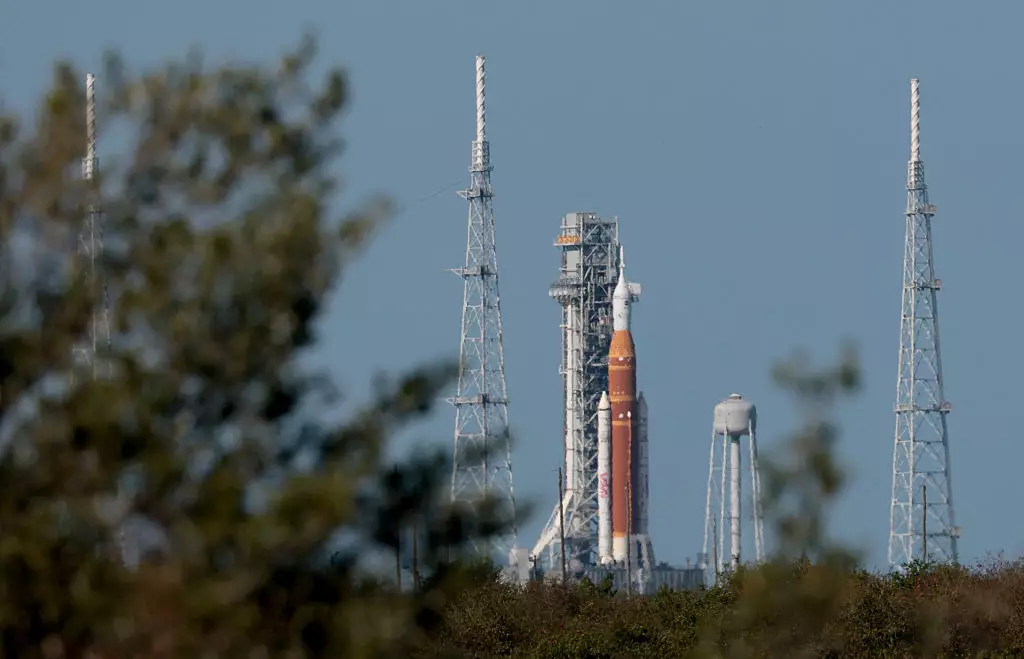
With NASA having not sent humans back to the Moon in decades, it might feel like there’s little left to learn from another lunar journey. But Artemis II is designed to do far more than revisit familiar territory.
The mission will serve as a crucial proving run, demonstrating that Orion and its systems perform as intended in the deep-space environment. In doing so, Artemis II helps set the stage for future lunar exploration aimed at scientific discovery and economic benefits, while also supporting longer-term plans that could ultimately enable the first crewed missions to Mars.
NASA has listed five main priorities for Artemis II, specifically:
The Artemis II mission is set to last 10 days following takeoff, which will take place no earlier than Wednesday (April 1).