

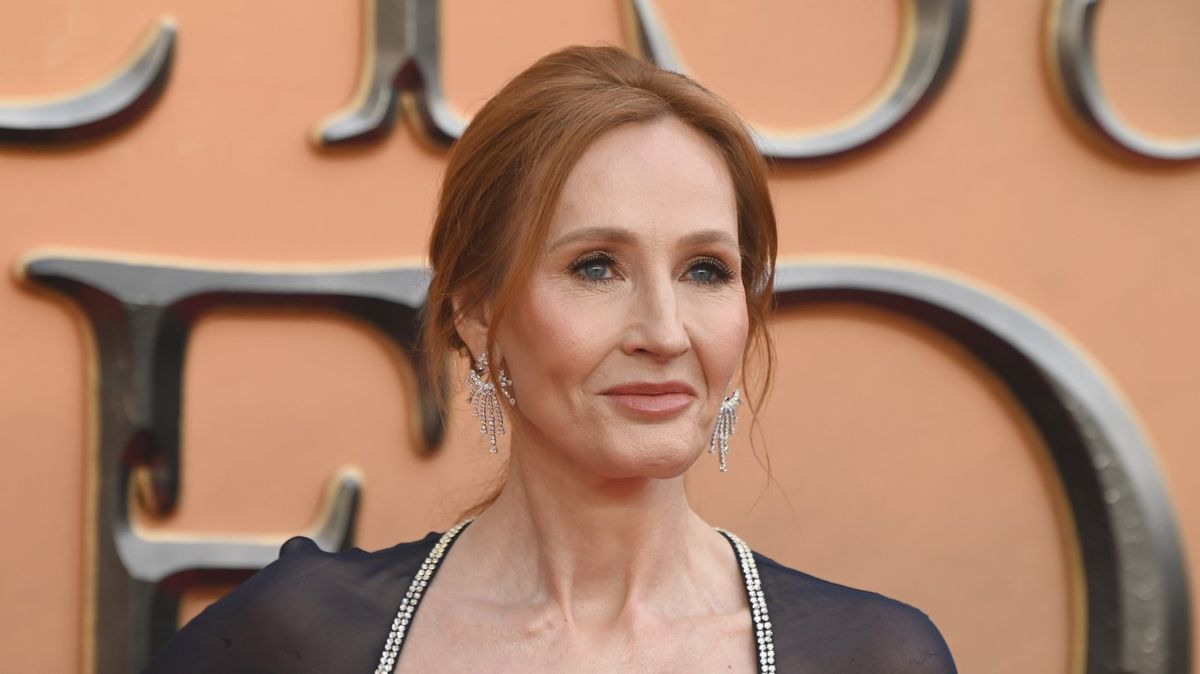
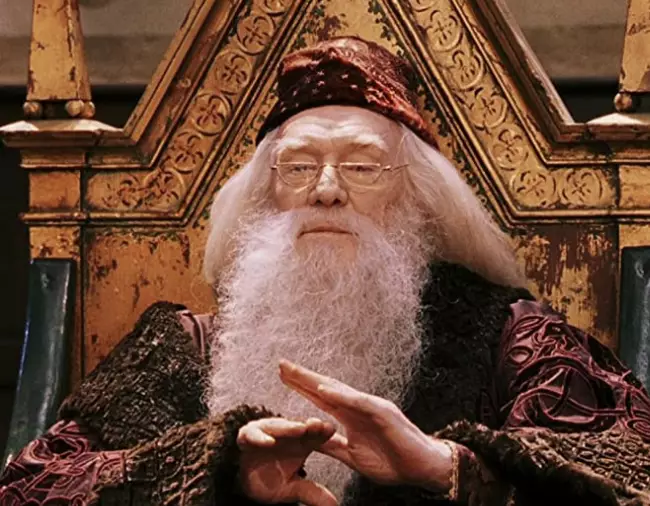
The upcoming Harry Potter reboot on HBO Max, expected to arrive later this year, will bring a fresh wave of viewers to Hogwarts and its calm, commanding headmaster, Albus Dumbledore.
As new audiences dig into J.K. Rowling’s fantasy series (first published in 1997), some are also discovering one of the author’s most debated post-publication revelations—something long-time fans have argued over for years.
In 2007, shortly after the release of Deathly Hallows, Rowling appeared at New York’s Carnegie Hall and told attendees that she had “always thought of Dumbledore as gay.” The statement quickly split readers between those who welcomed the interpretation and those who felt it came out of nowhere.
At the time, she added: “They had Dumbledore saying a line to Harry early in the script saying I knew a girl once, whose hair…. I had to write a little note in the margin and slide it along to the scriptwriter, ‘Dumbledore’s gay!'”
That announcement sent fans back into the books, combing through the text for clues they might have missed—anything that suggested Rowling had been planting the idea from the beginning.
For many readers, the search didn’t turn up much. Dumbledore is written as a reserved, enigmatic guide figure, so explicit commentary about his romantic life would have felt jarringly out of place amid prophecies, horcruxes, and school-year crises.
Some pointed to lines about his connection with Grindelwald, while others highlighted details like Rowling’s descriptions of Dumbledore’s flamboyant fashion sense—and even references to knitting.
Still, critics argued it’s difficult to treat a few indirect character notes across a series exceeding a million words as conclusive evidence that this was a clearly signposted intention from the outset, rather than an interpretation introduced after the final installment.
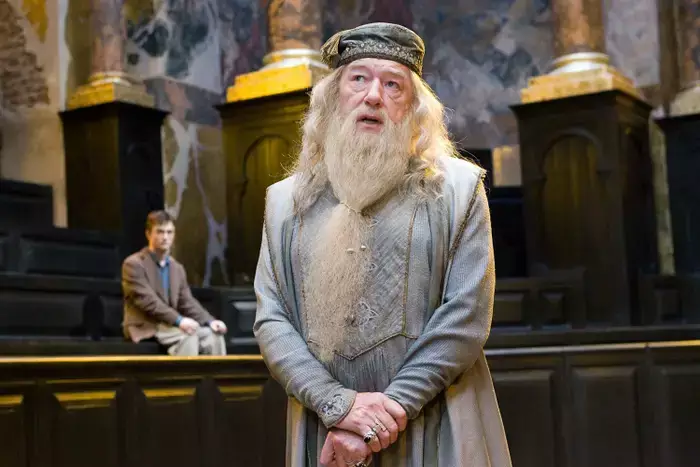
When Rowling addressed Dumbledore’s personal history in 2007, she framed it through the lens of love—arguing that someone who repeatedly champions love’s power had once been shaped, and misled, by it himself.
“Dumbledore fell in love with Grindelwald,” Rowling told a New York audience in 2007, referring to the wizard’s old rival. “And that that added to his horror when Grindelwald showed himself to be what he was.
“To an extent, do we say it excused Dumbledore a little more because falling in love can blind us to an extent? But, he met someone as brilliant as he was, and rather like Bellatrix he was very drawn to this brilliant person, and horribly, terribly let down by him.”
Rowling—who has drawn widespread criticism in recent years for her anti-trans views—described this version of Dumbledore as consistent with how she had always pictured him, despite many readers noting that the novels offered little direct material that clearly pointed to his sexuality until later revelations about his youth and Grindelwald surfaced.
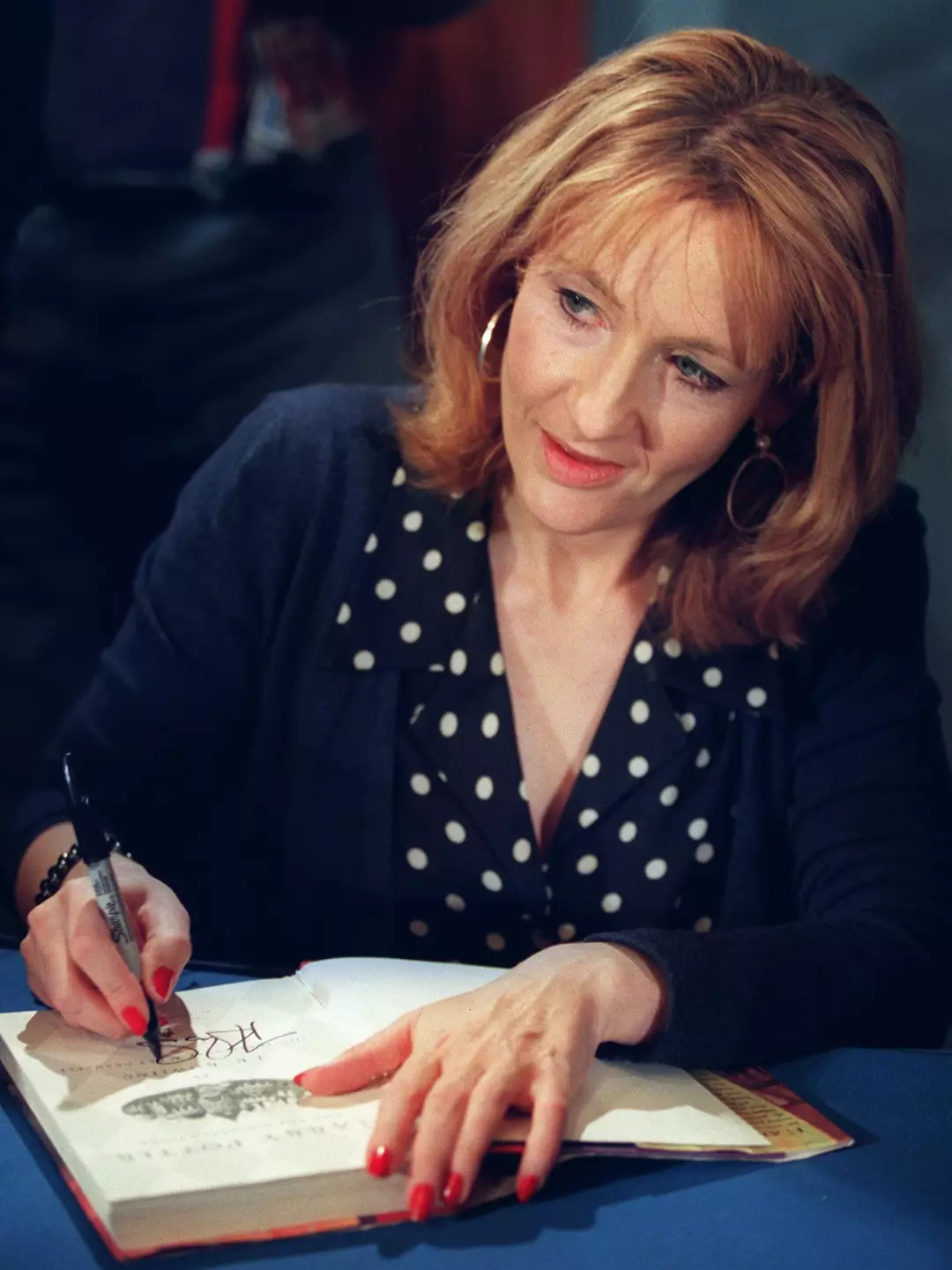
The debate became a lasting flashpoint: was Rowling clarifying something she’d always intended, or retroactively reshaping a character in a finished story? For some, it also served as a neat real-world illustration of “reader-response theory” in literary criticism.
Often linked to Roland Barthes’ The Death of the Author, this approach argues that an author’s intent doesn’t ultimately control what a text means once it reaches readers.
Instead, meaning is formed through interpretation—constructed by the reader engaging with the words on the page. From that perspective, if audiences didn’t see Dumbledore as gay while reading, does an after-the-fact explanation meaningfully change the books themselves?
Rowling addressed that point months later on the Pottermore podcast, saying: “How relevant is it? Well, to me it was only relevant in as much as Dumbledore, who was the great defender of love, and who sincerely believed that love was the greatest, most powerful force in the universe, was himself made a fool of by love.
“That, to me, was the interesting point. That, in his youth, he was- he became infatuated with a man who was almost his dark twin. He was as brilliant. He was morally bankrupt. And Dumbledore lost his moral compass.
“He wanted to believe that Grindelwald was what he wanted him to be, which I think is what particularly a young person’s love tends to do.”