

An astronaut has already detailed how astronauts use the toilet in orbit, as many people wondered about space bathrooms following a brief issue reported by the Artemis II crew shortly after launch.
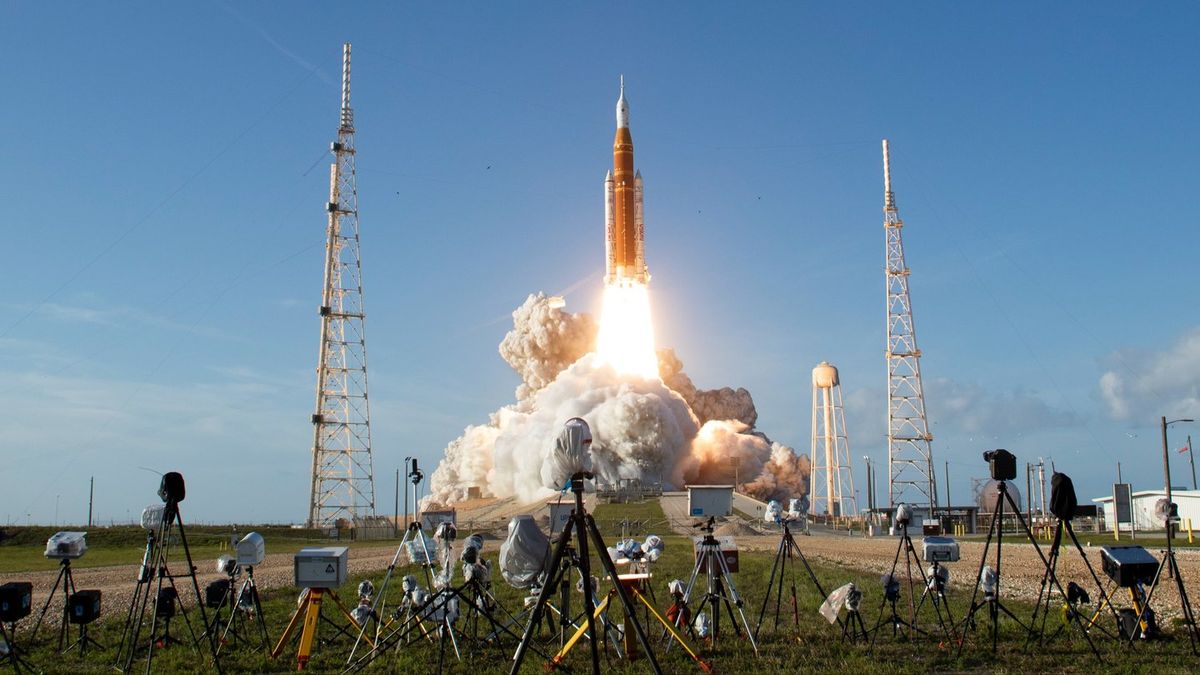
The mission, which is set to take four astronauts around the Moon if everything proceeds as expected, lifted off from Florida on Wednesday smoothly overall.
Not long after launch, however, the crew flagged a short-lived problem with the onboard toilet, telling mission control that an amber warning light had appeared.
Mission control replied that they would need time to work through a solution, and the issue has since been resolved.
Reports say that the crew reported a ‘blinking fault light and mission control teams successfully assessed the data and worked with the crew to troubleshoot and resolve the issue’.
The moment sparked plenty of curiosity about what happens when astronauts need the bathroom while they’re in space.
In a video uploaded to the European Space Agency (ESA) YouTube channel in 2015, Samantha Cristoforetti explained that a hose-like setup plays a central role when using the toilet in microgravity.

She said rotating it 90 degrees activates a ‘suction fan’ that helps when an astronaut needs to urinate.
Cristoforetti added that using the toilet for solid waste is handled differently, although suction is still a key part of the process.
In that case, astronauts sit on a more familiar-style toilet seat, but the waste is collected into a bag to keep things sanitary for whoever uses it next.
According to her, the solid waste container is replaced when it fills up — roughly every 10 days for a crew of three.
Urine is handled another way entirely: it is ‘recycled’ using ‘pretty complicated hydraulic equipment’ located behind the toilet.
She also noted one practical tip for a number two in space: astronauts are advised to switch the fan on, as the last thing anyone wants is an unpleasant smell lingering inside the spacecraft.
Meanwhile, NASA’s Artemis II mission made history when it launched from Earth toward the Moon on April 1 with a crew onboard.
It marks the first crewed trip sent toward the Moon in more than five decades; the last was Apollo 17 in 1972, when Commander Gene Cernan and Lunar Module Pilot Harrison Schmitt walked on the lunar surface.
Artemis II — with NASA astronauts Reid Wiseman, Victor Glover, Christina Koch, and Canadian Space Agency astronaut Jeremy Hansen traveling inside the Orion spacecraft — is planned as a 10-day flight packed with science work, spacecraft evaluations, medical monitoring, survival training, and other objectives.
What it will not include, however, is a landing on the Moon.
That’s because the current Artemis plan doesn’t call for Artemis II to touch down, and the Orion spacecraft is not designed to land.
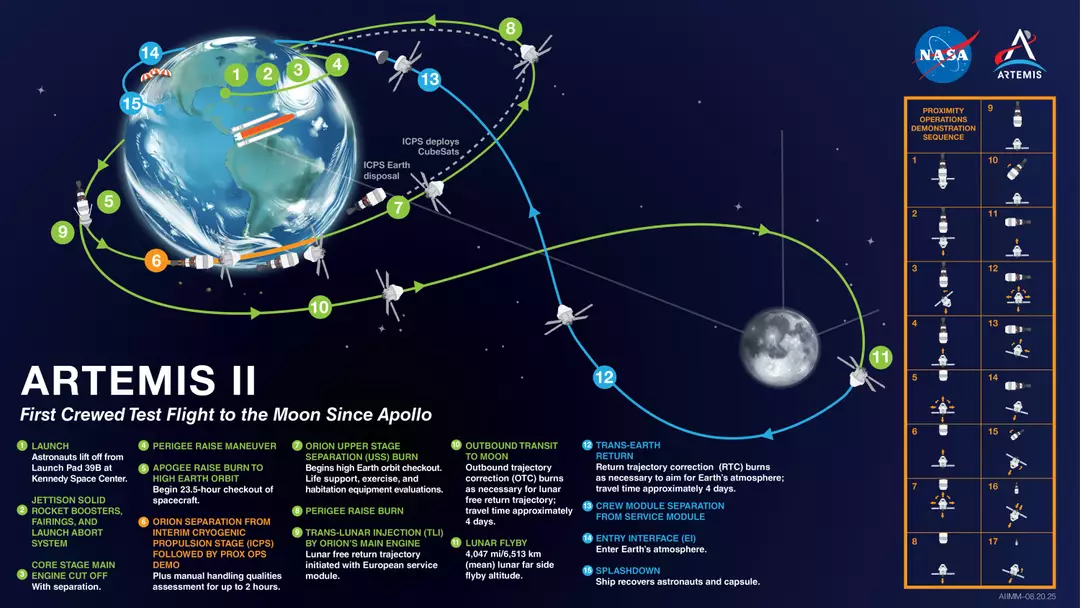
Instead, Artemis II is primarily a crewed shakedown flight to validate systems on the way to the Moon. Artemis I previously completed a similar route without astronauts, sending an uncrewed Orion to lunar orbit and back in late 2022.
NASA says it expects Artemis II ‘will confirm all the spacecraft’s systems operate as designed with crew aboard in the actual environment of deep space’.
“The mission will pave the way for lunar surface missions, establishing long-term lunar science and exploration capabilities and inspire the next generation of explorers,” the space agency said in their mission description.
NASA had originally aimed for Artemis III to deliver the next lunar landing in 2027, but the agency reworked the program earlier this year. As a result, Artemis III is now planned as a mission to rehearse docking and rendezvous in Earth orbit between Orion and one or both of the program’s private crewed landers.
If the updated schedule holds, NASA is targeting 2028 to return astronauts to the Moon with Artemis IV.