

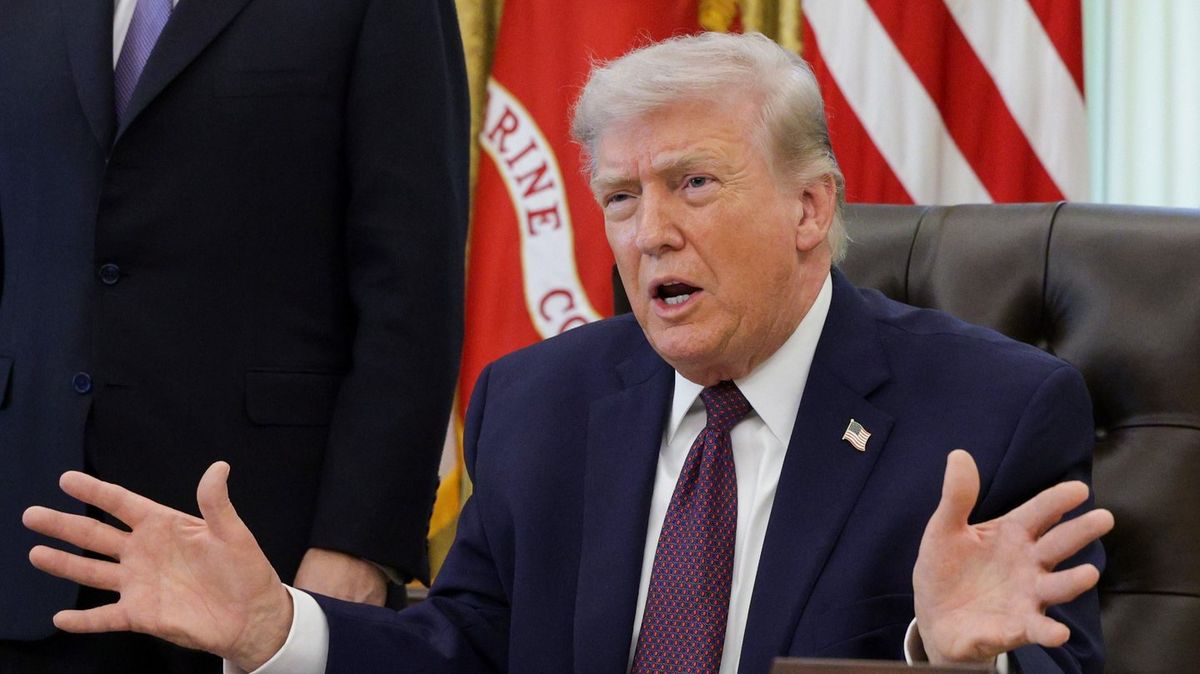
A new proposal from Trump’s government could see some US households receiving $1,200.
Across the US, many families are finding it harder to keep up as the cost of living continues to climb and a range of economic pressures begin to show up in day-to-day budgets.
During Trump’s second term, his administration introduced sweeping tariffs on imports, positioning the move as a way to support domestic businesses.
But those added costs can flow through to shoppers. Companies that depend on overseas goods or ingredients may end up paying more and then raising prices for consumers — with the Federal Reserve Bank of New York highlighting how this can affect items that can’t be produced in the US at the scale required, such as coffee.
On top of that, recent conflict involving Iran has added fresh strain to global markets. After US and Israeli strikes, Iran responded by blocking the Strait of Hormuz — a key route for around 20 percent of the world’s oil shipments.
Since then, oil prices have spiked and markets have been rattled.
Against that backdrop, the Trump administration is now linked to a proposal that could mean payments of up to $1,200 for some households.

The measure was introduced by Senator Martin Heinrich on March 12 and is designed to provide tax rebates to families who have been hit by higher costs linked to tariffs.
Heinrich has argued that many Americans are now feeling the impact in routine spending, including groceries and household essentials.
His proposal is intended to return some money to those who, he says, are paying more because of the tariff-driven price increases.
The bill is titled the ‘Tariff Refunds for Working Families Act’, and it has reportedly been backed by senators including Cory Booker, Ruben Gallego, and Kirsten Gillibrand, according to the Daily Express.
Trump had previously been reported as suggesting tariff rebates could reach as much as $2,000, though it has also been suggested that tariff-related funds could instead be directed toward importers.
Under Heinrich’s plan, rebates would be calculated on a sliding scale: the lower a household’s income, the larger the payment.

As laid out, individuals earning $90,000 or less could receive $600, while a ‘head of household’ earning $120,000 or less would also qualify at that level.
For married couples filing jointly, households with combined income of $180,000 or less could receive up to $1,200 under the proposal.
There is also an additional element that would add $600 per dependant child on top of the income-based amount.
Separately, Congressman Henry Cuellar has introduced a comparable proposal that would apply to taxpayers earning under $400,000, also including extra payments for children.
For now, these measures remain proposals. But if either bill were to pass, eligible Americans could ultimately see payments issued.